The Empordà of Don Quixote: from Salvador Dalí to Albert Serra
Joan Manuel Soldevila traces in 'Terra de Quixots', Carles Rahola essay prize 2026, the connections between Cervantes' work and characters, artists and spaces of the Empordà
-
CAT -
CAST
GironaOnce is a coincidence. Twice, a happenstance. And more than three, a pattern. Such is the case with the series of relationships linking Don Quixote and the Empordà. Far from a sporadic anecdote, the reiteration of examples connecting these two worlds allows for the detection of a rich and interesting bond. This is demonstrated by the Hispanic philologist Joan Manuel Soldevila, based in Figueres, in the book Land of Quixotes (Pòrtic), awarded the 2026 Carles Rahola Essay Prize. The text, written with great erudition but without heavy-handed analysis, unravels the carousel of characters, works, and places of the Empordà plain that, in one way or another, allude to Cervantes' literature. From the most obvious, such as Dalí's admiration for the Knight of the Sad Countenance, to others more surprising, such as the name of a nightclub in Figueres or the first documented photograph in the world of two men dressed as Don Quixote and Sancho Panza.
In total, there are 20 examples, one for each chapter. Soldevila unravels them one after the other, with a very rich prose, but without any pretense of reaching grandiloquent conclusions or demonstrating canonical theses. The author's vocation consists essentially of noting the rootedness of Don Quixote in the Empordà, articulating truly interesting reflections on the Quixotic spirit and the Empordà character: "I could say that, since we Empordanesos are slightly touched by the tramontana wind, we are siblings of a brilliant madman like Don Quixote. Perhaps it is one of the explanations, but what is evident is that this relationship exists and that the stubbornness to remain alive in the region's memory deserved to be spoken about without reaching any conclusion," the author defends. And he continues: "With these connections, which are truly fascinating, I wanted to demonstrate that literature has the capacity to influence reality, to become a tangible reference of life in the Empordà, dynamiting the relationships between fiction and reality that so fascinated Cervantes".

Joan Manuel Soldevila's fascination with Don Quixote goes back a long way. He was given his first Don Quixote at the age of 7 when he made his first communion. At 14, he ventured into his first reading of it, and during his Hispanic philology degree, he returned to it again. Later, he began working as a secondary school teacher and, since then, he has returned to it every three or four years to refresh the experience and prepare his literature classes. He is fascinated by the elegant style, the parodic content, the literary artifact, the metalanguage, and the pills of wisdom. "From this continuous relationship, in the end, you become a devotee of the novel. The work sends you messages and gives you glasses that make you see relationships between Don Quixote and everything. A few years ago, for example, I wrote an essay that related it to Tintin, another one of my obsessions", Soldevila defends.
A teacher who writes and a writer who teaches
Soldevila, professor of literature at the Ramon Muntaner Institute in Figueres, combines his facet as a writer and essayist with that of a secondary school teacher. And they are not two separate jobs, but rather complementary. Two sides of the same coin. A virtuous circle that feeds back on itself. "The work of teachers is hard and very pragmatic, but I have always believed that intellectual training and creation is inseparable from teaching work. They are elements that communicate deeply, they nourish each other. I teach classes on Cervantes, and this awakens in me the desire to write about Cervantes, and by writing about Cervantes I explain him better, and if I explain him better I have more desire to write", he corroborates.
Terra de Quixots begins, as one might expect, with Salvador Dalí, master of the subconscious, fascinated by the delusions of the hidalgo of La Mancha, who illustrated Cervantes' work with lithographs. It continues with the Reus-born photographer Josep Maria Cañellas, who, on his journey to document the reality of the Empordà peasantry, stumbled upon two people dressed up on horseback along the Rambla of Figueres acting as Sancho and Quixote. The author also studies the play Micomicó, by the prominent Figueres figure Abdó Terrades, inspired by the passage of the farce of Princess Micomicona, and follows with the verses of La balada del sabater d’Ordis, by Carles Fages de Climent.
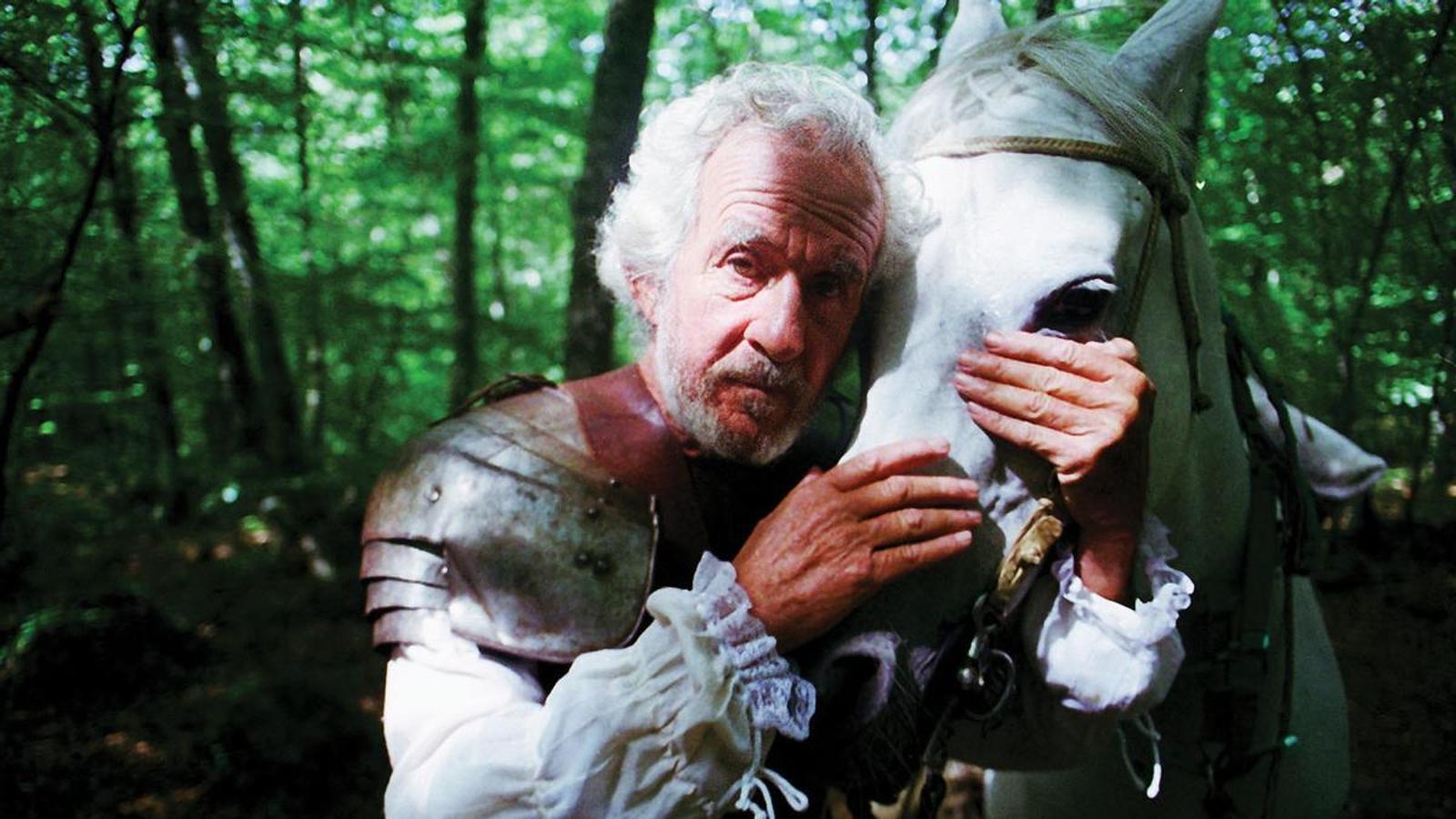
Soldevila also discusses the impressive Cervantine library of the Peralada Castle or the nightclub that, with the name of Cervantes' work, sought to attract tourists with a “typical Spanish” experience. Also the Cervantine influences on Vicenç Pagès Jordà or the connections with the witch Lídia of Cadaqués, Narcís Monturiol, and Josep Pla. And, as also expected, it ends with Honor de cavalleria, the genuine film adaptation by Albert Serra, in which Lluís Serrat and Lluís Carbó ride through the Albera mountains and cool off in the pools of Albanyà, guided by the roaring of the wind and the chirping of the crickets.
