1. SiuranaThis hamlet in Priorat was the last Muslim stronghold in Catalonia and clings to an imposing limestone cliff above a reservoir. Once you've passed the remains of its Arab castle, you can wander among stone houses to the church of Santa Maria or the Salt de la Reina Mora waterfall.2. BegetHidden in the lush Camprodon Valley, in Ripollès, you'll find Beget. Its nucleus is made up of narrow stone streets, two medieval bridges crossing the stream, and wooden and tiled houses. The crown jewel is the Romanesque church of Sant Cristòfor, which houses the famous wooden image of La Majestat.3. TaüllLocated in the heart of the Boí Valley, in Alta Ribagorça, Taüll is known for its traditional stone architecture and black slate roofs. Beyond its mountain streets, the main attraction is its UNESCO heritage: the famous bell tower of the church of Sant Climent and the mapping of its Romanesque paintings.4. MiravetIn the Ribera d'Ebre region, Miravet rises in tiers from the riverbank to the summit of its fortress. The great visual attraction is its imposing 12th-century Templar castle. Also of interest are the Cap de la Vila and the river crossing with the traditional unmotorized ferry.5. MuraSituated in the heart of Bages and protected by the Sant Llorenç del Munt i l'Obac Natural Park, Mura preserves one of the most photogenic medieval complexes in the province of Barcelona. The most outstanding elements of the village are the Romanesque church of Sant Martí, the surrounding natural springs, and the ancient wine vats in the area.
Return to summer at grandma's village
The search for less crowded spaces coincides with a tradition that has been repeated for decades: spending the summer in villages
-
CAT -
CAST
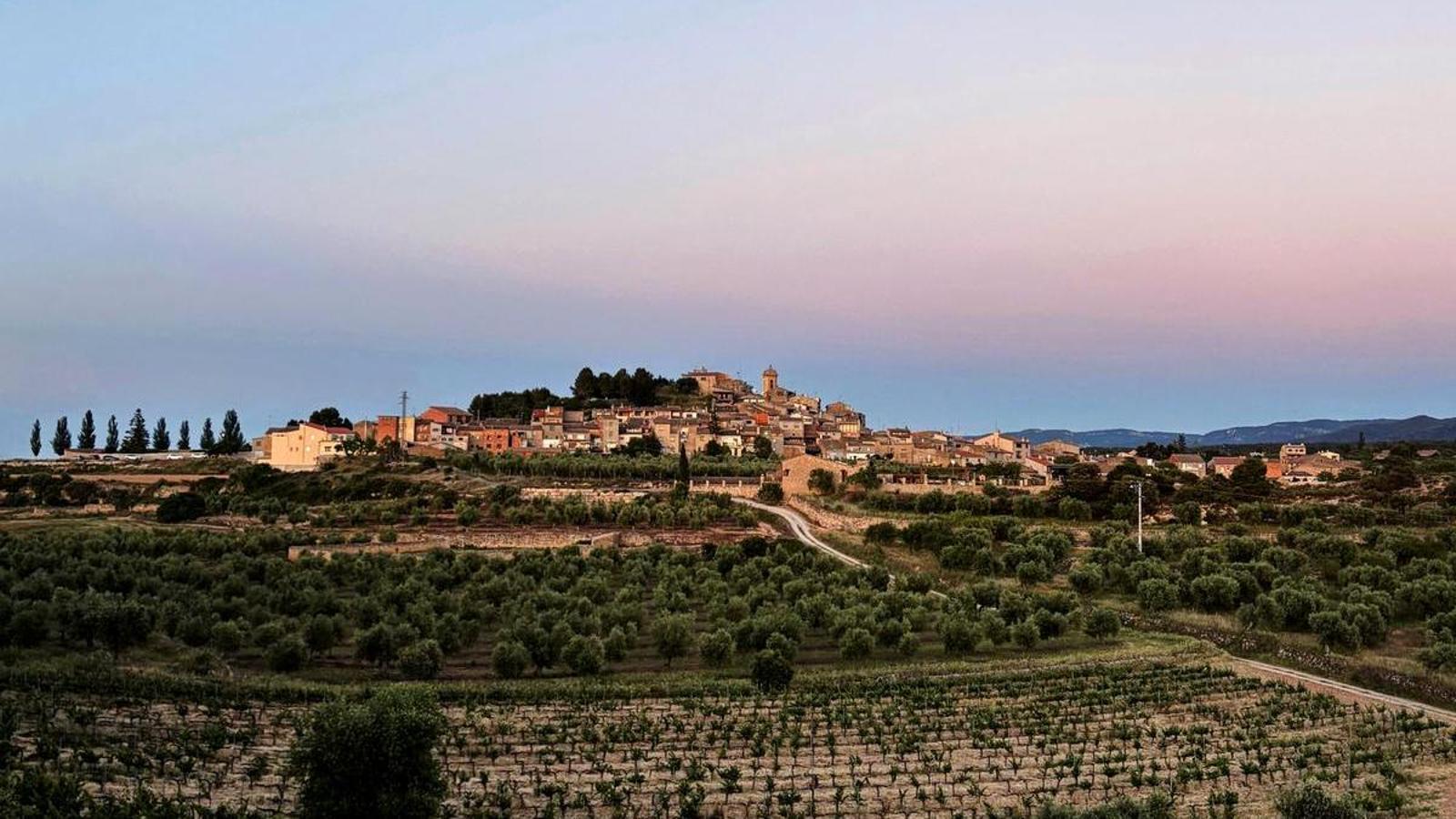
“I don't remember any year of my life that I haven't come to Vilosell,” says Georgina González. For her, returning every summer to her family's hometown is much more than a tradition. It's a part of her life. There are lunches with friends, sunsets, and summer festivals. And, over the years, she has also found her own group of friends, one of those things that aren't always easy to build in a small town.
Georgina's story is that of many generations who have learned to love a town because their family has always returned there. But it is also a reflection of a broader trend. Since COVID, inland tourism and, especially, rural tourism have gained prominence as an alternative to more crowded destinations. The family town and rural tourism start from different motivations, but they end up sharing the same idea: looking for a place to slow down.
Another pace for holidays
After the pandemic, the way of understanding holidays changed. The search for open, quiet, and less crowded spaces gave more visibility to rural destinations and small municipalities. And, although rural tourism continues to represent a small part of the total tourist activity, it already has a significant enough weight to show this change in trend. According to occupancy surveys from Idescat and INE, tourism in registered rural houses represents approximately between 1.5% and 3% of the global tourist share in Catalonia. But, despite this, this year its average occupancy has grown by 7 points compared to last year.
The data that best illustrates the current moment is, in fact, that of occupancy. This year, Catalan rural accommodations have achieved an average occupancy of 65%, seven points more than the previous year. It is a percentage that helps to understand that, even though rural remains a niche within the overall tourism sector, there is increasing interest in this type of getaways.

Martí Sarrate, general director of Juliatours of the Julià Group, relates it to a set of factors that go beyond the pandemic. The increase in gasoline prices, inflation in general, and other costs have favored local tourism, but there has also been a change in travelers' priorities. "Domestic tourism grows every year: geopolitical problems and increases in fuel prices lead people to resort to more local tourism," he explains.
But money or distance do not explain everything. The pandemic also changed what travelers expect from their holidays: “Since covid, more and more people want to have personalized trips, new experiences, increasingly related to nature, and trips to rural areas are among the most sought-after options,” assures Sarrate.
It is a demand that fits particularly well with small towns. Where large destinations offer an infinity of activities, micro-towns can offer precisely the opposite: less noise, fewer people, and an experience more linked to the territory. Sarrate points out that, faced with the overcrowding of large cities and coastal areas, more and more people are looking for "pacification and tranquility".

This need for disconnection also has a psychological explanation. Àlex Letosa, director of the Camina Center and member of the Clinical Psychology Section of the Official College of Psychology of Catalonia, observes that many destinations that had been associated with rest no longer always manage to convey this feeling. “Increasingly, one of the consequences of hyperconnectivity is the search for quiet holidays or a sense of belonging,” he says.
You can travel very far and, on the other hand, not manage to disconnect. “Highly touristy holiday spots are not responding to this need for people to seek experiences, but also tranquility, and to get away from big cities, from cold spaces,” explains Letosa.
It is here where small towns can offer more than just a landscape. They can offer a sense of belonging.
A tradition that is passed down from parents to children
To understand why some families keep returning to the same village for decades, we must go beyond tourism. We need to talk about memory. Children can inherit a place that their parents already considered theirs, and grandchildren can end up feeling a territory where they have only spent a few days each summer as their own.
"The feeling of belonging comes with the stories they tell us from childhood, from a young age," explains Letosa. Stories about where their grandmother was born, what streets she used to walk down, or what she did during the town festival allow a place that we don't really know well to become, in a way, part of our imagination.
Family memory thus transforms a physical space into a story. "Sometimes, even if it's a place you've never set foot in, that you've never seen, but about which you've been told stories or seen photographs, it evokes a feeling of belonging, of familiarity," explains the psychologist.
Therefore, the bond with a village can survive even when the relatives who lived there disappear. The place remains associated with the narratives that have been passed down, and with each visit, the new generation adds their own memories. What was a grandmother's story ends up becoming a story shared by children and grandchildren.

Letosa considers that this mechanism is especially important for understanding the sense of belonging: “The fact that there is a story behind it makes the bond and belonging easier.” You don't need to have lived the whole story to feel it as your own. It is enough that it is a real story, told within the family and linked to a specific place.
This transmission also explains an apparent contradiction: how can one feel nostalgic for a place where one has hardly lived? Letosa's answer lies precisely in the human capacity to turn family narratives into personal experiences: “Through family memories, personal constructions are created that form part of our reality”.
This relationship with the family village can also have an economic dimension. According to the Idescat Survey on Living Conditions for 2025, 29.4% of the Catalan population could not afford even a week of vacation per year. For some families, having a family village to return to can facilitate a more affordable vacation alternative. But reducing everything to price would be to only get one part of the story. If these families return year after year, it is because, in addition to having a place to go, they have a story.

A village can be a destination for those seeking calm, but it can also be a part of the identity of those who return every summer, and that is exactly what happens to Georgina. Vilosell is not just her family's village. Over time, it has also become hers. She has made friends, accumulated her own summers, and built a relationship that no longer depends solely on inherited memories. That's why she says that “a village is made by people, not streets”.
Explore the old town: Wander through cobbled streets, covered passages, and less-traveled corners to admire traditional architectural details.Go for a local hike: Follow rural paths or trails that lead directly from the village to viewpoints, natural springs, or nearby hermitages.Try local gastronomy: Have lunch at a local bar or restaurant to sample homemade dishes, regional cured meats, or seasonal products.Discover local crafts and shops: Buy products from small pottery or carpentry workshops, or shops selling locally made goods (oils, honey, cheeses, or wine).
