Trump, referee of the Israeli elections

-
CAT -
CAST
The results of the Israeli elections forecast an even more polarized political situation. In this context of confusion, the figure of Donald Trump emerges as an arbiter, and it must not be forgotten that the President of the United States has always shown particular deference toward the Prime Minister, Benjamin Netanyahu.
During the campaign, Trump has personally spoken in favor of Netanyahu, at the request of the Israeli leader, and has even explicitly asked for the voters' support. The debate remains open regarding the influence his words have had on voters, but the fact that Netanyahu has requested Trump's support twice in a few days indicates that the Prime Minister places weight on the American president's electoral aid.
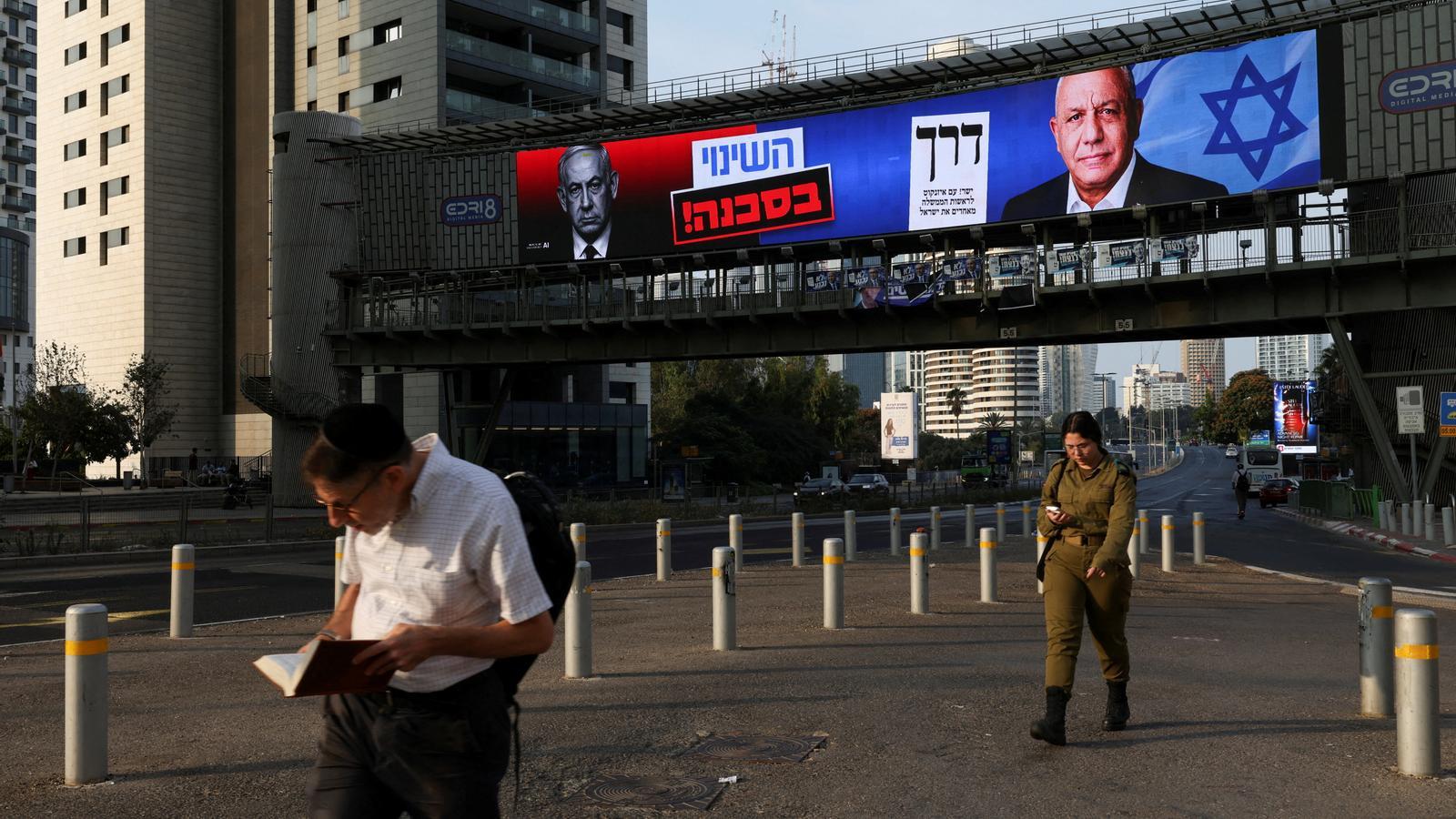
A government of the opposition bloc led by Gadi Eisenkot does not seem viable because it would require the tacit support of the Arab deputies. A similar coalition would face a hostile and even Islamophobic Jewish public opinion that demands a strictly Zionist government, that is to say, a coalition of Jewish parties that can govern without relying on the Arabs.
This hypothesis would lead to the formation of a precarious government and its daily life would be unstable, with a continuous and considerable drain on the decisions made by Eisenkot and his allies, and, therefore, it seems reasonable to rule out such a coalition. But if this option is ruled out, Netanyahu cannot form a coalition either with the current distribution of seats in Parliament, unless he recruits more than half a dozen deputies from the opposition bloc.
Rotation government?
Consequently, there are two viable options: calling for new elections or forming a unity coalition between Netanyahu and Eisenkot, which is where Trump enters the scene. The day after the elections, the White House said that the president is not currently considering intervening in the negotiations between the Israeli factions. But that could change if Netanyahu asks him, a possibility that the prime minister has on the table in the direction of creating a rotation government with Eisenkot for two years each.
Two days before the elections, Eisenkot solemnly reiterated that in no case would he form a coalition with Netanyahu, and added that before doing so he would resign. Despite these clear words, the former general could justify a change of opinion by invoking the supreme interest of the country, arguing that Israel needs stability and a responsible Zionist majority coalition. On Thursday, Eisenkot said that he wants a Zionist government that recruits young ultra-Orthodox for the army and that creates a state commission of inquiry into the events of October 7, 2023. These approaches can be interpreted as a starting point in a possible negotiation with Netanyahu.
If Trump pressures Eisenkot in this direction, at Netanyahu's request, which is possible, we will have a unity coalition. And Eisenkot could save face by negotiating a government program acceptable to everyone on some debatable issues, such as halting the controversial judicial reform promoted by Netanyahu.
The second scenario is that of a new call to the polls. In the first place, the president, Isaac Herzog, will have to organize consultations with the parties, a process that could last two or three months. Herzog is in favor of a coalition government, so between him and Trump, they could lead the situation down this path. In Israel, almost everyone agrees that new elections would benefit Netanyahu. In any case, these are the two scenarios that seem most viable today, but they could change in the coming weeks.
