The president of Israel tasks the opposition member Gadi Eisenkot with forming the new government
Herzog has chosen the former military chief after 67 deputies gave him their support, in some elections that have left the country without a clear majority

-
CAT -
CAST
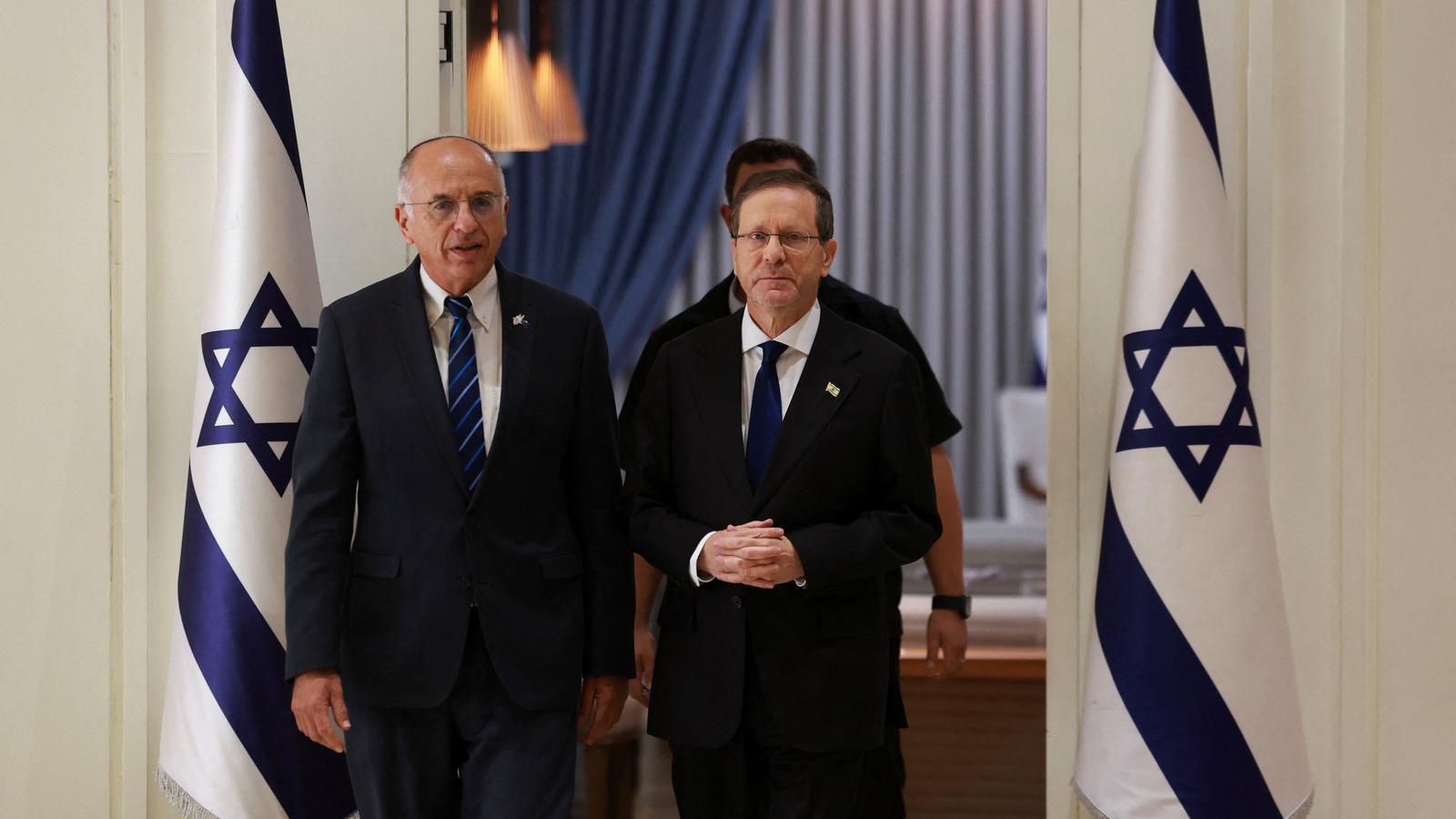
JerusalemThe President of Israel, Isaac Herzog, has tasked Gadi Eisenkot, leader of the Yashar party and main political rival of Benjamin Netanyahu, with forming a new government. The decision was announced this Saturday, after several days of consultations with the political forces that emerged from the October 27 elections. "I will do everything possible to be worthy," wrote Eisenkot on X, where he called for the formation of "a national emergency government."
During the consultations, 67 out of the 120 members of the Israeli Parliament recommended that it be Eisenkot who attempts to form the next executive. In contrast, 46 supported the continuation of Netanyahu, while the seven representatives of United Torah Judaism, an ultra-Orthodox party that has traditionally been an ally of the prime minister, did not recommend either of the two candidates.
Obtaining the presidential mandate is, however, only the first step. The 67 votes that Eisenkot received add up the 48 deputies of his opposition bloc and the 19 from the Arab parties, but they do not guarantee that he can form a governing coalition. In fact, three of the four parties in the opposition bloc have expressed reluctance to form a government that depends on the Arab parties, despite the fact that the support of these groups is decisive to allow him to govern as a minority with external support.
Among the opposition leaders, the leader of The Democrats, Yair Golan, is the one who has shown himself most open to exploring cooperation with the Arab parties of the Joint List and Ra'am. In contrast, former Prime Minister Naftali Bennett and Avigdor Lieberman have flatly rejected the idea of the future government depending on the votes of the Arab parties.
Netanyahu calls for a "national unity" government
Shortly before Herzog's announcement, Netanyahu once again called for the formation of a national unity government. The prime minister warned that an Eisenkot executive with the support of the Arab parties would endanger Israel from within and would not combat Hamas. He also advocated for a broad government with his party, the Likud, and his current ultra-nationalist and ultra-Orthodox partners. Yashar's response was not long in coming. The party accused Netanyahu of hypocrisy and challenged him to demonstrate his commitment to unity by breaking the alliance with the most radical factions and accepting Eisenkot's four political principles. According to the party, if the Likud and its allies are truly interested in a broad government, they must show themselves willing to integrate into an executive presided over by the opposition leader.
Herzog has summoned Eisenkot to the presidential residence this Sunday at five in the afternoon, to formalize the mandate. From that moment on, the leader will have 28 days to attempt to form a government. If he needs more time, the president may grant him an extension of up to fourteen additional days. The negotiations will force him to choose between depending on the support of the Arab parties or lowering his demands to include the ultra-Orthodox deputies.
This Friday Lieberman, who has made the demand for mandatory military service for ultra-Orthodox men one of the axes of his party, left the door open to negotiating with the ultra-Orthodox factions to unseat Netanyahu and prevent the new executive from depending on the support of the Arab parties. An option that poses a significant contradiction: the incorporation of the ultra-Orthodox would force negotiations on issues such as the military service exemption for religious students, one of the main discrepancies between the "change" bloc that advocates for equal military service for everyone, and the ultra-Orthodox factions, which want to maintain the exemptions.
