The game of alliances brings Netanyahu's exit closer
One of the ultra-Orthodox parties opens the door to joining the opposition bloc, which has already closed agreements with two parties

-
CAT -
CAST
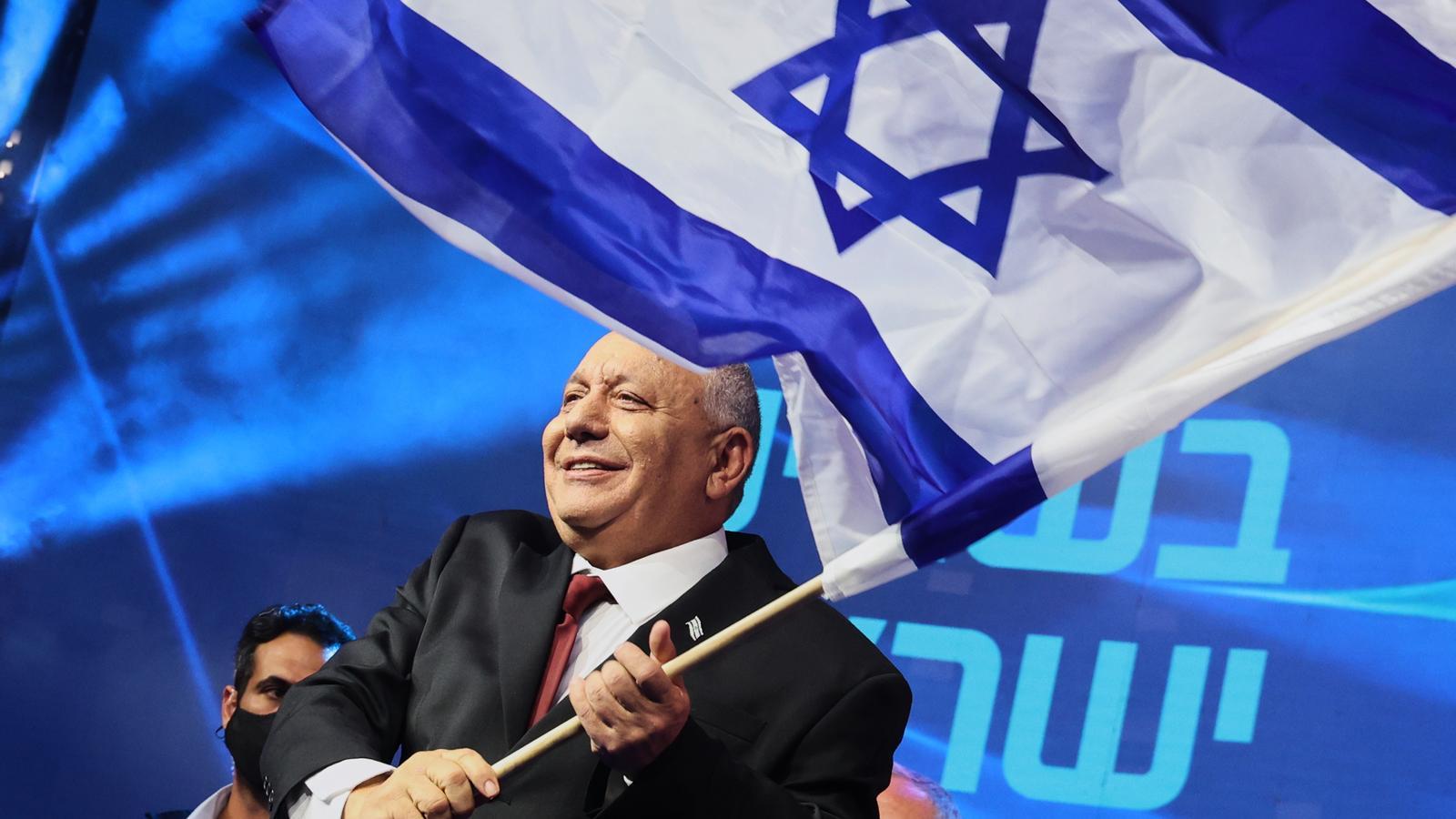
JerusalemBenjamin Netanyahu has not yet lost power, but, for the first time since the elections of October 27, his exit is beginning to take shape. His main opponent, the former chief of staff of the Israeli army, Gadi Eisenkot, is succeeding in bringing together parties of the secular right, the center, and the left, and has opened a negotiation that until recently seemed difficult to imagine: the incorporation of the ultra-Orthodox into an alternative government.
Eisenkot, who was tasked by President Isaac Herzog to form a government, has formally concluded agreements this week with two factions of the so-called change bloc: Yisrael Beiteinu, Avigdor Lieberman's right-wing party, and The Democrats, Yair Golan's left-wing party. The agreement with Golan, announced Thursday after a brief stall in talks, provides for four ministerial portfolios: Interior Security; Labor and Social Affairs; Communications, and Culture and Sports. The negotiations had stalled, in part, due to Golan's discomfort with the contacts the former military officer was maintaining with Likud, Netanyahu's party, to explore a possible unity government.
As for Lieberman, although the details of the agreement have not been made public, Israeli media suggest that he would take on the Ministry of Defense, while his party would also obtain the Justice and Immigration portfolios. If he manages to close a pact with B’Yachad, Naftali Bennett’s party, Eisenkot would consolidate a bloc of four parties that would total 48 deputies. Although it would still be far from the 61 seats necessary to achieve a majority in the Knesset, the Israeli parliament, in recent hours a path has opened that could be decisive for his aspirations: negotiations with one of the ultra-Orthodox parties.
Dangerous Liaisons
United Torah Judaism, the ultra-Orthodox formation that holds seven seats and that has traditionally been an ally of Netanyahu's governments, has taken an important step this Friday. The rabbinical leaders of Degel HaTorah, one of the two factions of the party, have authorized the opening of official negotiations with Eisenkot. The movement comes after both sides reached a principle of understanding on an issue that for years has been one of the great conflicts of Israeli politics: the exemption from military service for ultra-Orthodox students.
According to the Israeli public broadcaster Kan, the framework currently being negotiated would not set enlistment quotas for the ultra-Orthodox community, but would strengthen control mechanisms to verify that students in yeshivas exempt from service are truly dedicated to studying the Torah. It would also include a commitment from rabbis to encourage men who are not engaged in religious study to enlist.
If Eisenkot manages to incorporate this party, his bloc would reach 55 deputies and could attempt to govern with the external support of the Arab factions, without them having to join the executive: it would be enough for them to abstain in the investiture vote so that the former military man could obtain more votes in favor than against. But the concessions to the ultra-Orthodox have a considerable political cost. During the campaign, Eisenkot and his partners had defended putting an end to the generalized exemptions for religious students, a particularly sensitive demand after three years of war on multiple fronts.
Furthermore, maintaining any formula for exemption from military service may be unacceptable to some members of the future coalition. It is here that one of the main fractures of the anti-Netanyahu bloc becomes evident. Naftali Bennett, leader of B’Yachad, has postponed the meeting with Eisenkot until Sunday due to discrepancies over military service for the ultra-Orthodox. According to the Israeli media outlet Walla!, Bennett has postponed the meeting because Eisenkot’s negotiating team has not provided him with the details he requested regarding the guarantees and benefits planned for those who do fulfill military service.
For Bennett, who has placed the defense of those who perform military service at the center of his electoral program, accepting an agreement without guarantees for the soldiers could have a significant political cost. The leader of B’Yachad has defended measures such as 50% discounts on utility bills and municipal taxes, subsidies for the purchase of a first home, the withdrawal of aid to households in which none of the members participate in military service, among others.
Bennett, therefore, considers the incorporation of the ultra-Orthodox problematic and continues to keep another formula open: a unity government with Likud. In this scenario, the parties would agree on a rotation in which Eisenkot would be prime minister in a first stage and Netanyahu would occupy the position afterwards. Besides this, Bennett would be unhappy with the distribution of the most important portfolios because he aspired to obtain the Ministry of Defence, but Eisenkot would have agreed on this portfolio with Lieberman.
Despite the tensions within the bloc for change, Eisenkot has just enough time to close the agreements. He has until December 6th to present a government proposal, although he can request a fourteen-day extension from President Isaac Herzog. This Friday, he asserted that he wants to have the government ready before the first deadline ends. If the negotiations with the ultra-Orthodox, the Arab parties, and Bennett succeed, he could bring the new executive to an investiture vote as early as next week.
