Bukele crosses borders and extends the iron fist to Haiti, where he is received as a savior
El Salvador deploys the army in the country and attacks armed groups with the collaboration of the authorities given the ineffectiveness of international missions
-
CAT -
CAST
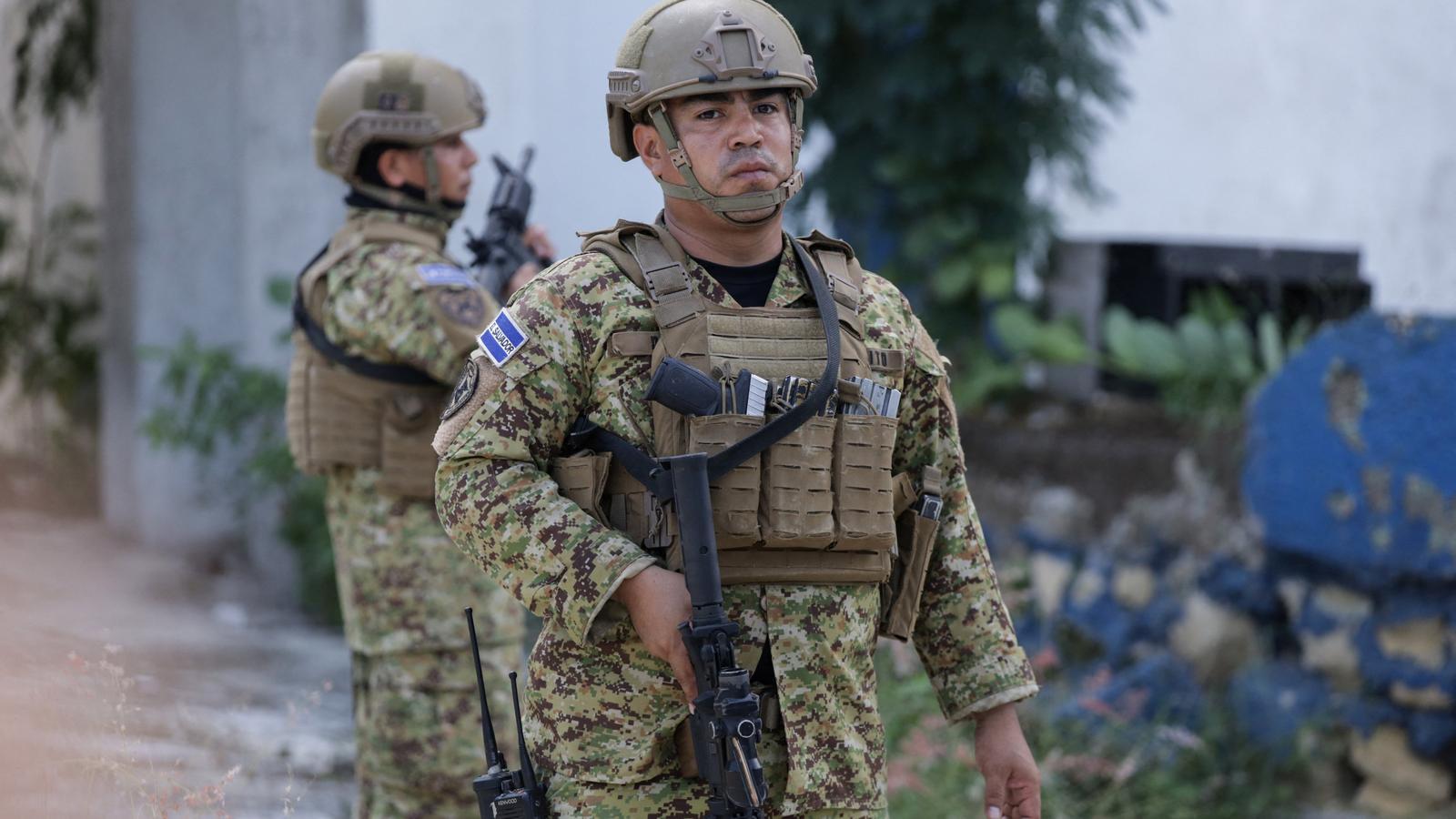
BarcelonaIt was supposed to be an operation to rescue four soldiers allegedly kidnapped by armed groups, but it has turned into a broad and sustained foreign military deployment. Since the end of October, the El Salvador army has spread across Haiti in collaboration with Haitian police forces. In an action driven by Salvadoran President Nayib Bukele, 2,000 soldiers are carrying out attacks against armed groups, and part of the population, fed up with the almost chronic state of interim status in which the country finds itself, shows support in street demonstrations for the foreign deployment, which is being carried out outside of the UN mission in the country.
Since the assassination of its president in 2021, Haitians have seen how the international missions deployed within their borders have been insufficient to redirect the situation. The United Nations has 1,500 troops deployed there, and the mission has been renewed until the spring of 2027. Even so, the state has been retreating from public life for years, and has proven incapable of confronting the armed groups, which have gained a presence in various spheres, and have left the daily lives of Haitians conditioned by public insecurity.
Armed groups are fighting for control of various areas of the country, including the capital, Port-au-Prince, in combats that leave thousands dead each year. This year, between January and September, at least 4,595 people have lost their lives in the country, according to UN data, which also record 1,497 cases of sexual violence against women and girls. Furthermore, it is estimated that since 2022 approximately 1.5 million Haitians have had to leave their homes.
Bukele's entry into the country
It is the perfect scenario for Bukele, who defends an iron-fisted approach against armed groups in the region, even if it involves bypassing any legislation, state or international. In this case, the deployment of troops in Haiti has the support of the interim government, but the problem that the action poses is that the armed forces respond to the mafias with practices very similar to their own, and there is increasing evidence pointing to the fact that the operation goes beyond the rescue of the four allegedly kidnapped soldiers.

Far from the initially declared objective, last week Bukele claimed that his forces had destroyed the luxury residence of the leader of an armed group. In a message on X accompanied by images of the moment of the attack, he presented it as a “gift to the Haitian people”. Days earlier, at a significant distance from the point where Salvadoran soldiers disappeared after being attacked, Bukele's military expelled the gangs that controlled one of the country's main stadiums and established an operations center there.
All these actions, especially the most symbolic ones, are accompanied by a significant dose of propaganda, in which the Salvadoran forces flex their muscles and boast of pushing back the gangs. And Bukele not only shows pride in controlling more and more points in the country. The Salvadoran presence in Haiti has also been reinforced through political pacts, for example, with an agreement to build three new prisons in the country with the participation of El Salvador, the result of a visit by the Haitian Minister of Justice and Security to Salvadoran penitentiary centers.
An operation without guarantees
Beyond the abuses that Bukele may commit against the mafias, the lack of an international umbrella is particularly concerning due to the impact of the operation on civilians. The actions of the Salvadoran president, often outside the scope of the law and replicating the practices of the mafias, in which the death of civilians is presented as a lesser evil, are worrying because of the precedent it may set in the region, and it raises a delicate question that is difficult to answer: who will answer for the dead civilians?

The uncertainties are also significant regarding the geopolitical implications of this offensive. Bukele has received the support of Donald Trump, with whom he shares ideological common ground, and after the military operations on the continent – the attack in Venezuela, but also the bombing of alleged narco-speedboats in the Pacific and the Caribbean– and the interference in the majority of Latin American countries, another question arises: with the operation in Haiti, is a new avenue of intervention by Washington on the continent opening up? At this moment, the majority of experts suggest it is too early to determine this, since despite common interests, there is no clear evidence of coordination or discussions prior to the operation between the US and El Salvador regarding this matter.
The UN mission has the objective of guaranteeing public safety in the short term, but ultimately international missions seek to create the conditions for Haiti to be able to hold elections – currently delayed at least until July 2027 – and so that the day after the elections, the elected government and the entire public apparatus can carry out their functions as little conditioned by the mafias as possible. The fact that it is a state and not an international mission that is now attempting to guarantee security generates suspicion, especially due to the fact that Bukele could act in accordance with his own national interests, which can easily conflict with a state fully recovering its sovereignty. For this reason, the operation raises a final question, also difficult to resolve: what will happen when the army of El Salvador withdraws from the country? And even: who guarantees that Bukele's military will leave Haiti in the future?
