Michael Ludwig: “The key to our model is that we have never privatized our housing stock”
Mayor of Vienna
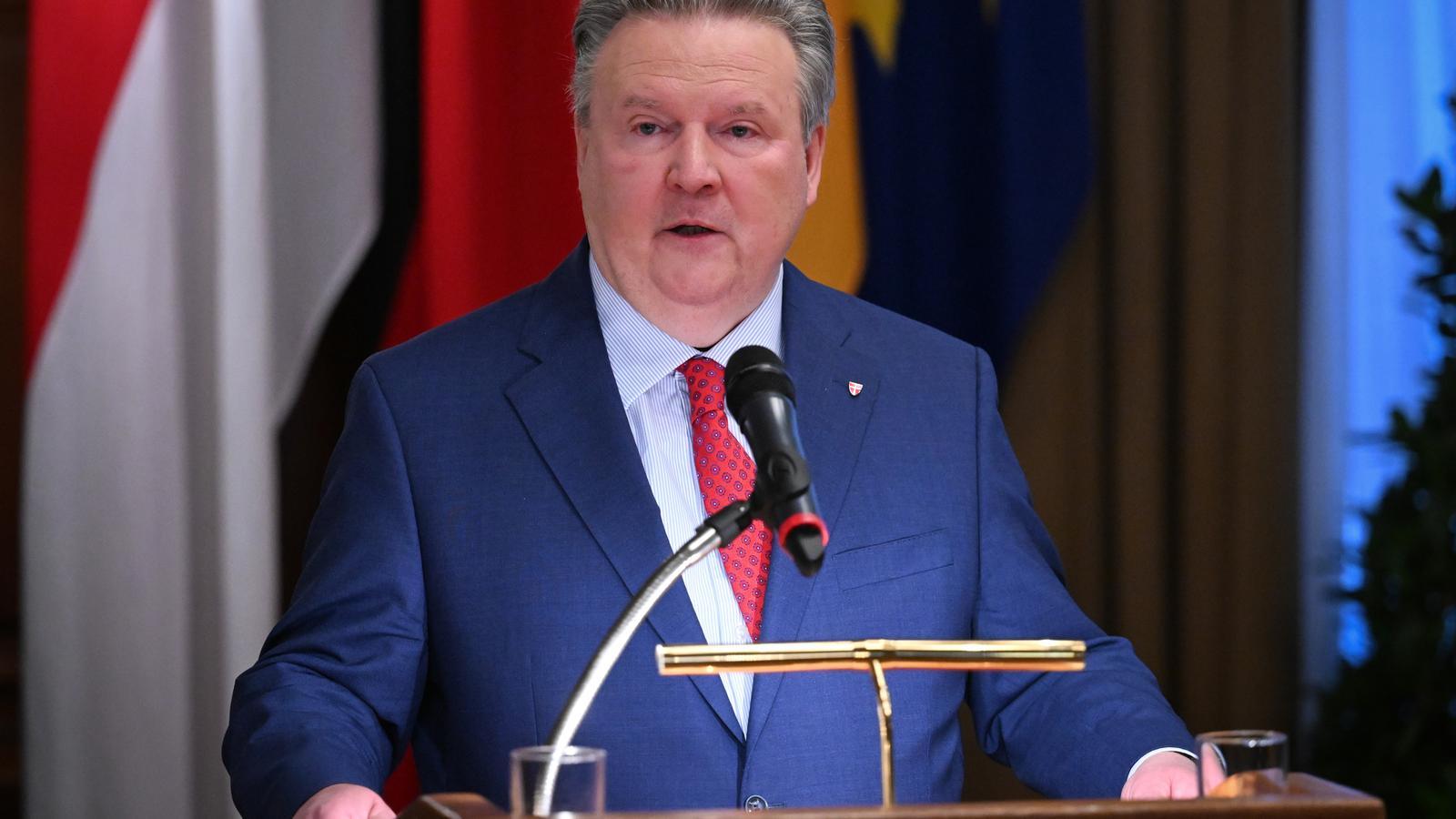

MadridThe Spanish president, Pedro Sánchez, called for snap elections on October 5th with the pretext of housing, and often, the left cites the Viennese model as an example. However, what does it consist of? Is it importable? L'ARA interviews Michael Ludwig, the Social Democratic mayor of Vienna, to find out.
In the Spanish political debate, left-wing parties have held up Vienna as a model to follow regarding housing. What are the three keys to the model?
— First, in Vienna housing cannot be a luxury, but a fundamental right. Being able to live in a good house should not depend on how much you earn. For this reason, for more than 100 years, in Vienna we have invested in municipal and protected housing. Second, we want a city with social diversity, where there are people of different generations, professions, and incomes living side by side. Third, we do not simply build housing, we create complete residential environments. This means providing green spaces, open areas, and good transport connections, in addition to schools and kindergartens. Using, at the same time, environmentally friendly construction materials.
Given that the Viennese model has been built with more than a century of continuous public policies, could Spain now import your model as a solution for the urgent housing crisis?
— The social and affordable housing model of Vienna is now regularly recommended by the Organisation for Economic Co-operation and Development. What matters most is starting and pursuing this policy consistently over the long term. Spain does not have to wait a hundred years: it can start today by making public land available for the development of non-profit housing and ensuring long-term investment in this sector.
How have they managed to maintain this public policy in the long term?
— The most important factor is that we have never privatized our housing stock, not even in part. This has saved us from many of the effects of the crises that other large cities have suffered. Our political rivals accused us of not knowing how to read the signs of the times. Today it is evident to everyone that our decisions were absolutely correct.
Who can access the public housing stock? Only the people of Vienna or also foreigners?
— Access to social housing in Vienna is open to people who meet certain criteria. Applicants must have their main center of life in Vienna and meet the corresponding legal requirements. This means having Austrian citizenship or an equivalent residence status. We have also introduced a points-based system for allocating apartments. It assesses each applicant's individual housing needs and allows us to offer suitable accommodation according to the urgency of their situation. This helps ensure that housing reaches those who need it most.
How do you finance the public housing stock and what role does the private sector play?
— The public sector sets social and housing policy objectives, but it does not need to finance, build, and manage every housing project on its own. In 2018, we introduced a new urban category for social housing. This means that whenever land is rezoned for residential development in Vienna, two-thirds of the apartments built there must be protected and, therefore, affordable. In Vienna, the city council collaborates closely and in a spirit of trust with non-profit housing developers and private companies.
And what about flats that are not part of the public or protected housing system? Are rents in the private rental market also regulated?
— Several studies have shown that a strong municipal public housing stock also helps to moderate private market rents, where we also want affordability to play a central role. In addition, Vienna has a significant stock of old privately owned apartments, where rents are also subject to strict regulation. Another key element is a comprehensive system of tenant protection. For example, a specific Tenant Assistance Service, which offers free advice and legal representation. This helps ensure that the rules are followed.
The Spanish government has introduced measures to suspend evictions in certain cases affecting vulnerable households. However, this has also generated controversy, as some landlords argue that these protections make them reluctant to rent out their properties because they fear unpaid rent.
— In Vienna, our goal is to prevent people from losing their homes before the situation reaches the point of a forced eviction. We have financial aid programs and social services that can intervene when people find themselves struggling to pay rent. In the worst-case scenario, eviction prevention services intervene to ensure that those affected do not lose their home. The costs of homelessness and the resulting consequences are far greater than the investment needed to prevent it.
Many European cities, including Barcelona, suffer from the impact of tourist accommodation and short-term rentals on housing availability. What measures has Vienna introduced in response to tourism pressure?
— In recent years, Vienna has deliberately adopted a stricter approach towards short-term tourist rentals. Anyone advertising accommodation on platforms such as Airbnb can only rent it out for a maximum of 90 days per year without a change-of-use permit. Furthermore, registration will be mandatory. Recently, some landlords have started converting their short-term rental properties into hotels in an attempt to circumvent our strict regulations. We have now also closed this legal loophole, just a few weeks ago.
What happens to people who aspire to own a home?
— Our ambition is to create a city where people can afford to own a home if that is what they want. But it should not be necessary to buy a property to enjoy a secure and high-quality home in the long term.
The population of Vienna has grown significantly in recent years. How does this demographic growth impact the rental market?
— It is clear that Vienna is facing major challenges. We need a solid public housing policy, efficient non-profit housing developers, and reliable long-term financing. We are also developing completely new urban districts, with good public transport connections.
