The professionals of politics: who will have been in Congress and the Senate for 40 years?
There are seven politicians who have been in the Courts for more than 30 years, but last legislature the majority were novices
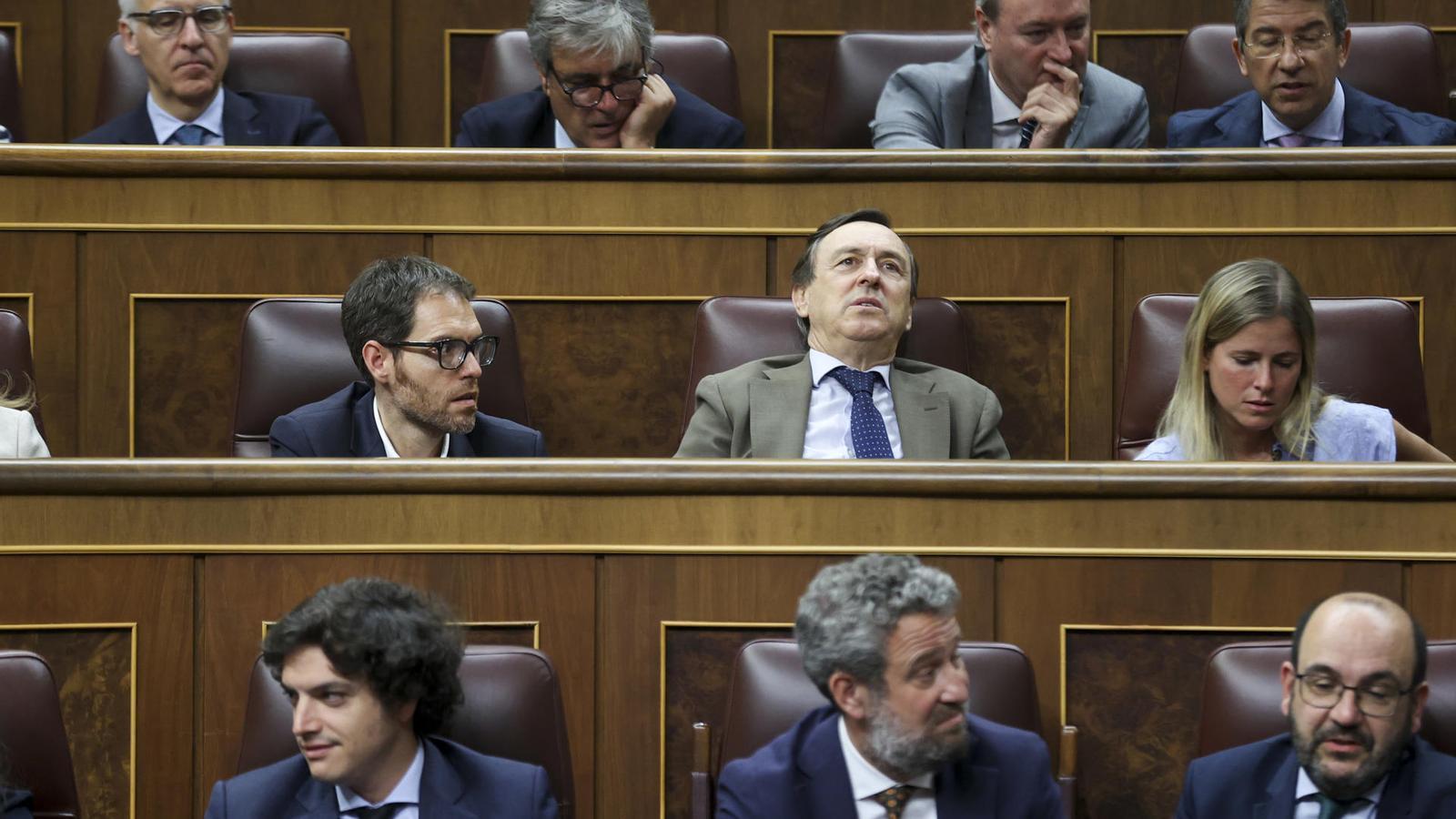
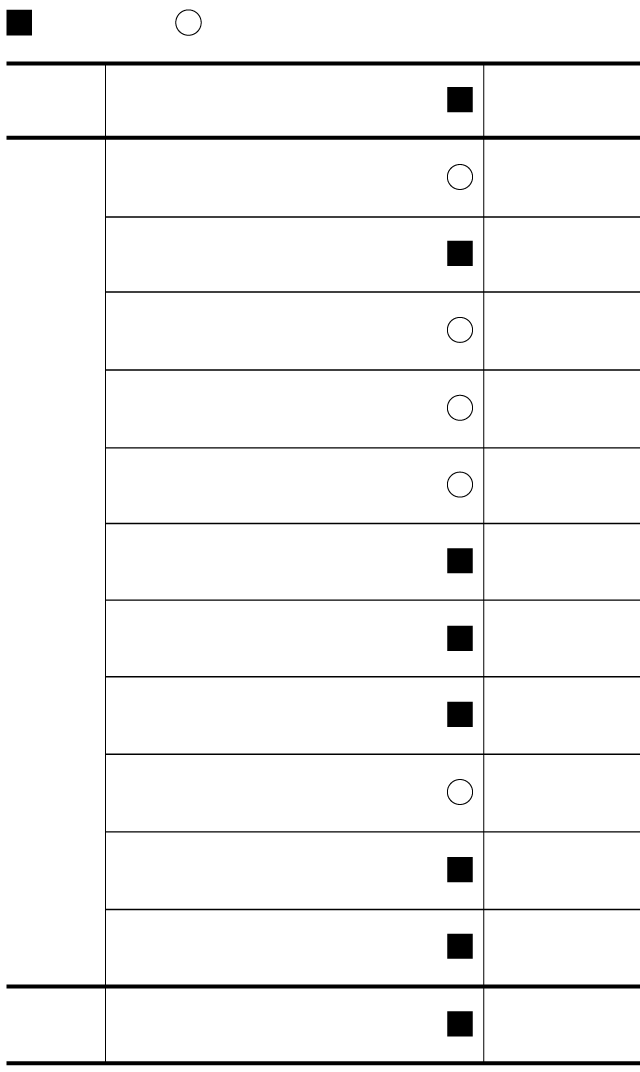
BarcelonaThe Spanish parliamentary activity presents a curious duality. Above, a narrow peak of members who entered Congress, with a cigarette in their hand, when the bullet holes in the ceiling were still fresh, to decide Spain's entry into the European Economic Community and to address the NATO referendum. Below, a large base of newcomers who are still wearing the parliamentary 'L' and for whom the hemicycle still seems smaller than they thought. And the fact is that, in the legislature that has just ended, the Congress and the Senate saw 308 new faces arrive, exactly half of the 616 total members, compared to the nine –1.46%– who have been there for ten or more legislatures.


Congress
Senate
C
S
Ignacio Gil Lázaro
38 years, 4 months
Vox
C
37 years, 10 months
Gonzalo Jesús Robles Orozco
S
34 years, 9 months
Rafael Antonio Hernando Fraile
C
34 years, 9 months
Francisco Javier Arenas Bocanegra
S
Luisa Fernanda Rudi Úbeda
34 years, 1 month
S
31 years, 4 months
Pío García-Escudero Márquez
S
31 years
PP
Carlos Aragonés Mendiguchía
C
28 years, 10 months
José Antonio Bermúdez de Castro Fernández
C
28 years, 10 months
María Sandra Moneo Díez
C
28 years, 10 months
Juan José Matarí Sáez
S
25 years
Celso Luis Delgado Arce
C
25 years
Carlos Javier Floriano Corrales
C
25 years
Rafael Simancas Simancas
PSOE
C
Congress
Senate
C
S
Ignacio Gil
Lázaro
38 years
and 4 months
Vox
C
Gonzalo Jesús
Robles Orozco
37 years
and 10 months
S
34 years
and 9 months
Rafael Antonio
Hernando Fraile
C
Francisco Javier
Arenas Bocanegra
34 years
and 9 months
S
Luisa Fernanda
Rudi Úbeda
34 years
and 1 month
S
Pío García-
Escudero Márquez
31 years
and 4 months
S
Carlos Aragonés
Mendiguchía
31 years
PP
C
José Antonio Bermúdez
de Castro Fernández
28 years
and 10 months
C
María Sandra
Moneo Díez
28 years
and 10 months
C
Juan José
Matarí Sáez
28 years
and 10 months
S
Celso Luis
Delgado Arce
C
25 years
Carlos Javier
Floriano Corrales
C
25 years
Rafael Simancas
Simancas
PSOE
C
25 years

Congress
Senate
C
S
Ignacio Gil
Lázaro
38 years
and 4 months
Vox
C
Gonzalo Jesús
Robles Orozco
37 years
and 10 months
S
Rafael Antonio
Hernando Fraile
34 years
and 9 months
C
Francisco Javier
Arenas Bocanegra
34 years
and 9 months
S
Luisa Fernanda
Rudi Úbeda
34 years
and 1 month
S
Pío García-
Escudero Márquez
31 years
and 4 months
S
Carlos Aragonés
Mendiguchía
31 years
PP
C
José Antonio Bermúdez
de Castro Fernández
28 years
and 10 months
C
María Sandra
Moneo Díez
28 years
and 10 months
C
Juan José
Matarí Sáez
28 years
and 10 months
S
Celso Luis
Delgado Arce
25 years
C
Carlos Javier
Floriano Corrales
25 years
C
Rafael Simancas
Simancas
25 years
PSOE
C
Most of the deputies and senators on the list will repeat in the next legislature, starting with the most veteran of all, Ignacio Gil Lázaro, a historic member of the PP who switched to Vox years ago. He is once again the head of the far-right list for Valencia and, if he completes the legislature, in 2031 he will have accumulated a total of 42 years in the Spanish Courts. There are seven politicians who have been in Congress or the Senate for more than 30 years.
In a volatile environment, experience is an asset that many defend as essential for the proper functioning of the State. Rafael Hernando, who is heading towards 35 years in the Cortes, and who is now running as number 2 for the PP for Almeria, is clear about it: “In politics too, being a professional is important” and he adds, in conversation with ARA, that “the chambers have a functional system that requires specialization and experience”. In the same vein, Antonio Silván, a popular senator, stresses that “experience brings serenity in times of noise”, and reflects on how political background allows one to appreciate a change in the nature of the debate: “Current politics has nothing to do with the traditional one. Before it was more reflective, now it is more impulsive. Politics is not the politics of the tweet or the cheap headline acting with aggression”. For José Zaragoza, a PSC deputy since 2011, this background translates into resources in a Parliament that is governed “by customs and traditions”. “The experience of knowing how things work means you have more means,” explains Zaragoza to ARA, who highlights that “people who have had long parliamentary lives are people who have been very appreciated and very valued; they have been essential”. Meanwhile, José Fernández Blanco, a socialist senator for seven terms, points out that “the passage of time gives a complete vision of the evolution of a whole series of matters” and that “veterancy brings conditions of tranquility and knowledge that is always positive”.
However, the experience is not free of dangers, and the protagonists themselves warn against complacency. Hernando warns: “Those of us who are veterans must not fall asleep and must also be on the street”, while Zaragoza provides a more critical view: “In selection processes, sometimes a reverse selection occurs, and the best do not survive, but the worst”. José Fernández Blanco closes the warning: “The illusion with which you start must be maintained. The moment it ceases to have a sense of service... it is better to leave it”, and recalls that “veterancy does not imply that you do not have to continue having the desire to learn”.
Intergenerational dialogue: freshness against blockage
“Errejón used to come to my office to ask me about everything,” highlights Hernando, explaining that, upon arriving, the Podemos deputies “had no idea, nor did they even know where they were supposed to sit.” The interviewees agree that the coexistence between the chamber’s veterans and the newcomers keeps parliamentarism alive. For the Popular Party deputy, “mixing experience with innovation is positive,” and he notes that “the young people who come bring other values, such as enthusiasm.”
From the socialist bench, Zaragoza analyzes this balance. “Political dynamics make it necessary to combine people with experience and people with strength”. According to him, the mix between “the experience that allows you to organize things and the novelty of those who let go when they arrive, is what makes parliamentary lives stay alive”, and warns that “a Parliament only of people with experience would not work due to a lack of connection with the most immediate reality, and a Parliament only of novices would simply get blocked because they would lack the capacity to govern”.
Since his youth, Jan Pomés, the youngest socialist senator in the last legislature, has been breaking stereotypes: “A young person can bring a very different vision. Other things can be tried and the results might be different” and warns that “when you get stuck in a job, the results can also suffer”. Pomés argues that “young people come very well-trained” and that they can surpass veterans in “language, technical, professional, and academic knowledge”.
The uncertain future of the “professional”
Despite the years accumulated in the chambers, the sense of transience seems constant. None of them planned such a long career. Antonio Silván confesses: “I never imagined myself where I have ended up,” an idea that Zaragoza seconds with a simple “No, no, it was a coincidence of life” and which José Fernández Blanco finishes by reminding us that Parliament is not a place to relax: “Whoever believes that you come to the Senate and Congress to rest, that is a bad sign... Whoever believes they will be there for their whole life, the same.” Jan Pomés, from his first term, closes the reflection with a look towards the future: “You don’t really know when you enter nor when you will leave. It is society itself that decides how long it wants you.”
