Rice and colonial ghosts on the banks of the Senegal River

-
CAT -
CAST
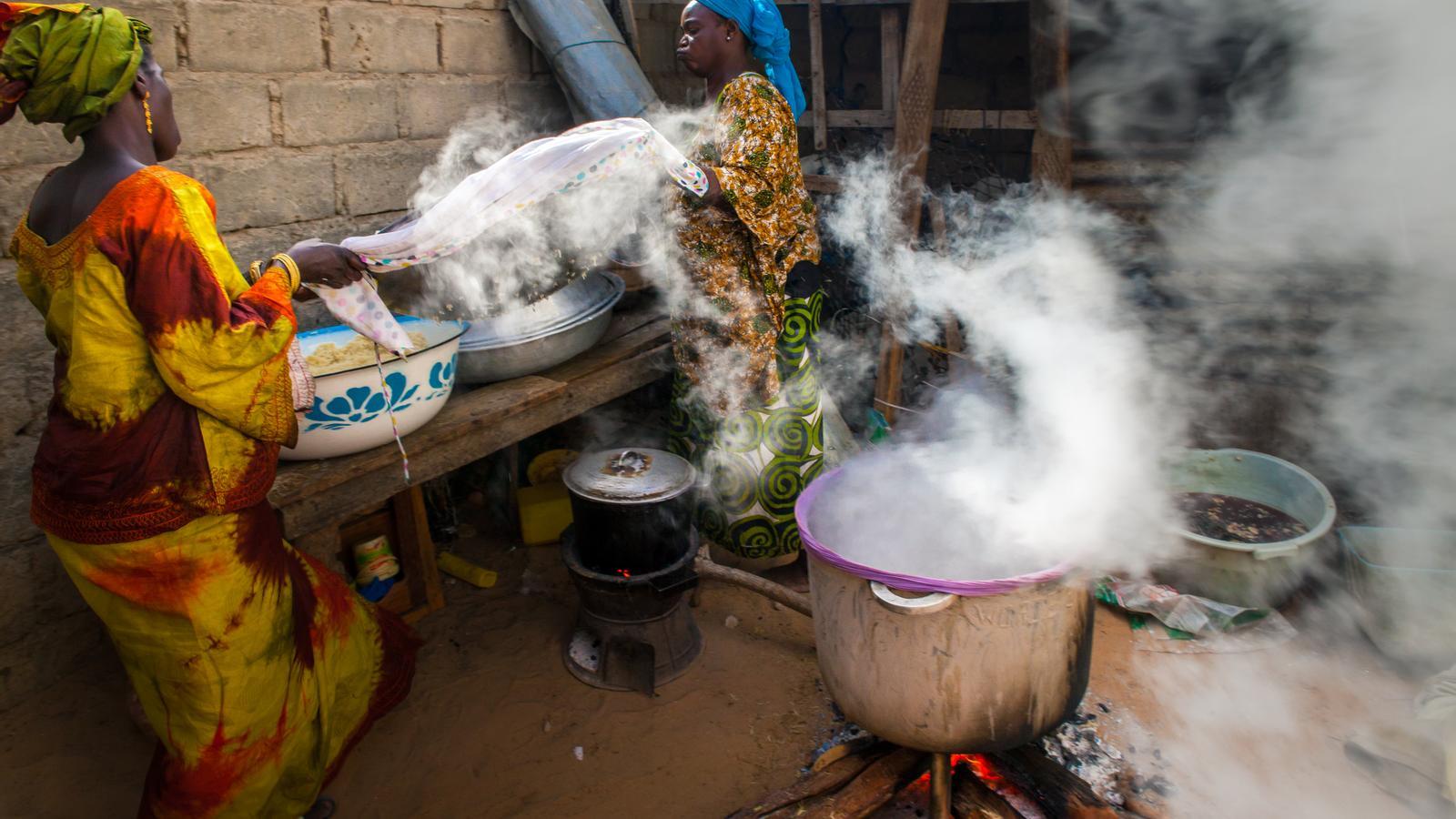
Few things explain a country more clearly than its cuisine. The available ingredients quickly summarize the history, politics, and economy of a territory; also its current affairs and its future perspectives. In Senegal, few dishes explain the country like ceeb au jën, which in Wolof literally means "rice with fish". These days I am in the north of the country with photojournalist Guillem Trius, following a series of stories linked to food and agricultural production on the banks of the Senegal River, the most important water artery in this country.

Rice here has a controversial history. Although it had already been cultivated in West Africa before colonization, the modern introduction was carried out by the French during the colonial period. They needed the Senegalese to leave behind the traditional cereals of their diet – millet, sorghum – to free up land that could be dedicated to growing peanuts and selling them to France. That is why they began to import from Indochina – another French colonial possession – broken rice, which until then had been used to feed livestock.
The Senegalese, in a display of adaptation and ingenuity, turned broken rice into the base of the main dishes of their cuisine, and many consider that it absorbs better the multiple sauces of Senegalese gastronomy. After independence, rice became a symbol of the new urban middle class: it was much easier to transport and prepare than other cereals, such as fonio. Today 60% of local consumption is rice imported mostly from Asia.
Senegal, however, has its own variety of rice, which these days we have been able to taste for the first time. The rice from the Senegal River valley is a whole grain, unlike the imported one, and the farmers in the Podor area, near the border with Mauritania, strive to sell it at the market they have a few kilometers away. We have spent a few days with them, visiting the projects of the Valencian organization CERAI, and thanks to this we have been able to taste a rice with fish with all the ingredients coming from Senegal.
It is not just a nationalist gesture, but a cry of alarm for survival. Senegal already spends about 800 million dollars on imported rice while the farmers who could feed the country lose tons of food in poorly conditioned warehouses. One of them explained to us that if they received the proper support from the government, they could generate the rice necessary to feed the entire country. They have a great internal enemy: rice importers, who thanks to the great economic and social capital they have accumulated, have great political influence.
European onions and milk powder
Podor, with a dry climate, about 200 km from the Senegalese coast, is a city marked by colonialism. From there, the French showed, thanks to a fort near the river, that that land was theirs, and that their sphere of influence would go far beyond the coastal cities. Leaving the colonial buildings behind, in the center of the city there is a market where onions and potatoes come from the Netherlands. The powdered milk, both in hotels and on shop shelves, comes from the European Union.
The farmers of the neighboring villages, with little state support and without a reliable transport network, have to compete with products subsidized by the European Common Agricultural Policy. A burden too heavy that they bear under an increasingly aggressive sun, and with increasingly irregular rainfall. In Podor, colonialism is no longer there physically, beyond the indelible imprint of the buildings, but the ghosts of the past continue to have a long shadow. The locals see them every day while they shop, cook, and eat.
