"If you are looking for a mail-order bride in Eastern Europe, you might be in for a surprise"
Maria Reva publishes 'The Last Trace', starring a biologist who breeds snails in danger of extinction in Ukraine until Russia invades the country

-
CAT -
CAST
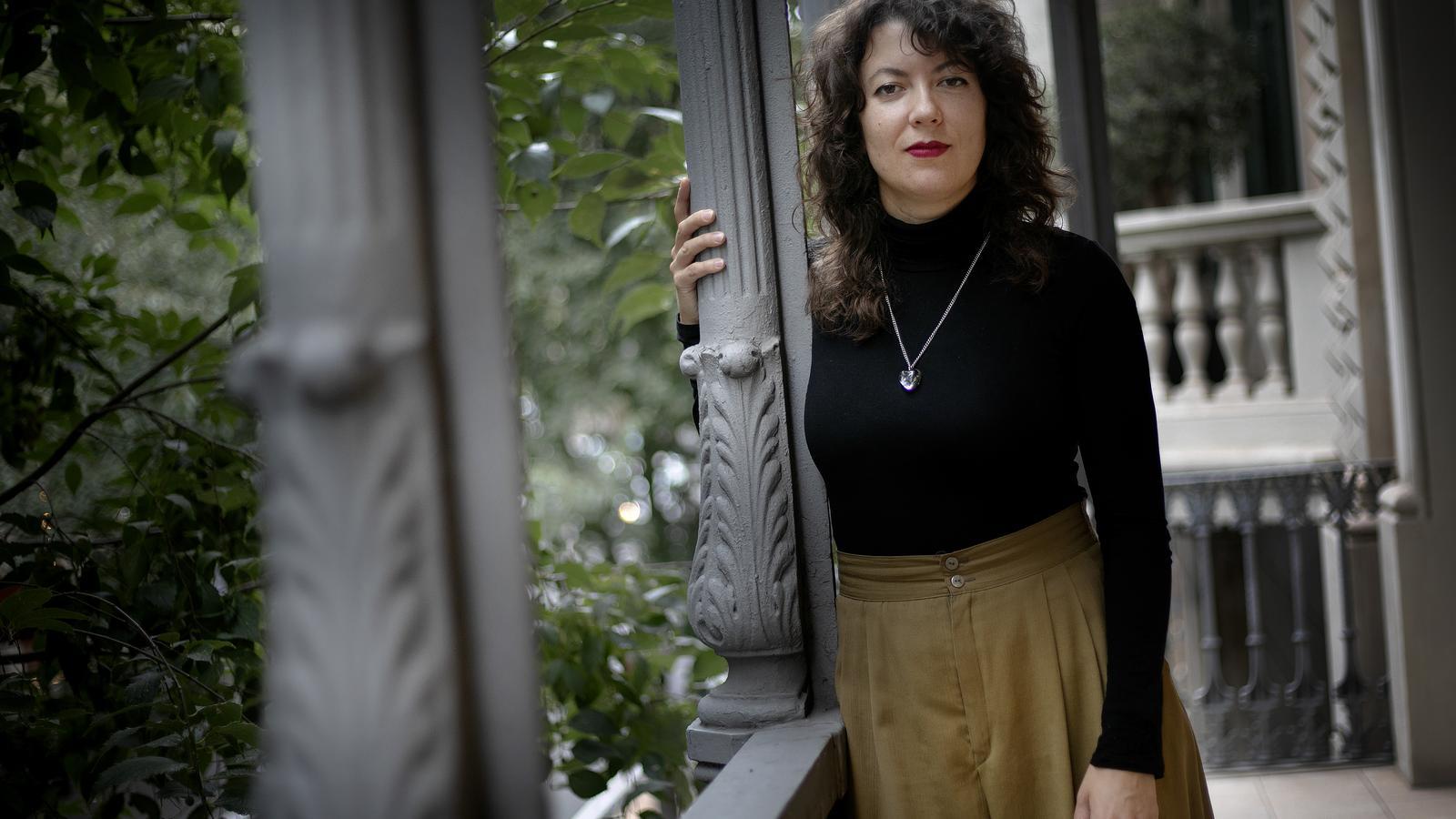
BarcelonaFew novels published this year start with a plot premise as curious, risky, and fun as The Last Trace, by Maria Reva (Kherson, 1989), which Periscopi is now publishing in Catalan, translated by Míriam Cano. It begins as the story of biologist Ieva's obsession with breeding endangered snails. It continues with the day-to-day life of Romeo Meets Yulia, the mail-order bride company where Ieva works to fund her research into gastropod mollusks. Through two sisters the protagonist comes into contact with, Nastia and Solomia, she agrees to kidnap a group of single men to denounce the misogyny of the business and, in the process, discover who is behind the mysterious disappearance of her mother. In the midst of the adventure, moreover, the novel implodes and transforms into a completely different book.
“If you want me to be honest, none of this was part of the initial plan for this novel,” comments the author. The Last Trace was born as an act of rage and revenge after what happened with my debut, Good citizens need no fear [Good citizens need no fear]. The book didn't even have time to fail, because it was released on March 10, 2020, the same day the WHO declared the COVID-19 pandemic and less than a week before the global lockdown.” Reva had spent several years explaining what life was like in Soviet Ukraine, which she learned about through the stories of relatives and neighbors in Kherson, where she grew up until, at age 7, she moved to Canada with her parents and sister.
“In just six weeks I had the first draft of the novel, which took place in a Ukrainian village where amber mines were discovered and the villagers began selling properties to do business,” continues Reva. “In that initial version, I dedicated 30 pages to the mail-order bride business. When I reread the manuscript, I realized that that part was the most interesting.” The author decided to reorient her project, and that was how she delved deeper into the characters of Nastia and Solomia. The first offers herself as a potential bride on the Romeo Meets Yulia website. The second is a translator. Both are looking to recover their mother, the feminist activist Iolanda Cherno, who has been missing for eight months after exposing the shadows of the business of connecting Western men with women from Eastern Europe.
Going in search of the perfect woman
“It is a topic that has embarrassed the women of these countries for a long time,” she asserts. “While growing up in Canada, I myself had to answer the question on several occasions. The vast majority of women have never been part of this game. During the process of writing The Last Trace I dedicated myself to reading many of these self-published books by Western men who explain their experience of going to Eastern Europe to find the perfect woman, because in their own country they can no longer find her: as everyone knows, Western women have been ruined by feminism and modernity, we are aggressive and in reality we aspire to become men, right?”
Reva sets out to flip “the story of making a male fantasy come true.” “If you are looking for a mail-order bride in Eastern Europe, you might get a surprise,” she says regarding the kidnapping that the three protagonists of the novel are planning. “In Ukraine, feminism has a long historical trajectory and believing that you will easily find a docile and passive partner there is a mistake.” The place where Ieva, Nastia, and Solomia want to lock up thirteen men has crucial importance in the plot: it is the caravan where Ieva breeds endangered snail species. “Before writing The Last Trace I had no special relationship with snails, but one day I read a long article in the magazine The Atlantic, signed by a science journalist, Ed Yong, which captivated me,” she recalls. “He spoke about the relationship that biologists and caretakers establish with the last specimens of animals that are about to go extinct and the psychological toll they have to pay if they fail to get them to reproduce and they die.”
The pace of the snails
Reva chose snails because there are many diverse species in the forests of Ukraine, which are dwindling due to climate change, and also because they are animals with no glamour at all. “At school, they spoke to us with admiration about furry animals like dogs, cats, and gorillas, or they warned us of the danger of encountering an orca in the middle of the ocean,” she recalls. “There are many species that are either ignored or that provoke rather disgust.” Just as happens to Ieva in the novel, Maria Reva developed a particular love for snails. “If you watch them for a long time, you realize that they, in reality, are not slow: they move at their own rhythm,” says the author. “If you do the opposite exercise and study a human from the perspective of a snail, you arrive at the conclusion that it is us who go too fast.”
On page 149 of the Catalan edition of the novel, the start of the invasion of Ukraine by Russian troops shatters the world of the protagonists and, consequently, the narrative that the book had proposed until then. The story bifurcates from that moment between the adventure of Ieva and company and the experience of an author of Ukrainian origins who struggles to write her second book from Canada when, suddenly, the war transforms everything. “One of my masters in terms of speaking with humor about such traumatic events as those of the invasion is Kurt Vonnegut —admits Reva—. The Last Trace does not aspire to provide a global vision of the conflict, which has changed a lot since the beginning; it aims to be a snapshot of that beginning. In my family, everyone left the country except for my grandfather. It was a very complicated period, because we were waiting for what was happening in Ukraine and trying to continue with our lives in Canada, a country where pain is not exteriorized. It is difficult for people to ask you about delicate topics; it makes them feel uncomfortable. In Ukraine, on the other hand, we can spend hours discussing them.”
