This is what a women's prison in Taliban-controlled Afghanistan is like

-
CAT -
CAST
KabulWhen I visited the women's wing of Pul-e-Charkhi prison in Kabul a few days ago, I did not know what I would find. I had an official permit from the Taliban to enter, but the prison officials made me wait for nearly an hour at the gate. Before gaining access, they warned me that I could only report on the sewing and literacy classes they hold for the inmates, and the nursery inside the prison for their children.
It is possible that I am one of the few journalists who has been able to enter the female wing since the Taliban returned to power in Afghanistan five years ago. Despite having a written permit, however, the officials had a female doctor and a prison worker – a man, even though in theory men are forbidden from entering the women's wing – accompany me during the visit.
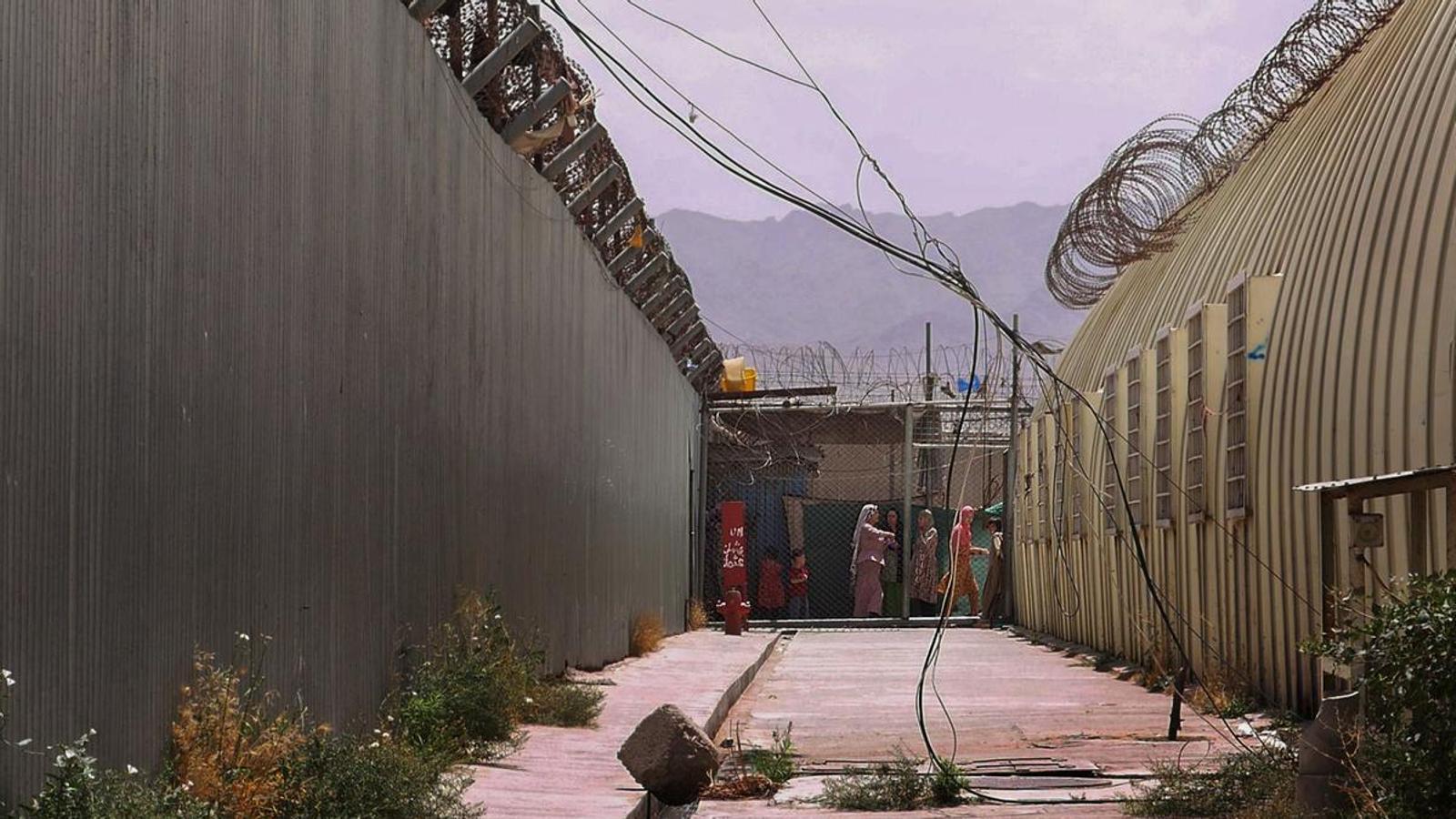
Pul-e-Charkhi is the largest prison in Afghanistan and unknown territory to me. Its high walls, concertina wire, and the deep trenches surrounding the complex were the first things that caught my attention. When the Taliban entered Kabul in 2021, they opened the doors of this penitentiary and all inmates were released. Now, five years later, there are women living behind its walls again, and some do not know when they will regain their freedom.
I expected to find women there who had committed serious crimes. First, I visited the sewing classes and the carpet-making workshops. In other words, I saw what the officials wanted to show me. But when I told the prison worker that my microphone had broken and that I needed him to bring me my mobile phone, which I had been forced to leave at the entrance, I had the opportunity to speak with some inmates. The employee left the room and the doctor did not stop me from interviewing the women.
Reasons to be behind bars
What the prisoners told me changed my initial perception. Some had been behind bars for years without their cases being resolved in the courts. For example, one of them had never had a trial, despite having been there for four years. Another had requested a review of her case, but, according to what she told me, an appeal hearing had never been held.
Some women had been accused of having sexual relations with men who were not their husbands. And there were also young girls detained because they did not dress in a sufficiently Islamic way, according to the Taliban. They had been sentenced to between three and six months behind bars.
One of the girls burst into tears while talking to me. She told me she was 21 years old and that her family had wanted to marry her off to a 54-year-old man in Kandahar, in southern Afghanistan. She fled and traveled to Kabul, hoping to avoid the marriage and that someone could help her. She went to a Taliban police station and, instead of receiving protection, ended up imprisoned under the accusation of having run away from home. "I wish I had married him. At least I wouldn't be in prison," she told me. When I asked her about her family, she explained that no one had contacted her to see how she was doing.
Among the prisoners I met, there was a 35-year-old woman who had been in prison for four years accused of having murdered her husband. According to what she explained to me, her 45-year-old husband used to mistreat her and beat her repeatedly, and in their last argument he tried to strangle her. She defended herself and hit him on the head with a container. The man died. Did she really have to be in prison?, I wondered.
When I finished talking to this prisoner, the doctor noticed that I was shaken, and told me that the woman's case was not isolated. There were many other inmates who had been imprisoned for fighting with their husbands, or simply for having disobeyed them. I was interested in talking to some of them as well, but the prison officer returned and I did not have the opportunity.
Life behind bars can be especially difficult for someone who believes they have done nothing wrong. One woman explained to me that she sewed to pass the days, and that she counted the months remaining until she could return to her children. In fact, many female inmates are separated from their children. Others are indeed in prison with their small children, who spend their first years of life behind high walls and razor wire.
After gathering the information, I got in touch with the spokesperson for the Taliban prison authority. At first, he was reluctant to respond, but he finally declared that in Afghanistan at present there are legal guarantees that allow for the review of each inmate's case one by one. I also called the spokesperson for the Supreme Court, but he refused to answer any of my questions.
When I published the information, both the prison authorities and the Supreme Court immediately called the media outlet I work for to complain about the report and about me. It was then that I realized that reporting on the lives and cases of imprisoned women can lead to consequences that go beyond the prison walls, and that can put me myself in danger.
