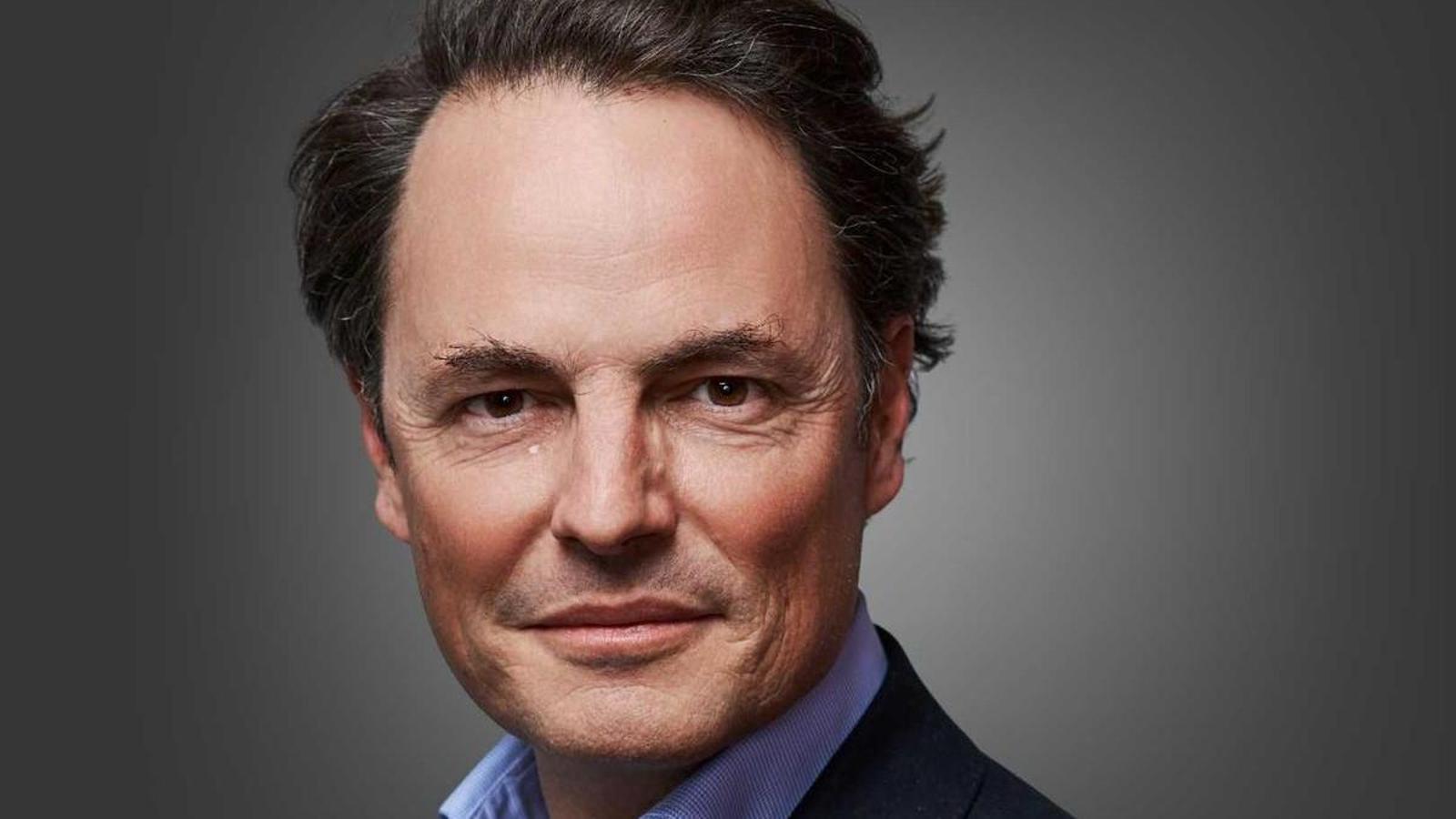
Fredrik Wesslau: "There is a strong indication that Russia would be behind the bomb threats to planes in Europe"
Analyst at the European Council on Foreign Relations (ECFR) expert in security

-
CAT -
CAST
BarcelonaEurope has experienced this week two waves of bomb threats on planes and at airports, and also a second cyberattack against supermarkets in several countries where freezers have turned into ovens. No one has claimed responsibility for these incidents and no authority dares to point the finger at anyone. But considering the context in which it is happening, it is inevitable that the idea that Moscow could be behind it will arise. We speak about this with Fredrik Wesslau, an expert analyst on security at the European Council on Foreign Relations (ECFR), one of Europe's leading think tanks in foreign policy and security.
No one has claimed responsibility for the threats and no authority has dared to attribute it to anyone. But do you believe there are elements indicating that it may be part of the Russian hybrid war against Europe?
— I believe there are strong indications pointing in this direction. Firstly, it is clear that this is a highly coordinated, systematic, and deliberate shadow attack, a hybrid attack. Therefore, it is very unlikely that any non-state actor could do this on this scale. These types of bomb threats against planes and airports are not new. We have seen it in Moldova for several years now, especially before the 2024 and 2025 elections, with thousands of bomb threats. The goal there, which I believe is also the goal now, was to scare the population and cause massive disruption. Because when there is a bomb threat, there is a protocol that forces measures to be taken, such as landing the plane or evacuating the airport, because one cannot take the risk of whether it is a hoax or a real threat. The actor behind this knows this and is capable of exploiting it. In Moldova, it was proven that Russia was behind these bomb threats. Thus, I believe that in these cases we are seeing now throughout Europe, there is a strong indication that Russia is likely behind it as well, because it is something it has used in the past and is very much in line with the hybrid war they are waging against Europeans.
In fact, this difficulty or impossibility of pointing out the culprit is one of the key elements of hybrid warfare, right?
— Exactly. There is always denial. And it is very difficult to prove with 100% certainty who is actually behind it to attribute the attack, because it is always very difficult.
Even if they are false alarms, these threats cause real disruptions and it is very easy to create a sense of chaos.
— Yes, it is very cheap to send an email or make a call to issue a bomb threat, but the consequences can be extremely costly. So, from a cost-benefit point of view, it is a very effective tool of hybrid warfare.
Do you think that cyberattacks on supermarkets could also be part of this shadow war?
— It also has the hallmarks of hybrid warfare. Hybrid warfare is multi-platform, that is, it uses a wide variety of tactics and means. From the most kinetic actions like armed drones hitting planes at Leipzig Halle airport, for example, to cyberattacks, assassinations, sabotage operations that set fire to factories or warehouses, as we have seen. And also these types of low-intensity and high-impact harassment.
So, do you believe that the cyberattacks on supermarkets could also be the work of Russia?
— I wouldn't be surprised if Russia was behind it.
Do you think we should expect new forms of attacks to appear in the coming months?
— Yes, I believe we will see a continuation of different forms of attacks, things we have not seen before, but it is all part of a larger orchestrated hybrid campaign. And they will continue and will likely also intensify, until Europe decides to take measures that actually impose a significant cost on Russia that convinces them it is not worth it. Because what is happening now is that Europe, to varying degrees, is trying to ensure deterrence through denial. And that means we are trying to protect our critical infrastructure, we are trying to build cyber defenses, etc., to make it more difficult for Russia to carry out these attacks. But we are not involved in deterrence through punishment to really increase the cost for Russia. Countermeasures that actually punish Russia should be taken. I believe the attack on the Leipzig-Halle airport is an example that it was an armed drone that failed, but that could have exploded, could have killed civilians in Europe. And this is extremely serious. But the response from the German side, from what we know, was only diplomatic. They closed the consulate in Bonn, they closed the Russian House, and they expelled some spies under diplomatic cover. But if you only take a diplomatic response to a kinetic attack, for the Russians that does not mean much. It really does not imply a significant cost. So it sends the message that the Russians can continue and even intensify the situation because there will be no negative consequences for them.
What type of measures does it refer to?
— There are many options. First, one could be to increase support for Ukraine. And this could be done, for example, by confiscating frozen Russian assets and giving them to Ukraine or buying weapons for Ukraine with that money. A second one could be to give Ukraine deep-strike capabilities like the German Taurus missiles, for example, and state explicitly that this is linked to Russian attacks in Europe. In response to the armed drone in Leipzig-Halle, we will now give Taurus to Ukraine. In a way, this would demonstrate that this action by Russia actually has a very negative consequence and brings costs to it.

