Money laundering and a castle in Toledo: the businessman behind the US pact for Venezuela's oil
Alejandro Betancourt, investigated in the courts of Switzerland and Spain, is the maximum beneficiary of the forced agreement
-
CAT -
CAST
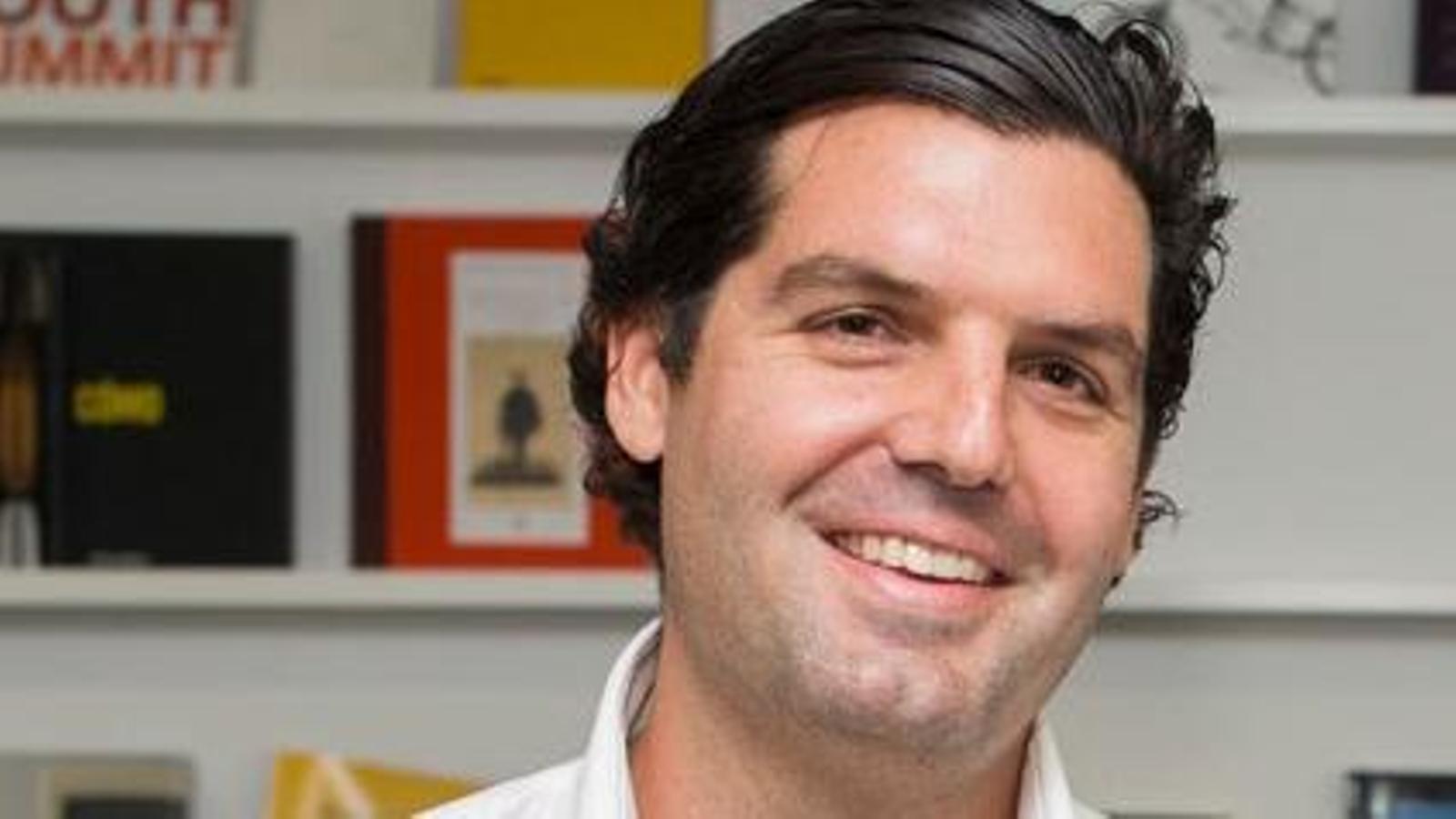
BarcelonaOn June 27, just three days after a double earthquake devastated Venezuela, causing more than 6,500 deaths, a plane from the United States landed in Caracas. Traveling on it was a businessman with Venezuelan and Italian nationality who had taken off from the luxurious and exclusive island of Palm Beach, in the American state of Florida. The trip was repeated, at least, one more time, on July 22. The country was immersed in the search for the missing and subsequently in the reconstruction after the deadliest earthquake –by far– in its recent history, but the motive for the main passenger's visit had nothing to do with humanitarian efforts.
Inside the plane was Alejandro Betancourt. In Venezuela, he is defined as a bolichico, the term used to refer disparagingly to young businessmen who got rich by accumulating contracts with the administration during the governments of Hugo Chávez and Nicolás Maduro. It is precisely because of these businesses that Betancourt is under investigation in Switzerland and Spain, accused of money laundering and having diverted more than 4 billion dollars from the state-owned company Petróleos de Venezuela (Pdvsa) by bribing officials. It is one of the various economic operations with which he has expanded his fortune for years, which includes an estate of about 1,440 hectares with a castle in Toledo.

Despite the open cases, the United States has reached an agreement with him for the exploitation of Venezuelan oil announced by Donald Trump at the end of August. Betancourt is the main beneficiary of the forced pact between Washington and Caracas. He is the owner of the company North American Blue Energy Partners (NABEP), which has been granted the concession to exploit 17 oil fields –some still virgin– from which it is estimated that 65 billion barrels of oil will be extracted, almost a quarter of Venezuela's reserves.
In exchange for the concession, the Pentagon acquires 35% of NABEP's shares and secures oil at cost price. However, the text of the agreement has not yet been made public, and the details regarding exactly what it includes differ in nuances depending on whether they are explained by the US administration or the Venezuelan authorities.
Shady operations and a famous lawyer
The figure of Betancourt does not emerge from nowhere. "His family is part of the traditional bourgeoisie of Venezuela, which adapted to Chavismo in order to maintain its privileges," portrays Anna Ayuso, a senior researcher for Latin America at Cidob. "He studied in the United States, at prestigious universities, and the preferential treatment he had with Chavismo has allowed him to expand his businesses and investments around the world, with increasingly murky operations," illustrates Ayuso. Despite having been investigated several times, also in the United States, he has never been convicted. "He has been skillful in avoiding being caught, but he has a fortune that it is not clear where it came from." In the attempt to prevent anyone from digging deeper than suited him, Betancourt has counted on the help of the former mayor of New York, Rudy Giuliani, one of his lawyers, who has also been one of Trump's personal lawyers.
The opacity surrounding his business movements is a constant over the years, and it is also so in his latest major deal: the pact with Washington. Despite having traveled to Venezuela on several occasions in recent years, the visits this summer are especially relevant. Mauricio Claver-Carone, US special envoy for Latin America, has admitted to the Reuters agency that Betancourt, who knows the oil sector both in the United States and Venezuela extensively, has acted as an intermediary between the Trump administration and the government of Delcy Rodríguez.

His relationship with Chavismo in recent years was not particularly fluid, but it has not always been that way. During the Hugo Chávez era, the businessman maintained a good rapport with the Venezuelan administration which, beyond oil, awarded him the construction of a dozen electrical stations. But later on, Betancourt fell out with Nicolás Maduro. "When he came to Spain to do business, he established connections with the PP. Afterwards, he connected with the Venezuelan opposition, to the point that he declared himself in favor of the Guaidó operation, in which an attempt was made to position the opposition leader, Juan Guaidó, then president of the National Assembly, as acting president of the country," recounts Ayuso.
Doubts about the future of the agreement
Despite the grandiloquence with which Trump, in need of good news, announced the agreement, several analysts doubt its viability. Firstly, because the fact that the Pentagon is the owner of a private company is a significant anomaly, especially when the shares have been purchased without transparent control. Secondly, and above all, because it will take a long time to be able to implement the forced pact, since it will take years to renovate the Venezuelan oil industry, which is highly deteriorated after a period with almost no investments.
And while business and statements follow one another, the opinion of Trump among Venezuelans is beginning to change. At least among certain sectors that saw in Washington's intervention a certain hope for change. The pact, far from promoting any political transformation in the country, may cause the US to have one more reason not to promote an electoral call. A government different from Delcy Rodríguez's, elected at the polls, could argue that when Caracas signed the agreement, the executive, co-opted by Washington, was not in a position to negotiate with minimal freedom, and thus invalidate the understanding signed with the White House.
After initially justifying the aggression against Venezuela as an operation against a "narcodictatorship" and accusing Nicolás Maduro of leading the Cartel of the Suns, claiming that this alleged group of drug traffickers was integrated into the country's government structure, Donald Trump removed the Latin American country last week from the list of states that, according to Washington, fail to comply with the fight against drug trafficking. He did so in parallel with new oil agreements and without Venezuela, governed by the same political option he accused of covering up and participating in drug trafficking, having implemented practically any measures aimed at combating it.
