Cyberattacks against blood banks in France: refrigerators go from -30ºC to 110ºC
The incident, which coincided with the attack against supermarkets, has not had serious consequences because the anomaly has been detected in time
-
CAT -
CAST
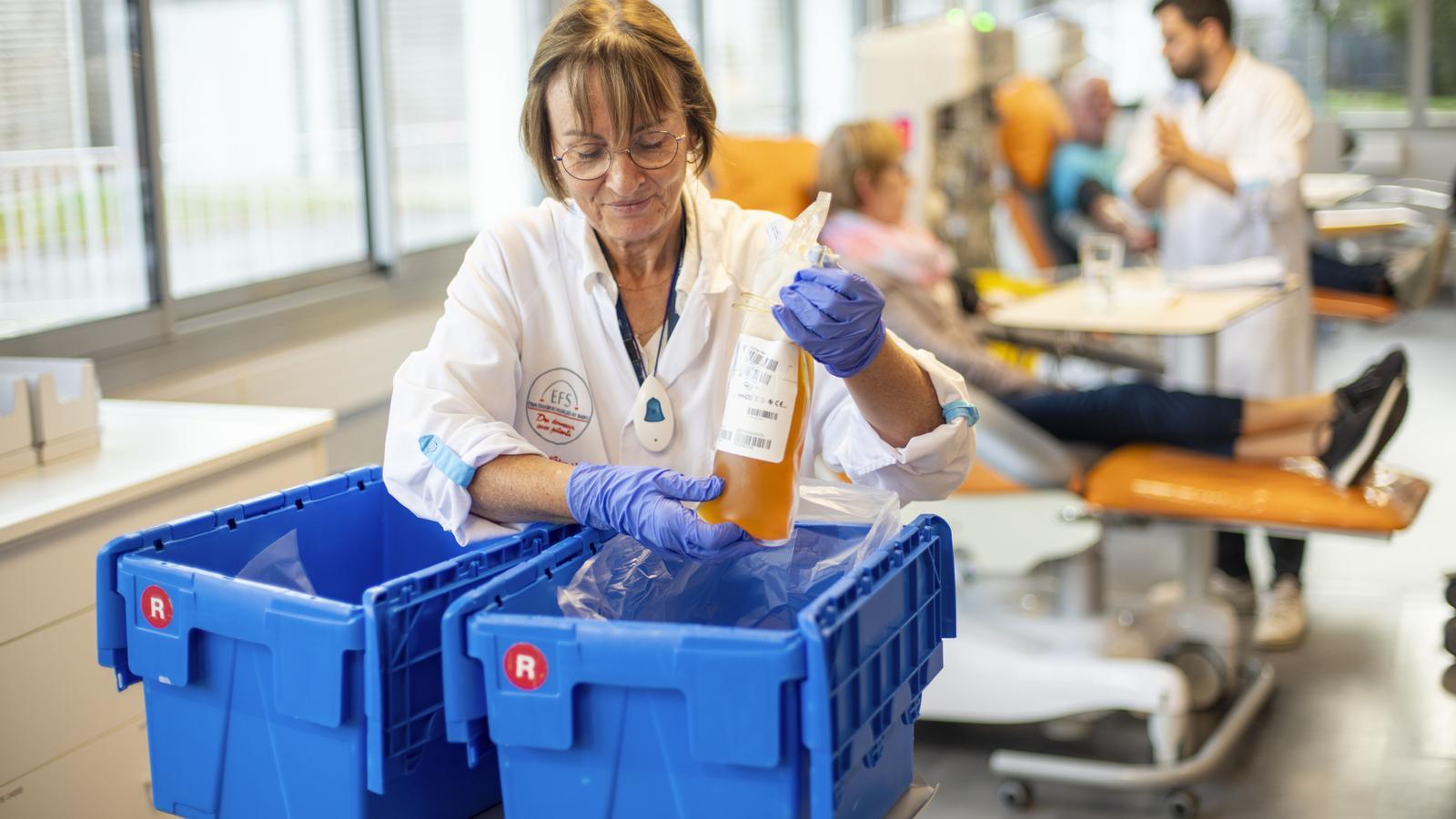
Paris / BarcelonaThe same night that dozens of supermarkets in several European countries suffered a cyberattack that spoiled tons of food, some blood banks in France were also the target of a very similar attack by unknown hackers. As confirmed this Wednesday by the French Ministry of Health, during the night from Sunday to Monday, cybercriminals remotely accessed the software that regulates the temperature of the cold rooms where plasma bags are stored and reprogrammed them so that the temperature would go from -30 ºC to 110 ºC.
The hackers attacked the private company Coolworld, which is in charge of the maintenance of the refrigeration facilities of the French public body that manages the collection, conservation and distribution of blood to hospitals (EFS). "The EFS has not been a direct victim of a cybersecurity incident. It was our refrigeration service provider that suffered a cybersecurity incident that could affect some supervision and control installations of cold rooms deployed in various centers," the public body pointed out in a statement.

He also specified that in the refrigerators that were the target of the cyberattack there were mainly plasma bags intended for transfusions and others intended for laboratories. According to the French weekly Le Canard Enchaîné, the blood banks most affected are those in the Burgundy-Franche-Comté region.
Without health consequences
Despite the seriousness of the attack, it had no serious consequences and no plasma bags were damaged because an on-duty worker noticed the anomaly in the temperature of the cold storage chambers and acted quickly. "There is no operational consequence, because the situation was detected in time," the Ministry of Health has assured. "The products stored in the affected equipment – plasma bags intended for transfusion and also for the manufacture of medicines – have been moved or protected," explained the EFS.
The French Ministry of Health has explained that it is working to gather more information about the incident and to know for sure how many cold storage chambers have been affected. "The situation is now under control and is being exhaustively monitored," stressed Health authorities.
The incident at the blood banks took place just three weeks after the cyberattack suffered by hundreds of French supermarkets and those in other European countries with a modus operandi very similar. At that time, cybercriminals remotely increased the temperature of refrigerators and freezers in different supermarkets overnight in an incident that is still under investigation and which caused millionaire losses.
Could it happen in Catalonia?
Could a cyberattack put the blood or plasma at the blood component processing and storage facility in Catalonia at risk? Zero risk does not exist and it depends heavily on the security measures and detection systems of the facilities, as well as their internal networks. The medical director of the Blood and Tissue Bank (BST), Joan Ramon Grífols, explains to ARA that, at their headquarters—located in the Poblenou neighborhood of Barcelona—they have several security barriers that minimize risks, such as temperature control, differentiated monitoring, the decentralization of systems, and human supervision.
Each refrigeration unit has two distinct systems: one for managing and controlling temperature and another for independent monitoring, which does not depend on the first. If there is tampering with the refrigeration control system, the monitoring system can detect a potential temperature alteration. Added to these two mechanisms is human supervision through manual checks. "It is as if we had up to three levels of control," explains Grífols. To simplify it greatly, none of the refrigerators or cold storage chambers has a direct connection to the Internet. The institution also explains that it works with a decentralized architecture, meaning it does not have a single system that manages all refrigeration equipment together, but rather they are distinct systems for each piece of equipment.
Regarding cybersecurity, the BST acknowledges that technology is not infallible and that, like any computer system, it can present vulnerabilities. Given this, it is the Cybersecurity Agency of Catalonia that analyzes potential vulnerabilities in the temperature control and monitoring systems to identify possible risks and reinforce their security. For example, by tracking the providers that supply platforms and technological packages for different areas of the organization, including the management of the chambers' temperature (the BST works with external solutions instead of having a single proprietary management system).
