Germany, on alert for three suspicious attacks in 48 hours
Sabotage against the electrical infrastructure and a detonation at a train station unsettle the country after having pointed to Russia
-
CAT -
CAST
Barcelona"We are not at war, but we are a daily target of hybrid warfare." This is how German Foreign Minister Alexander Dobrindt summarized on Tuesday the moment that one of the main European powers is going through, and which is extensible to a good part of the region. After Dobrindt's words, Germany has recorded three violent acts in the last two days, which coincide with the German government's accusation against the Kremlin of being responsible for the attempted drone attack at Leipzig airport on August 4th. Amidst the uncertainty and waiting for police investigations to progress, Germany and Europe are debating between avoiding an excessive escalation that worsens the situation or taking a stand given the gravity of the incident in Leipzig.
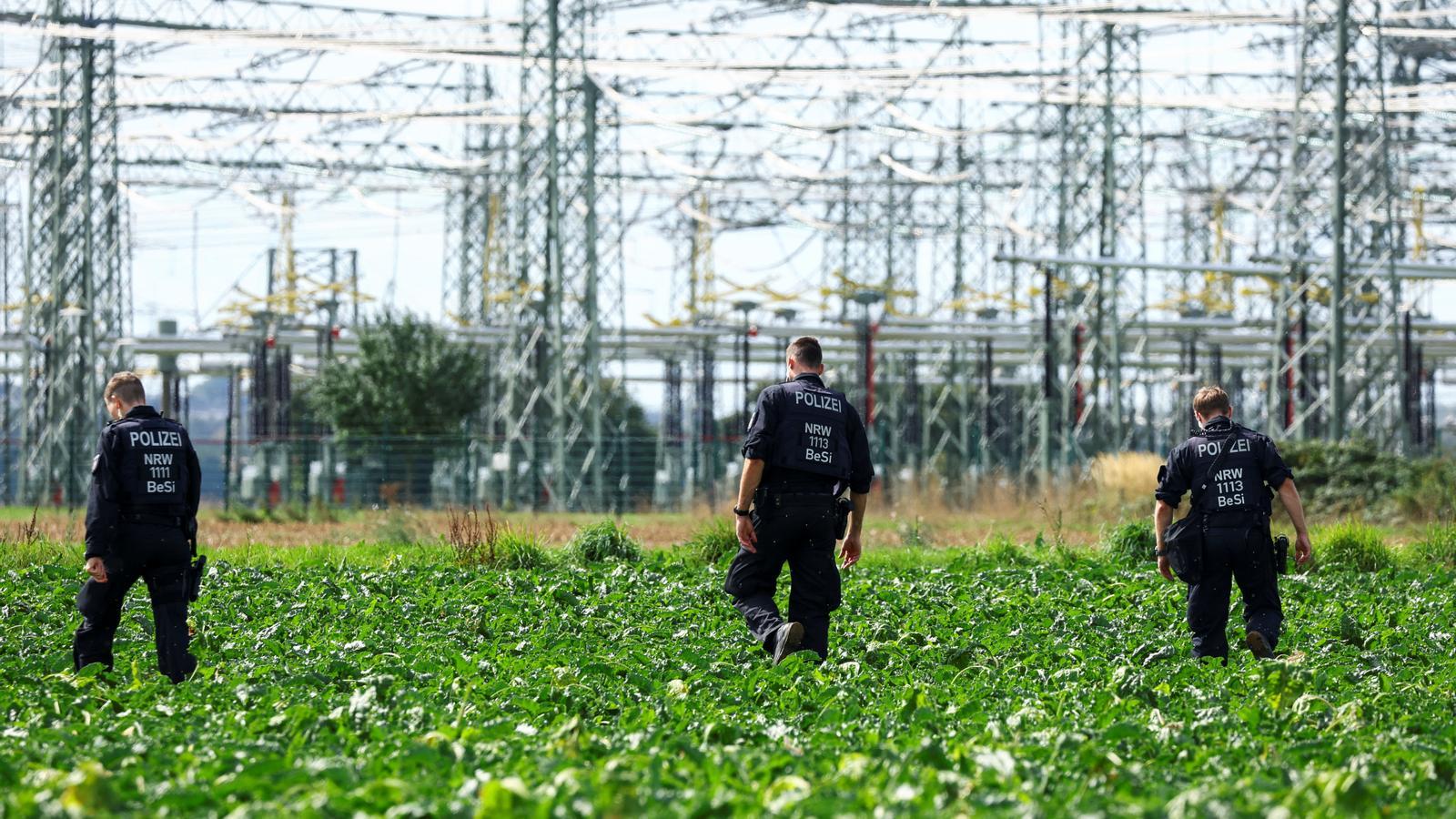
On Tuesday, the same day that, relying on police investigations and intelligence service conclusions, Germany pointed to Russia, homemade explosives detonated at an electrical substation in the state of Brandenburg. Yesterday, Wednesday, another electrical substation was attacked, this time in Cologne, in a sabotage almost identical to Tuesday's, and an explosion was also recorded at a train station in Augsburg, in Bavaria, which for the moment has not been linked to the incidents in the electrical infrastructure.
The investigations into the three incidents of the last 48 hours in Germany are ongoing. The authorities are working with two hypotheses: the sabotage of electrical stations would be either the work of a "foreign actor" or of some left-wing group. For this reason, the police are asking not to draw hasty conclusions. However, while the motive is not yet determined, the situation is generating uncertainty and anxiety among the country's population, and the Minister of the Interior, Herbert Reul, has issued a warning: "Whoever is behind this is attacking our country".
The details about the latest episodes are scarce, but there is more evidence regarding the failed attack at Leipzig airport last month. Berlin is pointing to two people. One is from Latvia, born in Russia, and is said to have had contact with Russian security services. The other suspect is from Belarus, and has been identified because his DNA was found on a drone and a container with an explosive. According to the German public broadcaster, ARD, neither of the two is still in European Union territory.
The response in Leipzig
Numerous European leaders, especially those from the northern and eastern countries, have shown concern over the incident in Leipzig and the growing uncertainty generated by the successive drone incursions into countries bordering Russia, where these incidents are now almost constant. The head of European diplomacy, Kaja Kallas, requested this Wednesday to respond "with determination" to what she described as "state-sponsored terrorism," and the president of the European executive, Ursula von der Leyen, made it clear that the "pressure" on Russia will grow: "We will not stop."
However, there is debate in Berlin. The German Chancellor, Friedrich Merz, has opted for moderation so far when pointing at Moscow. For weeks he avoided directly blaming Russia while awaiting intelligence reports, while his ministers were already speaking of "hybrid warfare." When the moment came to do so, those who appeared publicly at Tuesday's press conference were the ministers of Foreign Affairs and the Interior, and on the social network X, Merz limited himself to thanking the NATO secretary, Mark Rutte, for his support. The executive emphasizes that it takes the matter seriously and that the position expressed at the conference is that of the government as a whole, but some analysts point out that the chancellor is trying to avoid excessively escalating the confrontation with the Kremlin. His relationship with the Russian president, Vladimir Putin, is already especially tense, and escalating it further could have unpredictable consequences.
From the far right, Merz is accused of a double standard in his response to the sabotage of strategic infrastructure for Germany. In the attack on Nord Stream (the gas pipeline connecting Russia with Europe), two Ukrainians were arrested as suspects, but there was no retaliation against Ukraine for damaging infrastructure essential to Germany –and Europe– in a sabotage that directly reduced the million-dollar revenues that Moscow received from the EU for gas.
Different political positions in Germany
Beyond this example, the AfD's position is radically opposed to that of the Merz executive. The German far-right is in favor of sitting down to negotiate with Russia, putting an end to the sanctions applied to it, and cutting support for Ukraine. The exact opposite of what the German government and community institutions defend, but this does not prevent the AfD from leading the polls in the country.
In electoral terms, the social democratic side of the German government must also balance the Ukrainian file. Die Linke, to the left of the SPD and the Greens, rejects Russia's aggression in Ukraine and condemns Putin's regime, but the party is against the rearmament defended by the German executive and the majority of the Twenty-seven, and maintains that security in Europe will be achieved through the reactivation of diplomacy and a more autonomous foreign policy.
The party also rejects closing Russian institutions in Germany, as has happened in this latest episode of tension –Germany will close the consulate in Bonn and terminate its agreement with the Russian House cultural center–, because it maintains that this means cutting off diplomatic and cultural exchange channels with Moscow. In the polls, Die Linke already accumulates almost the same support as the SPD at the federal level, and in the state of Berlin, which holds elections on September 20, the polls suggest it could win the elections.
Russia has announced that it will close all Goethe Institute branches in the country in response to Berlin's decision to close the Russian House cultural center in the German city of Bonn. "The Germans have Goethe Institute branches here. In Moscow, St. Petersburg, Yekaterinburg. Naturally, they will be closed after they expelled our cultural center," said Russian Foreign Minister Sergey Lavrov during a speech at the Eastern Economic Forum in Vladivostok.
