The oil province of Alberta refuses secession from Canada
76% of voters reject the calling of a binding referendum, according to the first projections

-
CAT -
CAST
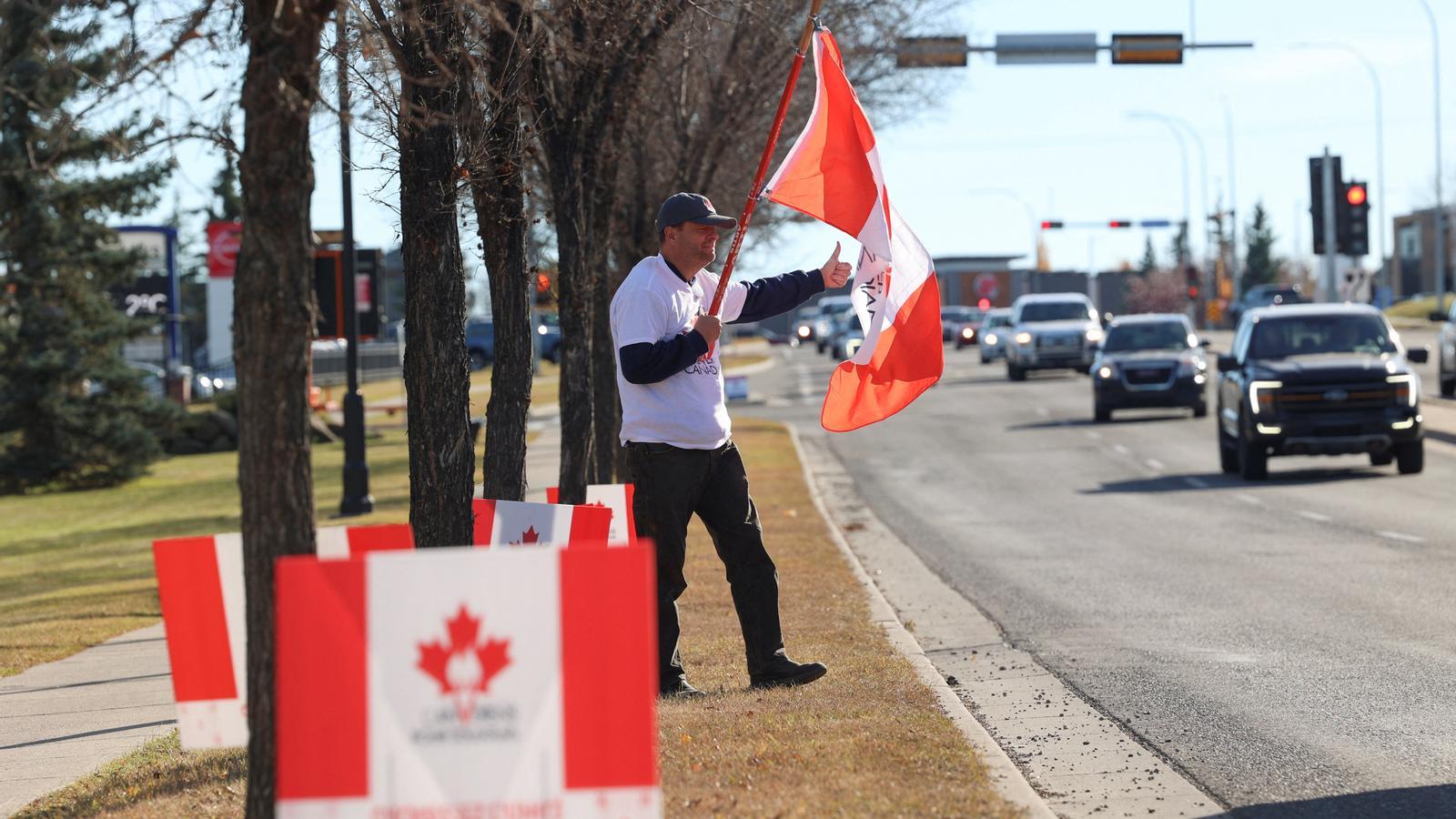
LondonThe Canadian province of Alberta voted this Monday in favor of remaining part of Canada, according to the first projections made public by the public broadcaster CBC News. With just over a third of the votes counted, 76% of voters declared themselves in favor of not breaking ties with the federal government.
Unlike Quebec, a province that has held two failed referendums (1980 and 1995), the separatist sentiment has always been a minority in Alberta. Even so, opponents of independence feared that voters would support holding a second plebiscite to express their discontent with the province's relationship with the federal capital. The vote was driven by Danielle Smith, the conservative premier of Alberta. Smith assumed the leadership of the United Conservative Party largely thanks to the support of separatists, who were responsible for forcing the removal of her predecessor, Jason Kenney. The Canadian Prime Minister, Mark Carney, had campaigned for the country's unity, warning that a breakup would cause years of division and uncertainty.
Based on an email interview with Professor Tamara Krawchenko of the University of Victoria in British Columbia, we summarize the key points that explain why there is a separatist sentiment in Alberta, even if it is a minority one.
The feeling of paying more than what is received
One of Alberta's historical grievances is the perception that the province contributes more to federal finances than it receives in return. Inter-territorial transfers, intended to reduce economic inequalities within Canada, fuel a sense of injustice among a portion of the province's population. However, according to academic Tamara Krawchenko, this explanation is “insufficient” to understand the current sovereignty surge. More than a “direct fiscal harm to citizens”, the grievance has a symbolic component: in other words, there is the perception that “the province does not receive the recognition it deserves”. Academics call it western alienation, or western alienation, a persistent feeling of exclusion regarding Canadian centers of power. Energy tensions act as an immediate trigger, while western alienation is the historical substrate that allows us to understand why the conflict can turn into a sovereignty claim.
Oil, a source of prosperity and a cause for concern
Alberta's economy is deeply linked to oil and gas, sectors that have provided good wages, stable jobs, and income to fund public services for decades. This prosperity has helped shape the province's political identity. Therefore, when Ottawa pushes energy and climate regulations, a portion of the population interprets them as a direct threat to their standard of living. According to Krawchenko, “tensions with the federal government over energy policy are the most immediate trigger for the current sovereignty wave”. The conflict is not just about who makes the decisions, but also about the future of an economic model upon which hundreds of thousands of people depend.
The energy transition and a missed opportunity
The dependence on fossil fuels also reflects the decisions made by successive Alberta governments, which have not sufficiently taken advantage of boom periods to diversify the economy. This leaves the province more exposed to changes in global energy markets and decarbonization policies. Krawchenko emphasizes, however, that “Alberta has the technical talent, geological experience, renewable resources, and entrepreneurial culture necessary to play a prominent role in the new energy economy”. The problem is that the economic and political system remains organized around fossil fuels. Without a transition plan that recognizes the opportunities and protects workers and affected communities, “climate change is perceived as a federal imposition”. In this context, sovereignty offers a way to express discontent.
The attraction of an alliance with Trump's United States
A part of the independence movement is not limited to demanding more autonomy from Ottawa, but rather views an approach to the United States favorably. The Alberta Prosperity Project –the political organization that promotes independence– has sought meetings with representatives of the Trump administration and has proposed both the adoption of the U.S. dollar and independence aligned with Washington's energy and national security interests. This orientation connects with a conservative political culture that defends low taxes, favors the exploitation of natural resources, and is deeply skeptical of federal climate policies. For these sectors, alignment with the United States represents a political and economic alternative closer to their preferences.
The First Nations, a decisive obstacle to secession
On March 12th, a group of representatives from the so-called First Nations were received in an audience by King Charles III, nominally the head of state of Canada. From the audience, it transpired that the monarch had expressed his concern about the independence movement. And, beyond the result of the referendum held this Monday, any independence project would have to face a fundamental issue: the territorial rights of indigenous nations. Treaties 6, 7, and 8, negotiated between the First Nations and the British Crown, cover practically the entire territory of present-day Alberta. For Professor Krawchenko, indigenous communities are rights holders and consignees of the foundational agreements that underpin the territorial legitimacy of the province. Therefore, an eventual secession would not only be a conflict between Alberta and the federal government, but would also raise constitutional and legal questions regarding these commitments. Three days before the audience with the King, on March 9th, more than a dozen First Nations chiefs, together with councilors and elders, went to the provincial legislature to express their rejection of separatism. Pro-independence supporters have suggested that a sovereign Alberta could establish more egalitarian relationships with indigenous nations, but Krawchenko considers that this possibility “does not seem likely”.
