The aviation tycoon who invented the first car radio
Bill Lear created aviation and automotive companies and some still carry his name
-
CAT -
CAST
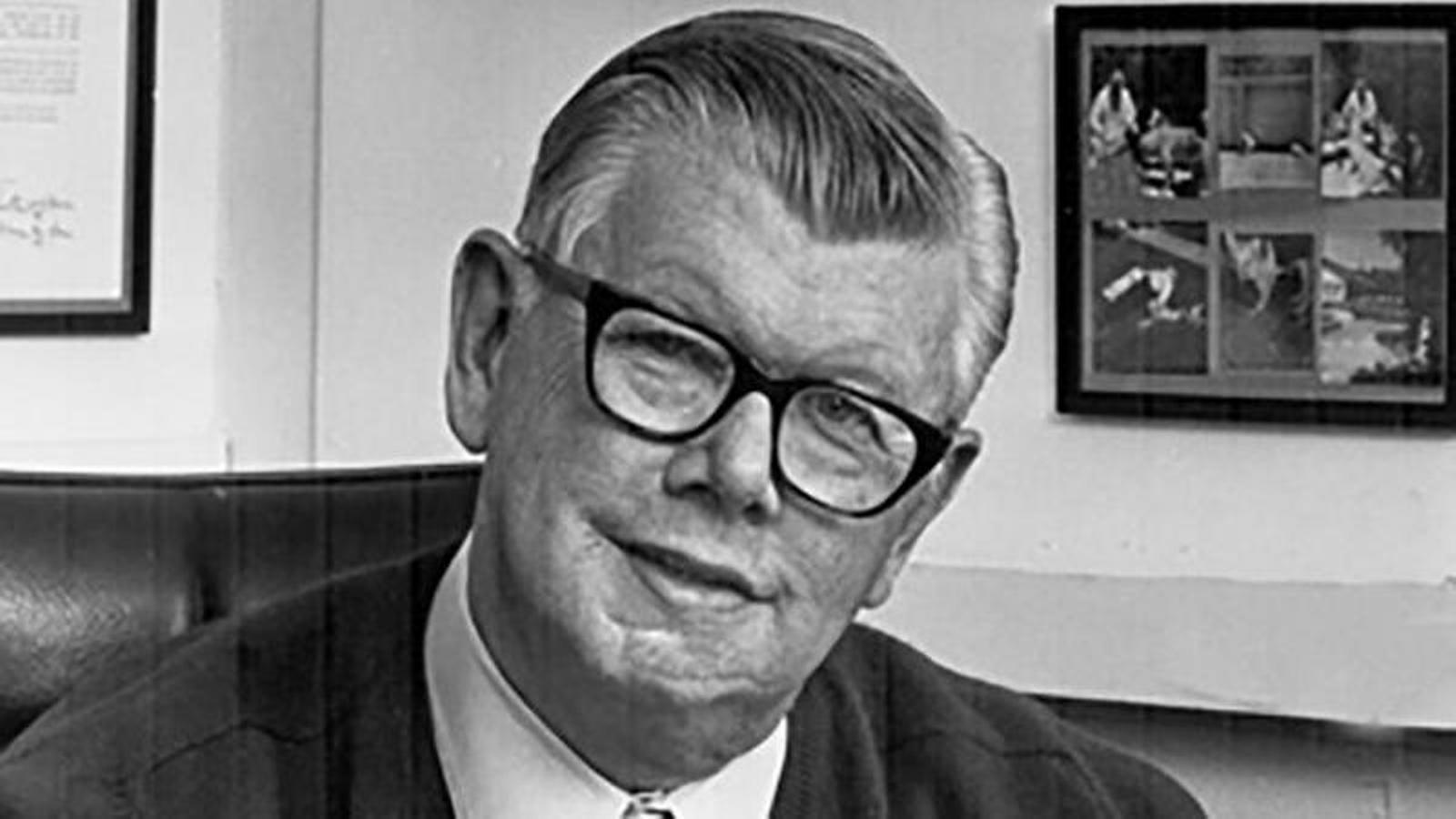
In the seventies and eighties, the UFO craze took a leap in scale with the release of films like Close Encounters of the Third Kind and E.T. the Extra-Terrestrial, both directed by Steven Spielberg. Amidst this wave, an aviator with ties to the CIA named John Lear came to public attention, who in 1987 claimed that the United States government was maintaining relations with extraterrestrial beings and that there was a secret committee called Majestic 12, which had unspeakable pacts with the visitors. From that moment on, Lear's figure became a central character in American UFO conspiracy theory, but as the years passed, he was gradually forgotten and his theses were considered a mere fantasy. What surprised the United States most about the emergence of Lear as a great propagator of these theories about aliens is that he was not just any citizen, but the son of one of the main aviation magnates, the businessman and inventor Bill Lear, founder of companies that still bear his name today.
- (1902-1978)
Coming into the world within a family that was falling apart –his parents separated when he was small and initially he was raised by his aunt and later by his mother's husband– inoculated Bill Lear with a deep desire to do important things in life and to try to earn a lot of money. From a very young age it was noted that Lear had a great knack for repairing electrical devices and, in fact, as a teenager he already built his own radio, based on knowledge acquired in a self-taught way. It should be taken into account that he had abandoned formal education before going to high school. During the First World War he enlisted in the navy, where he was in direct contact with the world of radio broadcasts (admittedly, lying about his age to be able to enter the army). Shortly after the war conflict he set up, with another partner, a small company that manufactured radios for cars, an invention of his own and the first to hit the market. Some investors, the Galvin brothers, thought the product had a future and bought the patents from him. They christened the device Motorola, a name that years later would give its name to the company itself.
At the beginning of the thirties, he founded Lear Developments, with which he would end up focusing on the aeronautical world. He created the multiband radio, which he sold to the giant RCA, the radio beacon for air navigation, the autopilot, and an autonomous landing system. During the Second World War, he collaborated closely with the Allied aviation, contributing his model of flaps electric. And from producing components for airplanes, he made the leap to manufacturing entire planes: in 1963, the Learjet was the first private-use jet to be mass-produced and which had great success among the businessmen of the time, who were attracted by the comparatively affordable price compared to other similar aircraft. This adventure was not simple at all, because to carry it out he had to set up a new company, because his partners in the original company did not approve the project. The solution to the conflict consisted of selling his share and, with the money raised, founding the new firm.
In another area, in the mid-sixties he also devised the first eight-track cartridge for audio recordings, which worked on a magnetic tape. Thanks to the RCA catalog it became a very popular system both in homes and in automobiles and did not decline until the arrival and consolidation of the compact cassette from Philips. Another invention of Lear during the sixties was the engine powered by a closed-loop steam circuit that moved a turbine. Some tests were carried out with cars, but the development did not prosper.
The firm Lear Corporation, which is established in Catalonia (in Alt Camp, with 75 years of history), belongs to the automotive industry –not aviation– but has a direct relationship with our protagonist, because in 1962 his company merged with the seating giant Siegler Corporation and the inventor's surname ended up predominating, which is maintained to this day, even though he dissociated himself from it very early on. The John Lear with whom we opened this piece was the fruit of his fourth marriage, to Moya Marie Olsen, daughter of the comedian John Sigvard Ole Olsen, very popular during the Great Depression. In total, Lear was married four times, had seven children, and a difficult character to manage.
