The Dutch prime minister will have a child through surrogacy: is it still legal in the EU?
The Netherlands authorize this practice under certain conditions
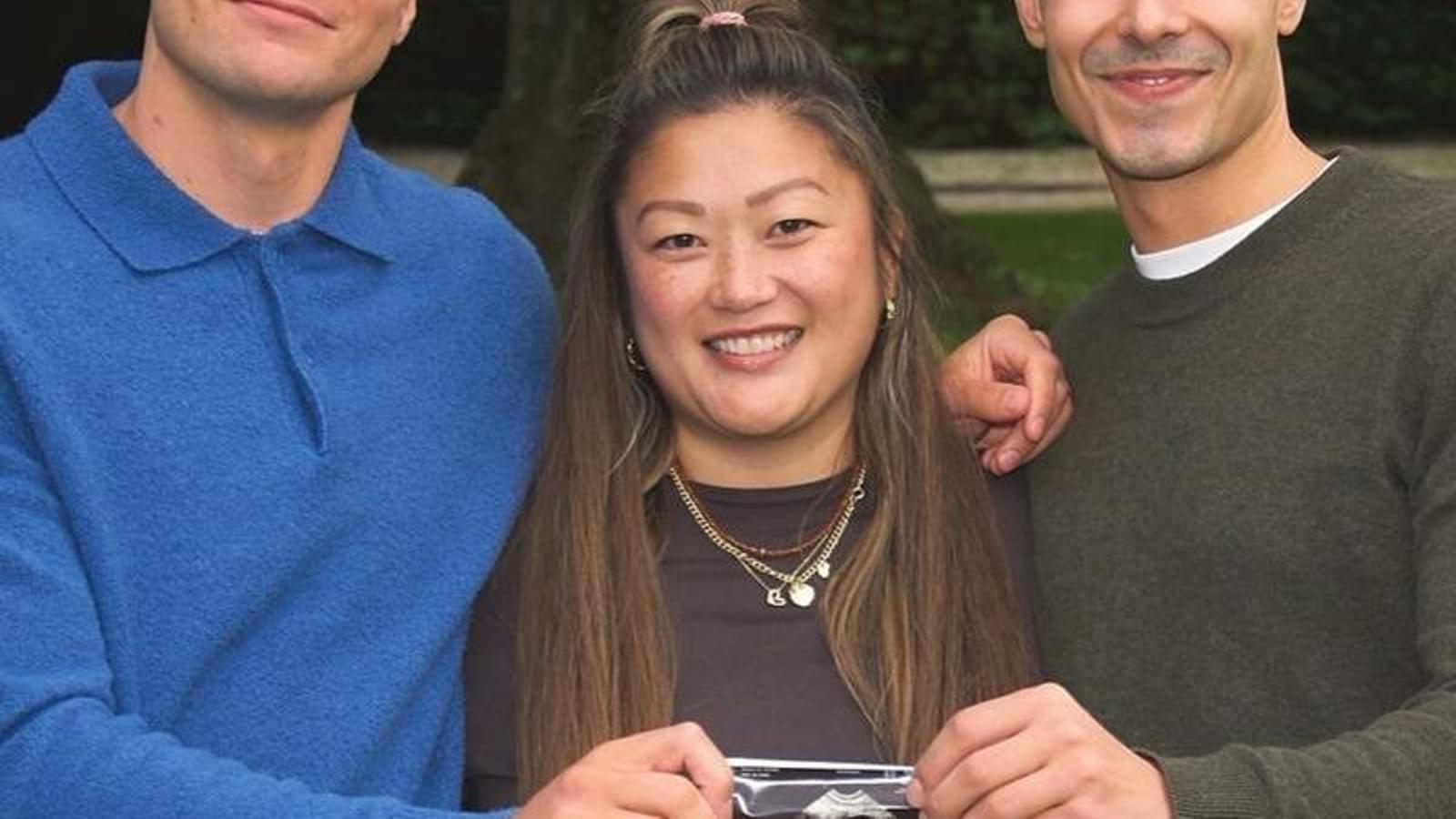

BrusselsThe Deputy Prime Minister of the Netherlands, Rob Jetten, has announced that he and his fiancé, the Argentine hockey player Nicolas Keenan, are expecting their first child and that they will have it through surrogacy, a practice popularly known as a rent-a-womb. "We are waiting for someone very special. See you in 2027, little one," Jetten wrote on Monday on his Instagram account.
In the carousel of images, both parents appear showing an ultrasound while embracing the surrogate mother. "There are no words big enough to thank our egg donor, our surrogate mother, and their two families. None of this would be possible without you," says the text, accompanied by baby and baby bottle emojis.
Although surrogacy is a legal practice in the Netherlands—under certain conditions—the fact that a high-profile figure in the country like the Deputy Prime Minister is using it openly has reopened the debate on the ethics of this practice. The country's law strictly prohibits the commercial practice of surrogacy, but, on the other hand, authorizes it if there is a private agreement between the parents and the surrogate mother.
The surrogate must be someone known to the couple—in fact, it is forbidden to post ads on social media to find a surrogate or to offer oneself to carry a child for third parties—and the mother can receive reimbursement for expenses associated with the pregnancy, but it cannot be for profit. And there is still another element: filiation is not automatically attributed to the future parents. The woman who gives birth is the legal mother of the child, even if the egg is not hers, until there is a procedure like adoption.
In the case of the Deputy Prime Minister and his partner, they assure that they have received "help" from two donors: the surrogate mother and an egg donor. Both, they say, are friends of the family, of Dutch nationality, and, furthermore, have children of their own. The leader's party, D66, explained in a statement that there has been no commercial transaction to make this possible. "[The surrogate mother and the donor] are grateful to be able to help fulfill the wish of the two future parents to have a child in this way," reads a note issued by the political group.
At only 39 years old, Jetten became the youngest deputy prime minister in the history of the Netherlands when, a year ago, his party D66 achieved an unexpected electoral victory. He had planned to marry his partner this summer, but they postponed their wedding shortly after Jetten took office. The Dutch leader will take a few days off for the birth of the baby to be with his family, but he does not plan to take any longer paternity leave.
An open debate
The controversy has caused a stir because, at this moment, the Dutch Parliament is debating changes to the law regulating surrogacy. The proposal provides for a judge to determine before pregnancy that the future parents be recognized as parents from birth. About ten days ago, Jetten himself defended the law before the chamber. But critics, including his coalition partners, fear that more regulation will translate into more normalization. And, even, that it could open the floodgates to the international market, a fact that, they argue, carries risks of exploitation of vulnerable women and opens the door to treating children as a transactional good.
The EU countries that authorize surrogacy are a minority, and nowhere can it be the result of an economic transaction. Greece, Cyprus, Ireland, and Portugal, for example, authorize surrogacy altruistically and under certain conditions, while Belgium does not have a specific legal framework to regulate it, which in practice means that it is carried out, but with difficulties regarding filiation. In contrast, in most states, including France, Germany, Italy, or Spain, it is expressly prohibited by law.
