Virgilio Martínez: "When you manage to have worldwide recognition and admiration you realize that it was not what you were looking for"
Cook
-
CAT -
CAST
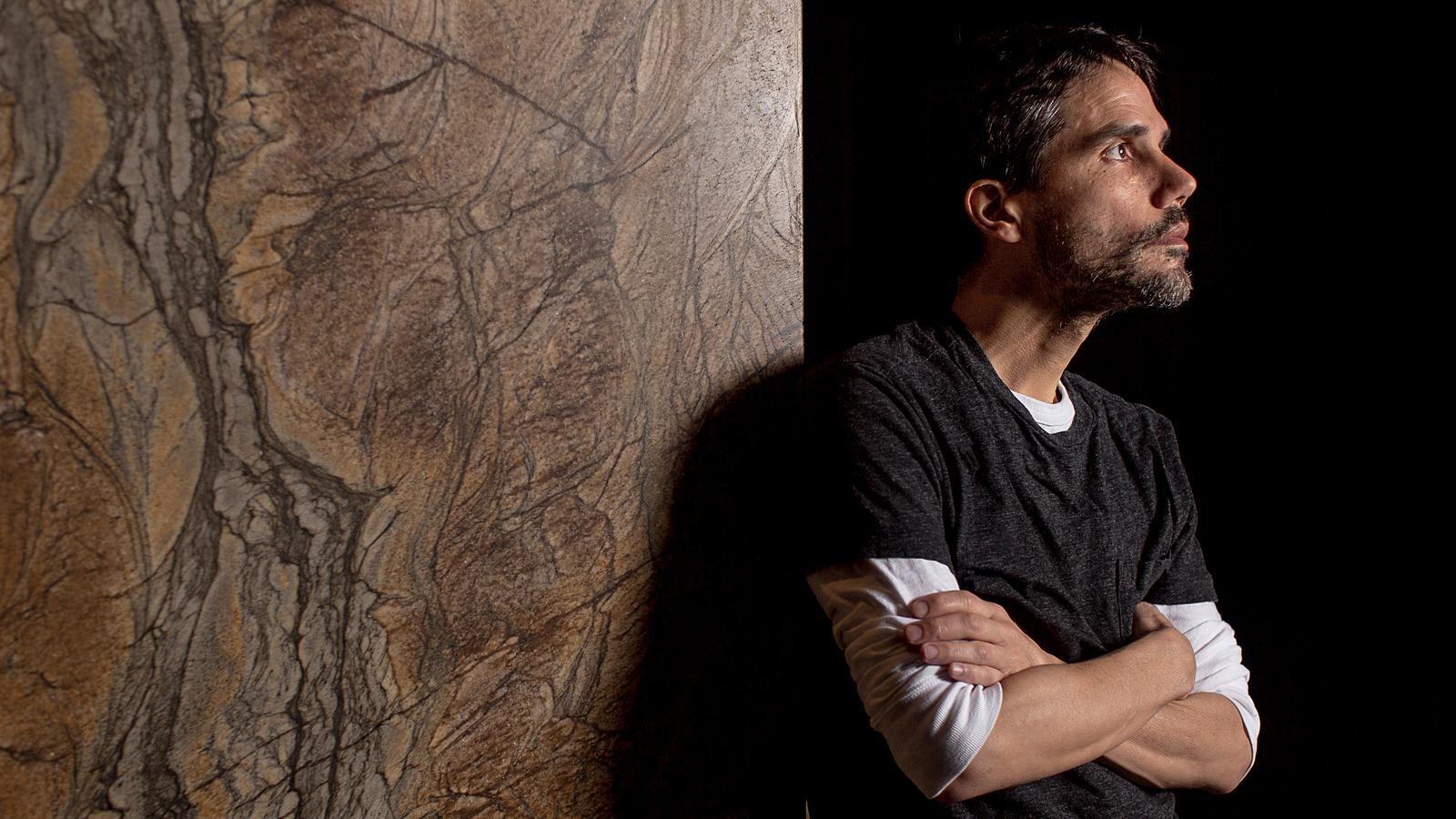
Escaldes-Engordany (Andorra)Virgilio Martínez (Lima, 1977) is one of the most renowned chefs in the world. His restaurant Central, in Lima, was considered the best in the world in 2023. It was a milestone that no one had ever achieved in Latin America. And he achieved it by placing at the center the ingredients used in all the ecosystems and altitudes of Peru. Many of them, safeguarded by indigenous communities. “When I was a child, they told me that these people were poor. Later I understood that they were rich,” says the chef. In addition to Central, he has the Mil restaurant, where he cooks Andean cuisine at 3,800 meters, and a multidisciplinary knowledge center called Mater. Martínez speaks to ARA at the Andorra Taste congress, dedicated to high-mountain gastronomy, where he was awarded the career achievement award. An award previously received by Michel Bras, Gastón Acurio, Ferran Adrià, and Carme Ruscalleda.
As a child, he wanted to be a soccer player; then a professional skater, and in fact, he became the national champion in his category; he tried studying law for a year, as he comes from a family of lawyers, but it wasn't for him at all. Finally, since he wanted to see the world, he thought that cooking would be his pretext.
— I was a chef who wanted to travel, and in the last ten years all my travels have been for cooking, for work, and not for pleasure. I had never been to Andorra, for example. But the world is endless. Now I travel a lot through Peru. And there are villages and villages, each one with a different language. When people talk about Peruvian culture I ask them which one of them all. The more you know, the more enticing it is. And you realize that it's not that you learn about cooking, it's that you learn about life itself. They are people who have not had contact with the Western world. Nowadays, when there is so much talk about what is ancestral, about knowing the past and history, well there you can see and feel it. And that excites me.
And he moves it to the kitchen.
— I share it with the restaurant food, but I also integrate it into my philosophy of life.
How do you go about approaching these communities without seeming like the "famous chef who helped them"?
— We had to conduct a study with anthropologists and sociologists. You have to start from respect and admiration. If you go in with a short-term goal, it won't work. These are people who work with a very deep sense of community. We express that we want to work with them, be part of them, be good neighbors, and in some way generate a community. We respect tradition, but we also look a little bit to the future, because these remote communities also suffer from problems. Climate events, governments, and things that are alien to them, and perhaps we can be of some help to them. There will always be doubts and resistance. But it must be done carefully. We are not saying that we will do projects with everyone. We find where we can act, and we have good examples of this, such as in the Andes mountain range. We positively affect 300 families who have no contact with the city. And seeing that they suddenly start to develop their products more and start to promote their arts and their culture more. And we open markets for them without them having to do it themselves. The most complex issues are the spiritual ones. We speak of Andean cosmovision. But they do not understand the word cosmovision. It is our concept, in fact. For them, life is simply like that; the mountain is a divinity and you must have impressive respect for it. You cannot show up with a cigarette and throw it on the ground or treat a plant with little care. It is a world you thought was only in movies, right?
What is curious is that you were a lover of French cuisine and had to go abroad to fall in love with the cuisine of your own land.
— This has to do with education. In Lima they will tell you that what happens in the USA, in Europe, in Japan is more important. They tell you that you should study abroad. But when I had the chance to travel through Peru, I saw that there were more interesting things than those of my travels around the world. You have to be restless, and move, of course. I spent a long time in London. But in the end, that wasn't me. I had been sold as a child that progress was technology and industrialization. Now I see clearly that progress is maintaining the culture of these communities in harmony with the environment, nature, and food. They are practically self-sufficient. They told me they were poor, when they live in abundance and wealth. And there the word anxiety and stress does not exist. But realizing it takes time, because we live with trends, noise, social networks that bombard us, and we live running from one place to another.
You received the greatest recognition a restaurant can receive.
— This is the superficial layer, because you don't live off a ranking. Recognition puts you on the stage. To be able to reach the deep layers and what really makes sense, which is not the rankings, we work with people from other disciplines. Archaeology, sociology, art... Cooking is no longer just making delicious dishes, but things that impact all this depth. And that is when it leaves you with an emotion.
So being number 1 is not everything.
— When you manage to have global recognition and admiration you realize that it was not what you were looking for. And when they say that Peru is “a global power” you think that it is too small for it. That it responds to a trend and that later another one will come. And another one. And another one.
I have spoken with Latin American chefs who envied the case of Peru.
— If there are countries that see Peru as an example, it is because they are not looking at themselves. I used to look at France, at Spain, and I would get excited because they applauded me. But then you realize that is not it.
But you cannot say it without experiencing it first.
— To be a chef today and be successful, you have to know what the world is about. It is not enough to be passionate about gastronomy. You have to know how to manage, how to deal with people, how to work with communities, with suppliers... You have to be interested in philosophy, anthropology, and listen to people who know more than you do. You tell me that Peru has been the envy of Latin America and that it has received a lot of attention, but it has existed from long before. It was the base of the Tahuantinsuyo Empire, where everything happened and where there are great archaeological works already linked to agronomy. They preserved seeds, worked with three thousand varieties of potato, and used medicinal plants. Of course Peru has something to say, today. But not because it is in fashion or because it is competing with France, Spain, or the Nordics. For thousands of years, people here have been relating to nature, and we have ancestral knowledge. When they talked about "the boom of Peruvian gastronomy," it pissed me off. A boom deflates, and here we are talking about the long term. These are headlines, slogans, clichés to grab people's attention. I fall for it too, but one must not lose sight of what matters at the end of the day.
You said that one must know how to deal with people. A French chef of the old school threw an ashtray at your head and cut your ear. And he took your backpack from the locker because a sauce had been ruined and put it into the pot full of fish stock. What separates that world from the current one?
— Before, this and much more used to happen. It was normalized and was part of the supposed demands on young people. It was the price to pay. The new generations now are not looking for that. If a chef doesn't adapt to the way we want to live now, their project won't work. I also had to adapt to working with Peruvians when I returned from abroad. I came from the hyper-technological moment of molecular cuisine. And I had the ideas of creativity and the avant-garde. Now I feel that if I look to the past, I have more to say and it allows me to look to the future. The avant-garde in a restaurant nowadays is to be the best restaurant in the world to work in. A place where we have a good time as a work group and where no one wants to leave. And that is what is happening to me now, that they don't leave [laughs]. We have generated a work rhythm inspired by Mil, in Cusco, where times are slower. A slowness that before, from Lima, we viewed with prejudice.
What did you learn from Santi Santamaria when you were at Can Fabes?
— A totally disciplined kitchen. It was the first 3-Michelin-star restaurant I went to in my life, and it was impactful. I learned the classic structure of a restaurant. My kitchen doesn't work that way, but it's good to experience it. You have to have learned it to be able to decide. Nowadays, I believe restaurants work in a more integral way, as an organism, less hierarchical. What did impress me a lot was the quality of the product I worked with. And the technical level and the meticulousness. Now it couldn't be done; young people wouldn't be capable of doing this work.
Give me an example.
— How to pluck pheasants.
And is that good or bad?
— This is a good question. I don't know. Should pheasants be plucked one by one because that is the way the skin will be 0.1 crispier? Or is it not that important? You will have a person who is not motivated doing it. These are the questions I ask myself. We must question things and engage in self-criticism. The obsession with perfection can lead to chaos and mistreatment.
We have recently seen this with the news about Noma.
— In the end, there will always be a scapegoat. And another, and another and another. And more will come. It is important to know how the world works. You do a pop up in Los Angeles and things appear that have not been investigated. The agenda moves quickly, and they look for a chef who has done something in the past, and who has probably already changed, perhaps. You have to take into account the global context. If I go tomorrow with my speech to Los Angeles, perhaps they will accuse me of cultural appropriation. It is the risk of moving things out of place and not contextualizing.
For many years his wife, Pía León, was an inseparable part of Central. Now she is making her own way and is gaining international recognition on her own. Has she created her own universe at the Kjolle restaurant?
— We have Mater as a biocultural knowledge center. And she uses it for her restaurant Kjolle. She adapts it to her criteria and has given it great freedom. She does not work by ecosystems, as at Central, where we have this idea of working on altitudes. She makes a different kind of cuisine. Sometimes, jokingly, we say that there are restaurants that resemble Central more than Kjolle. It says a lot about Pía, about how well she is doing it, and about the great moment she is in, thanks also to the fact that she is reading the world very well.
If I were to start from scratch now, what would I do differently?
— At the beginning, I did eclectic cooking. I took paths that didn't serve me, which made me delay three years to understand something I could have understood in three days at Mil, in Cusco.
