The dish that was popular in homes in the 18th century and that now is in restaurants
Chefs Albert Adrià and Jordi Vilà explain how they prepare fricandó, while Bar Milagros introduces it to the menu with the recipe by Ernestina Torelló, president of Torelló (Corpinnat)

-
CAT -
CAST
BarcelonaFricandó is experiencing a golden age in the restaurant industry. If a few years ago we lamented that it was in danger of extinction, today it could be said that it is a popular dish on restaurant menus, just as it is believed to have been in homes in the 18th century. From this time dates the cookbook Avisos i instruccions per lo principiant cuiner, written in a Franciscan convent, in which the recipes cooked by the common people were collected, and left in writing because, back then, the culinary tradition in homes was passed from mothers to daughters, and for this reason, the men who entered religious orders wrote it down, to remember a wisdom that they had not received at home. Today, Jordi Vilà from the restaurants Alkímia and Alkostat, as well as Albert Adrià from Enigma, and Bar Milagros all have it on their menu and champion it.

At the Enigma restaurant, Albert Adrià assures that his mother had a special knack for it. He prepares it using beef chuck: he likes the gristle it has because it gives it consistency, and also because it is the part he has always used. He flours it and fries it lightly in a pan, which he will later use to make the sofrito after setting the beef slices aside. What will this sofrito be like? With lots of onion (not Figueres onion), little tomato, very little, rancid wine, white wine, and water. He also adds star anise and a bit of cinnamon. When the sofrito is done, he adds the slices of meat he had reserved, and on top, fairy ring mushrooms that he will have previously soaked. The final touch: the picada, which he prepares with hazelnut, bread, and roasted garlic. "Two days a week we make it in large quantities, and with the resulting sauce, we fill some ravioli that we also make ourselves." On the plate, the chef serves the ravioli filled with the fricandó sauce, and places a few fairy ring mushrooms on top as a visual reminder of the fricandó.
For his part, chef Jordi Vilà agrees on the chuck as the cut of veal he uses to prepare it, as well as on using white onion, not the Figueres variety, and a small amount of tomato. He also browns the meat in the same casserole dish, and then prepares the sofrito there. "If you do it in separate pans, you lose the meat juices, which later give consistency to the stew itself," he explains. It is possible to strain the excess oil that might remain after lightly frying the meat, but it is right there that the sofrito begins. The chef recommends letting the dish rest for about six hours, but it can also be eaten immediately.
To continue, Ernestina Torelló, co-owner of the Torelló winery (Corpinnat) together with her children, explains how she prepares the fricandó that the Milagros bar has just added to the menu as a tribute. “My mother, Josefa Llopart i Mir, left us the recipe written in a small blue-covered notebook, in which she even made an index with the names of all the preparations she recounted there”. Today she still keeps it, and it is good reading, because my grandmother had round, easy-to-read handwriting. At her side, her children, Toni and Paco de la Rosa, explain that the recipe has become a symbol: “Our fricandó is family, farmhouse, estate, winery, tradition and country, Catalonia”, states Toni de la Rosa Torelló.
The Bar Milagros recipe
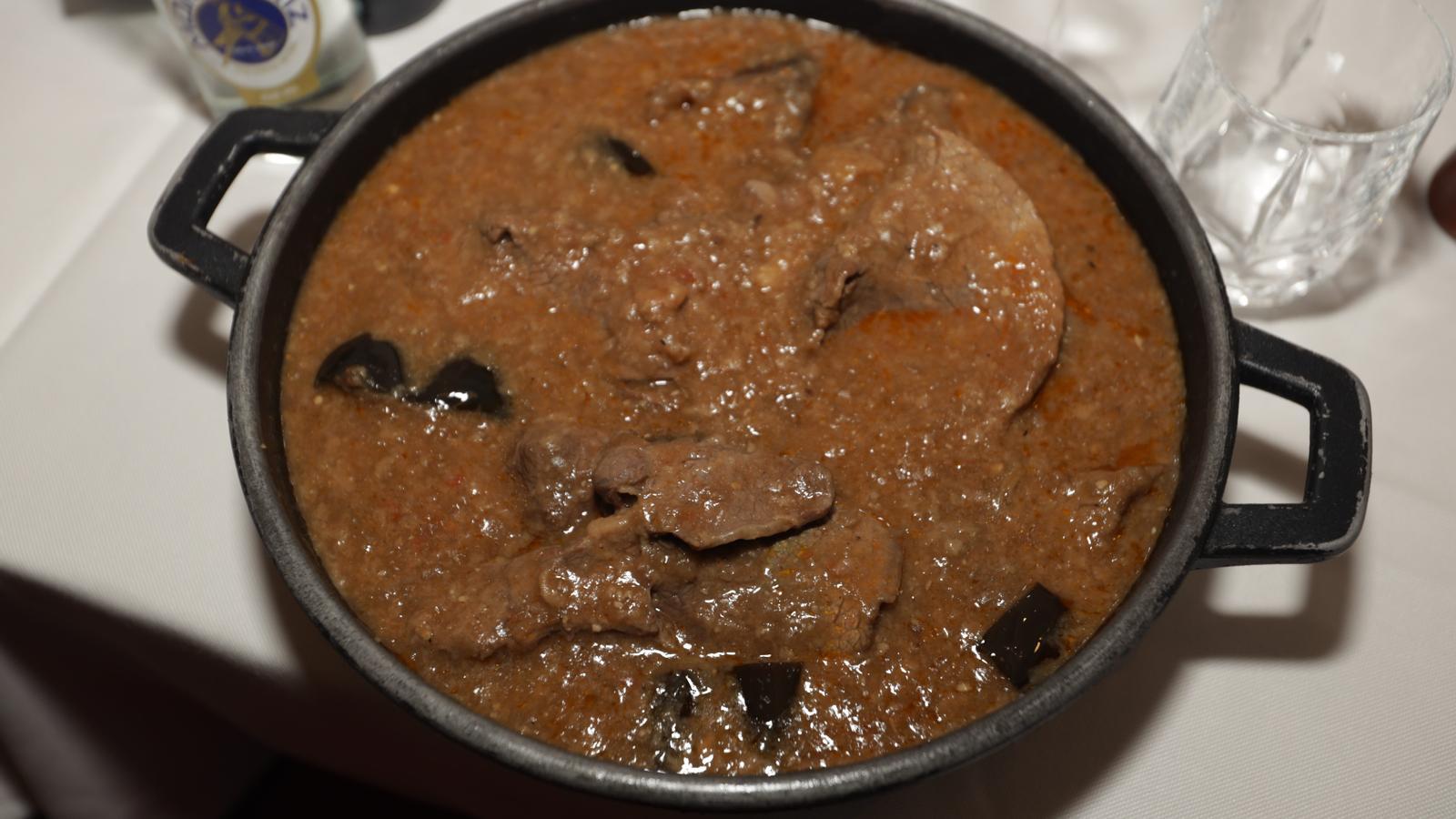
To make it, Ernestina starts with slices of veal rump, thinly sliced. She discards the ones from the shoulder blade because she doesn't like the nerve in them and because she finds that they are the ones people usually remove from the plate. For ten people, the necessary amount is two and a half kilos, she says. Then, she seasons them with salt and pepper and coats them in flour. In a frying pan with extra virgin olive oil, she fries them lightly and sets them aside on a plate. There is a trick she uses so that the flour does not blacken during frying, which is to put two toothpicks inside. “It's just as my mother used to do it; just two toothpicks, which have the ability to keep the flour that comes off the veal slices from getting dirty while they are being fried”.
Once the veal is lightly fried, Ernestina takes the toothpicks out of the pan and throws them away. The curious thing about this trick is that chefs like Javier Álvarez, from Bar Milagros, claim that they had seen their grandmothers and mothers do it too. “It is a trick that I had forgotten and seeing her do it has connected me with my past at home,” he comments. Conversely, chefs Albert Adrià and Jordi Vilà say that they had never heard of it, nor had they ever seen it done.
The next step is the sofrito: with spring onion in a large casserole dish, where you also add two small tomatoes, which should not predominate in any case, and a clove of garlic. The sofrito is the most laborious step of the recipe due to the amount of spring onion that is sautéed, and because it requires hours of cooking. While the sofrito is being made, in another frying pan lightly fry thin slices of eggplant. At this point, the amount of eggplant is to everyone's taste. You also reserve them on a plate once they have been fried.
Once the onion has been sautéed, add the reserved pieces of veal and eggplant to the pan, and let everything cook together for a few minutes so the ingredients blend. Next, add a ground almond mixture, chopped into very small pieces. The final touch is to season it with salt and pepper and let it rest for a few minutes before serving. The way Ernestina Torelló makes it is how Bar Milagros introduces it on the menu, which will explicitly indicate her name.
Fricandó has become a popular dish in restaurants, which have likely risen as standards of tradition. Now the suggestion is that they save others, to create variety, as could be the sarsuela, which is another dish forgotten in homes.
Fricandó, as it appears written in the book 'Avisos i instruccions per lo principiant cuiner dels monjos franciscans' (Notices and instructions for the beginner cook of the Franciscan monks), 18th and 19th centuries
- Finely chop an onion.
- Crush a head of peeled garlic, for example for two thighs.
- Take the grill, you will add bacon fat or lard; put it on the fire, so they finish boiling.
- Put a handful of sifted flour, throw it into the lard pan and keep stirring it, so it does not burn and it takes on a golden color.
- Add the onion, let it sauté there, and once it is done, gradually add the water you have taken from the drippings at the bottom of the casserole, and with this water it will thicken.
- If you have well-soaked fairy ring mushrooms, add them, also truffles.
- Season it with salt and spices. Place the thighs in a casserole dish, pour the juice over them, let it simmer over low heat for a good while until it is done, and serve.
- Instead of scotch bonnet mushrooms you can add a handful of capers and a cup of white wine; if you like, also a bay leaf, two or three pinches of oregano.
- This sauce is good for fried meat and fish, only instead of lard, good oil or butter is added to the flour. At the end, some finely chopped parsley is added with the sauce, and when it is poured over the meat, it must be strained.

