The risks of the general strike

-
CAT -
CAST
BarcelonaThey say that inflation is the worst poison for governments, and in the case of the Spanish state, it has been years now that various crises have been chained together (pandemic, international wars that drive up energy prices, etc.) which, combined with the exorbitant rise in housing prices, have caused a serious loss of purchasing power for the middle and lower classes. As ARA explained on Sunday, wages have risen since 2013 well below the CPI and housing prices. This has been festering a malaise, especially among the youngest, which erupted following the Maricarmen case and which led, on one hand, Pedro Sánchez to bring forward the elections and, on the other, the unions to call a general strike on the eve of the election campaign.
Without questioning the underlying reasons, it is the calendar that makes this strike an unusual protest in recent Spanish history, as it is impossible to separate it from the pre-election atmosphere. Usually, a general strike is called against the government of the day, in this case that of PSOE-Sumar, but the reality is that it is these parties, and the entire left in general, that are most interested in it being a success. In practice, therefore, it is a protest against the opposition of the PP and Vox, who struck down the housing decrees and now threaten to dismantle all the rent control and anti-eviction policies that the executive has put in place.
This is the first time that a general strike has been called not for strictly labor rights issues but because of the price of housing and the high cost of living in general, that is to say, because of low wages. This means that, in practice, the large unions are not the ones leading the protest, but rather the Sindicat de Llogateres (Renters' Union), an entity that has been capable of socially galvanizing the housing debate, as the PAH did in its day, but it is not at all clear that it has the capacity to force a generalized stoppage of economic activity. Among other reasons because the very high cost of living means that many workers cannot afford to do without a day's wages.
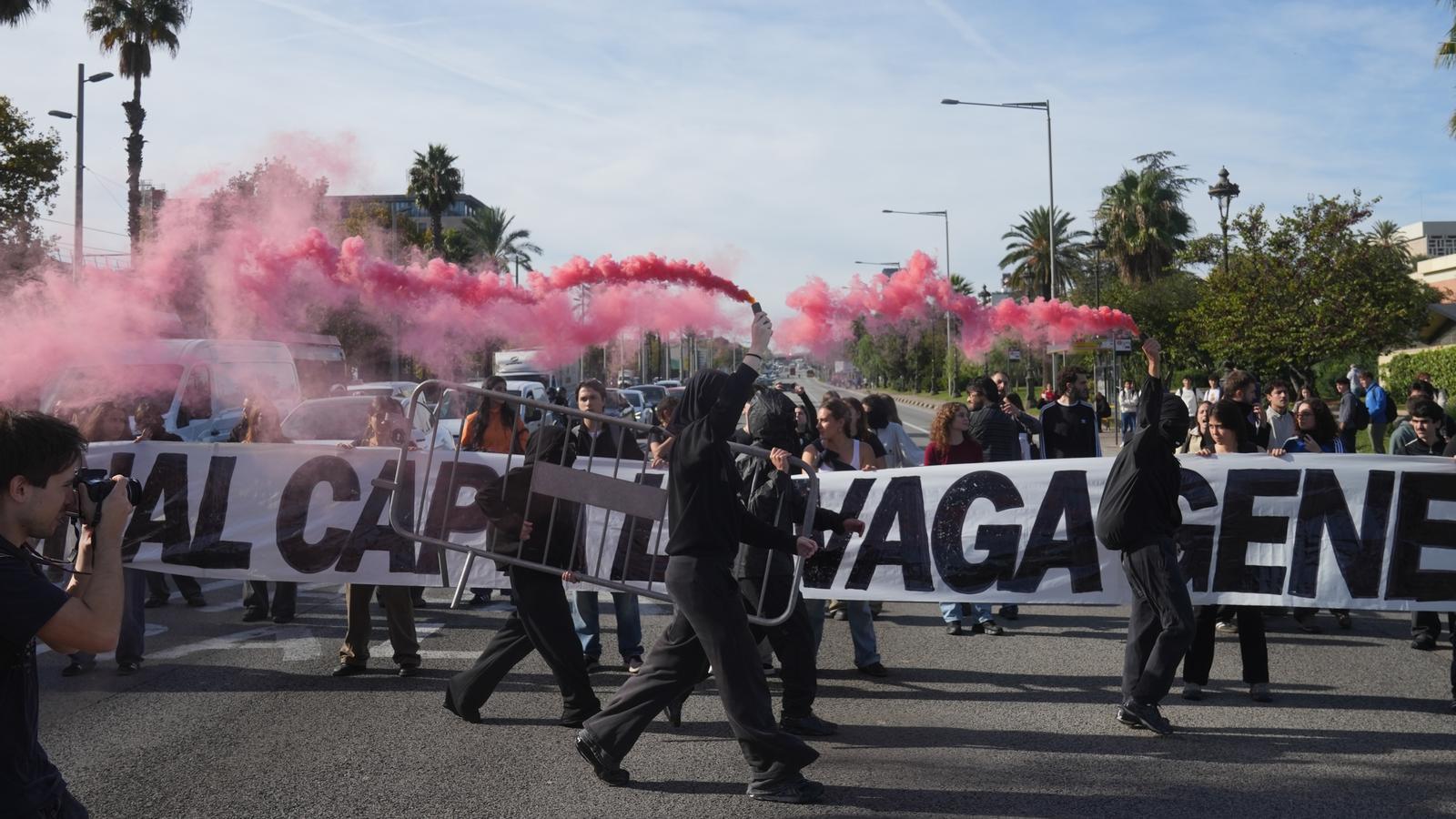
Therefore, there is a first risk for the promoters of this initiative, which is that the following will be minimal, something that would end up having a boomerang effect for the cause they defend. The second risk is that disturbances and scenes of violence occur that end up clouding the day and thus electorally strengthening the right-wing parties. It is, therefore, a gamble that can turn against its organizers and strengthen their theoretical adversaries just at the gates of an election that will define Spain's path for the coming years.
Be that as it may, the right to strike is constitutional, just like the right not to do so, and the optimal scenario for democratic health is that everyone can decide freely and without coercion, neither from employers nor from pickets. From here on, what is needed is to take advantage of the campaign to debate the different proposals to resolve a problem that is very real and that, like all others in a globalized economy like ours, does not have an easy or magical solution.
