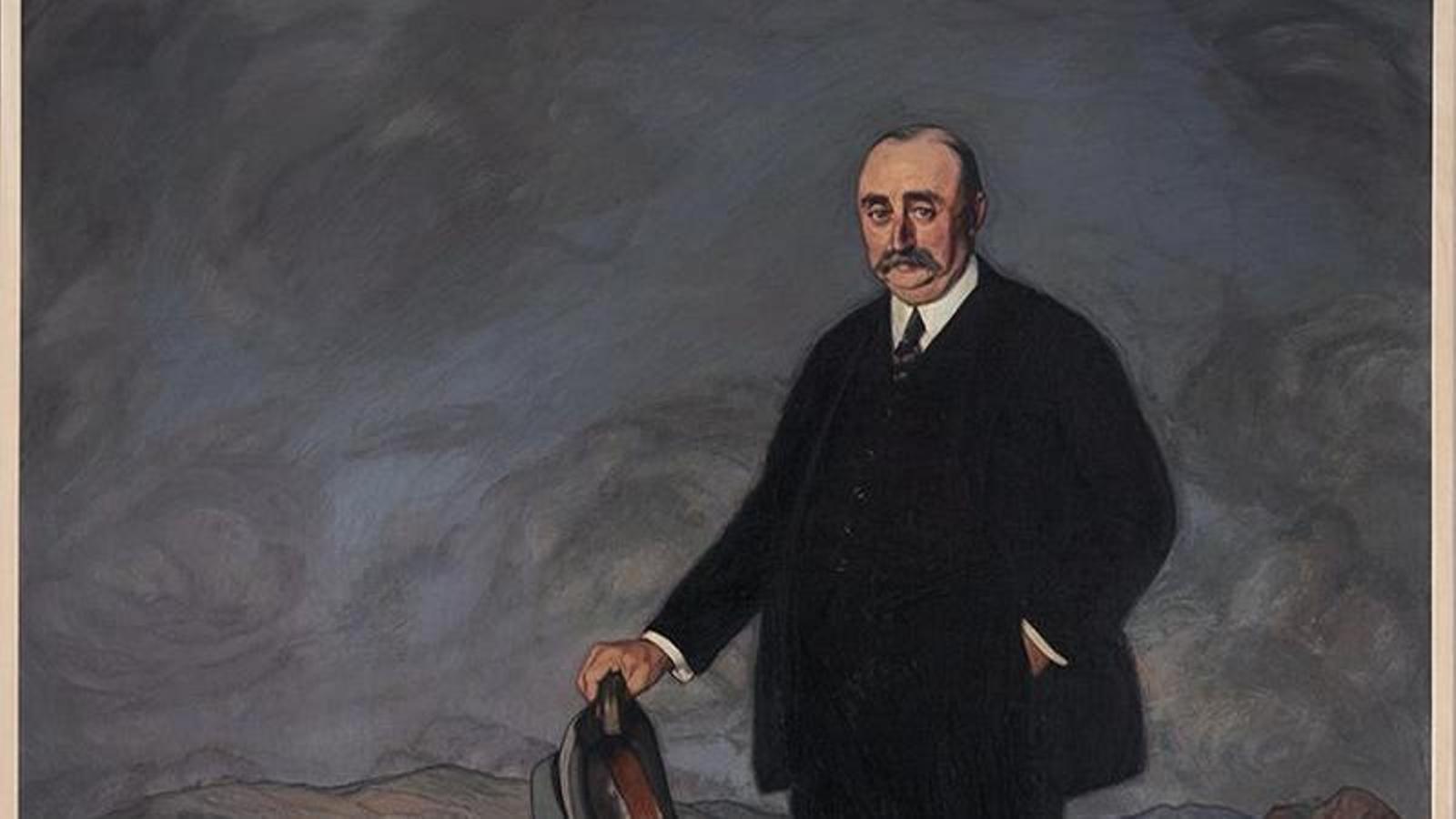
The sir and marquess who was embargoed for his Basque nationalism
The family home of Ramón de la Sota has ended up being the headquarters of Athletic
-
CAT -
CAST
At the end of January 1917, the Catalan politician and businessman Francesc Cambó Batlle was invited to deliver a series of lectures in the city of Bilbao. The trip was an initiative of the Chamber of Commerce of the Biscayan capital, and one of the local figures most enthusiastic about those presentations was the representative of the Basque shipowners, Ramón de la Sota, who was also active in the political arena. In this field, De la Sota played a prominent role within the Basque Nationalist Party and was convinced that the abertzale organization should model itself on the theses of Cambó and the Regionalist League that he led.
- (1857-1936)
Although due to certain family circumstances De la Sota was born in Cantabria, his connection with the Basque Country was total, both due to his ancestors and his nationalist convictions. Once he graduated in law, he started working in his father's mining business, but shortly after he acquired a ship to open himself up to maritime activities. To be able to scale the business quickly, he decided to establish an agreement with his cousin Eduardo Aznar y de la Sota, almost thirty years older than him and already well-positioned in the business circles of Bilbao.
The alliance between cousins materialized in the creation of a good number of business initiatives, such as the Compañía Minera de Setares (1886), established in Cantabria; the Compañía Minera de Sierra Alhamilla (1893), in Almeria, and the Compañía Minera de Sierra Menera (1900), which operated in Teruel and Valencia. They also delved into the shipping business by founding a swarm of small shipping companies that, once Eduardo died, merged to form the Compañía Naviera Sota y Aznar (1906), one of the great firms in the sector before the Civil War. Precisely, the collaboration of their fleet with the British Navy during the First World War earned De la Sota the title of Knight of the Order of the British Empire, which is why from its concession in 1921, he publicly used the title of sir. Eight years later he also received the title of marquis from the King of Spain.
Also with the support of his cousin, De la Sota created the Banco del Comercio (1891) and the ship insurer La Polar, two entities that shortly after their founding were integrated into the Banco de Bilbao. The bank maintained the independence of the brand until the beginning of the 21st century, and the insurer also had a long life: in 1977 it merged with another Biscayan company, Aurora, and moved from the orbit of the Banco de Bilbao (already BBV at that time) to that of the French insurer AXA, to form Axa Aurora, a name that was in force until not many years ago.
Another successful project by De la Sota was the creation of the Euskalduna shipyard (Compañía Euskalduna de Construcción y Reparación de Buques), which began operating in 1900. This company was integrated into Astilleros Españoles (AESA) in 1969 and did not close its doors until 1988, during the time of the Spanish industrial reconversion promoted by the socialist governments of the State (precisely, one of the most iconic companies affected by the reconversion plans was the Sagunto-based Altos Hornos del Mediterráneo, a firm that was the heir to a steel facility that De la Sota had created there in 1917).
We started by talking about politics because it was one of the activities to which our protagonist dedicated the most time and energy. Shortly after reaching adulthood, he began to be active in parties within the sphere of moderate nationalism (basically, the demand for charters and traditions) and years later he joined the Basque Nationalist Party, but without fully agreeing with the ideology of Sabino Arana. In the elections of February 1918, he was elected deputy to the Cortes of Madrid for the Basque nationalists and served there for one legislative term.
This political militancy caused great problems for his heirs, because once the Civil War had ended –he died a month after the outbreak of the war–, the State subjected the family to a process of political responsibilities that meant confiscations, fines, and the seizure of their business group. By the way, the De la Sota family residence from 1900 until his death was a mansion in the Abando neighborhood of Bilbao, called Ibaigane. Its name resonates because it is currently the official headquarters of the Athletic Club.
