The Lebanese baker offering tastes of Beirut in the heart of Girona's Old Town
Roger Nasr has recovered the ancestral nomadic bread and makes specialties from his country with ingredients produced in Catalonia

-
CAT -
CAST
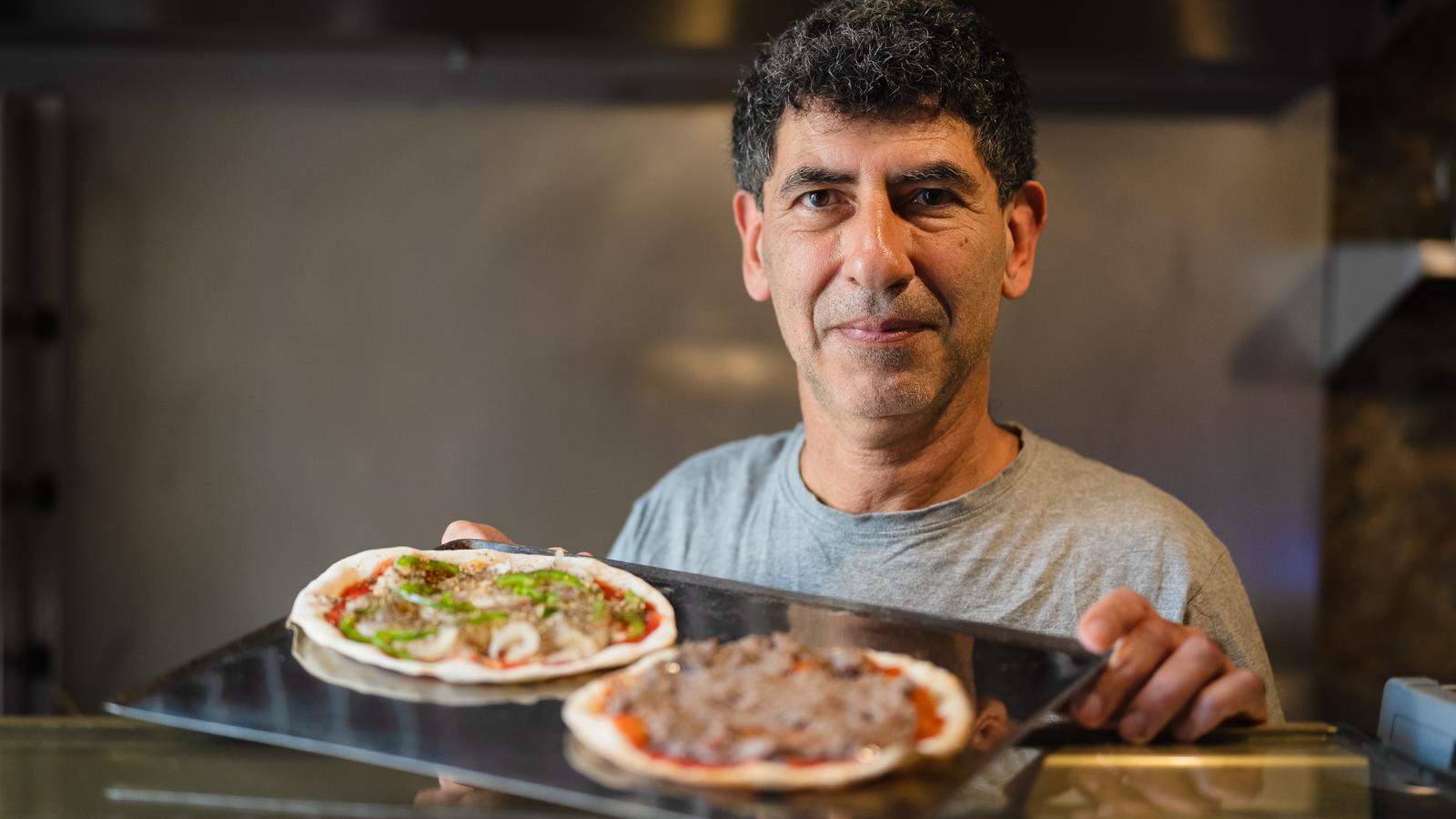
GironaIn Beirut, his hometown, Roger Nasr was the baker at the establishment Roger Le Boulanger. Under the same name, he created a small bakery-workshop in the Sants neighborhood of Barcelona when, in 2019, he and his wife, born in Figueres, decided to leave Lebanon and move to Catalonia to "ensure a better future" for their son, who was then 7 years old. Both in Beirut and Barcelona, at Roger's "bakeries", customers particularly appreciated the "nomad bread", rescued from an ancestral recipe and made with sourdough, flour from local producers, unrefined sea salt, and spring water.
A cuisine that is based on the wisdom of tradition
This type of bread is what Roger makes and uses for several of the Lebanese cuisine specialties he offers at the establishment Entre Terres, which opened in the heart of Girona's Barri Vell six months ago. The small size of the premises has forced him to opt for "takeaway food", although there is a bar with stools in case a customer prefers to sit and savor in situ Roger's cuisine. A cuisine that is based on "the wisdom of tradition and ancestral preparation methods", as the baker himself never tires of repeating, in perfect Catalan, to the customers who have entered the premises or whom he invites in if they stop in front to read the menu. "Where we spend our money shows what we value," it states on the house specialty menu. And where Roger has decided to "spend money" to buy ingredients is on local and organic produce.
Falafel with chickpeas from Artesa de Segre and water from La Garrotxa
One hundred percent Lebanese cuisine with one hundred percent Catalan ingredients. Thus, at Entre Terres you can enjoy oven-baked falafel made with chickpeas from Artesa de Segre, soaked for 24 hours in volcanic water from La Garrotxa. Or traditional hummus with Siurana oil and finished with onion and tomato. The vegetables, always organic, are purchased from Jordi at the Organic Empordà establishment, with a stall at the Mercat del Lleó in Girona. The veal, from Pyrenean pastures, is roasted in the Lebanese style and served wrapped in a thin, crispy layer of nomadic bread.

For dessert, Roger highlights the pistachio baklava or the knefeh, a delight made with hot cheese in a semolina and sesame bun with coconut sugar syrup. "It's not about adapting Lebanese cuisine to local taste, I make one hundred percent Lebanese cuisine, but since the ingredients used on the other side of the Mediterranean are also found here, I buy them here, and I also look for the best quality and with the added bonus of organic production," says Roger. He also highlights the self-management system of his business, which allows decisions to be made as a team, made up of three young female workers from Girona whom Roger constantly praises: "They have learned to make nomadic bread and they work magic and art preparing falafel or Lebanese desserts".
Despite being located on one of the busiest streets in Girona's Old Town for tourists, Roger seeks to attract local clients from Girona especially, who, according to him, have responded with enthusiasm in the few months since he opened the establishment. "Tourism is a plus, but it cannot be the basis of the business," he assures.
Based in Llagostera, Roger feels fully integrated into Catalonia, even though he misses his native Beirut. In Llagostera, he runs, together with his wife, Marga, a restaurant that bears the same name as the establishment in Girona. They offer Lebanese cuisine, but also Greek, Armenian, or Palestinian with a common spirit: "Food as a language of love, of respect for the wisdom of tradition, and as a vehicle for culture".
