"At a dinner eating insects is how we convinced everyone that the Santa Caterina market should not be turned into a supermarket"
Architect Benedetta Tagliabue bets on neighborhood markets as a model of healthy living and food, and also as a current model

-
CAT -
CAST
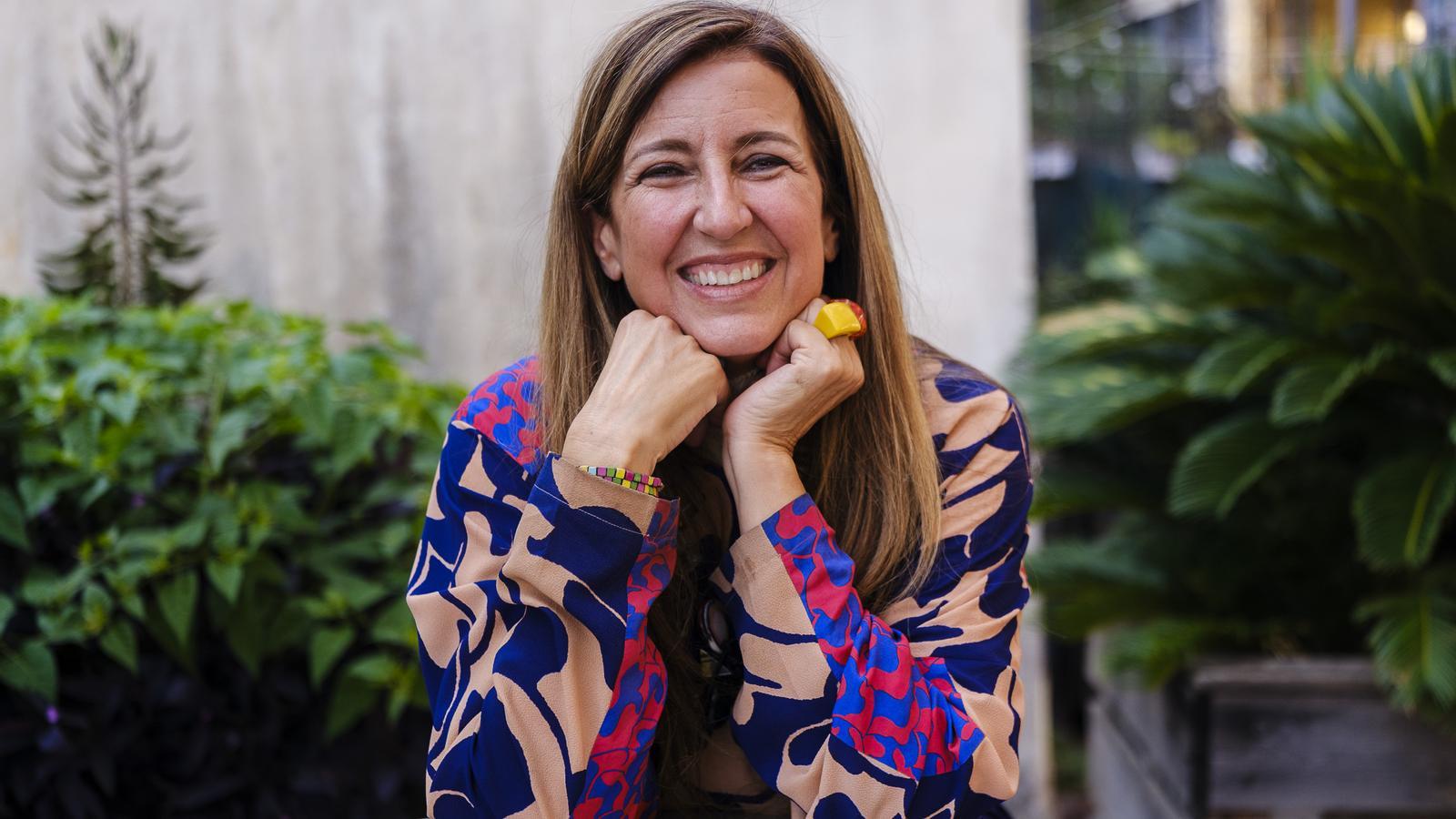
BarcelonaIt's Thursday at noon, and I have met with architect Benedetta Tagliabue for lunch on the terrace of her studio, located on the first floor of the Enric Miralles Foundation in Barcelona (Passatge de la Pau, 10 bis). She is a woman who radiates optimism, expressing herself in Catalan with an Italian lilt, which makes her even more charming and approachable. We talk about food, and as an Italian who arrived in Barcelona in 1989, she says she bases her daily diet on Catalan cuisine. “My husband, Enric Miralles, told me that I couldn't eat pasta every day, which is what we Italians do; pasta that is often just with a drizzle of olive oil and black pepper,” she says. She believed he was right, and both of them began designing the menus they would make. “I discovered that green beans with potato are boring but very healthy, and I also rediscovered legumes, like chickpeas, for example, which we have very much forgotten in Italy.” The Santa Caterina market was where they went most often because they lived nearby (where Benedetta still lives today). “The quality of the vegetables in the markets cannot be surpassed by any supermarket; besides, there is that personal touch; the vendors explain recipes to make at home, they ask how you are, and they say nice things to you.” She cooks chard and cardoons with the recipes the market stall vendors explained to her. The relationship that the residents of a city can have with a market goes beyond commercial exchange. When the architect couple started going to the market, it was in the days when work studios had a two-hour lunch break. “We were very young; we had a two-hour break at noon, and we would go back home for lunch, but on the way, we would stop at the Santa Caterina market and buy vegetables, some fish.” It was like that, daily, how they began their relationship with the Santa Caterina market, which made them raise an outcry when they heard that there was talk in the city of tearing the market down. “Enric, who was very impulsive, started sending faxes to the city council, until the councilwoman at the time, Pilar Rahola, said we should meet.” They met, “always with sandwiches in between, which arrived once we had already started talking,” and they discussed many ideas. The studio made different models with some of the ideas they proposed, but they were all projects in the air, proposals the architects supported so the market would be preserved. Finally, the Barcelona City Council put the construction of the new Santa Caterina market out to tender, “and no other studio but us submitted a proposal.” It was a time, Benedetta believes, when there was a lot of cohesion among architects as a guild, and everyone knew that the two of them had a very close relationship with the market, as neighbors.

The fact is that, when Benedetta and her husband were working on the Santa Caterina market project, at the end of the nineties, it was a time when “markets were perceived as outdated, and that is why there were constant projects on how to modernize them”. One of the ideas that were put on the table was to turn it into a kind of supermarket in the style of the last one that had been inaugurated in Barcelona at that time, and which was taken as an example: L'Illa Diagonal. Other proposals also came up, such as creating a museum that would unite art and gastronomy, which was an idea from the artist Miralda. In the end, there was a day when everything was resolved with different architects, artists and authorities of Barcelona, at a meal. “At a dinner eating insects is how we convinced everyone that the Santa Caterina market should not be turned into a supermarket”. The meal had been prepared by the late chef Montse Guillén, wife of the artist Miralda.
The big trend, fresh produce markets
With what arguments did they convince them? “We told them that in other parts of the world, such as the United States, fresh food markets were being revalued; we spoke to them about Whole Foods, which was the big trend; we told them that nothing had to be changed, and that is how we agreed on everything while eating ants and worms, which we all found quite good and we congratulated Montse Guillén”, recalls the architect.
Today the Santa Caterina market is experiencing a happy moment, with new restaurants inside and around it, such as the Súper bar by the twin Colombo brothers, and many others that maintain the same quality as always: such as the bar Joan or the Casa Mary i Rufo
Let's change the subject, and from the Santa Caterina market we move on to food in general in Barcelona. "Since I arrived, in 1989, I noticed that Barcelona had a very deep food culture, which means stopping to eat, gathering with family, with friends, giving importance to what one eats". As an Italian, I did miss some preparations or foods, such as a good cappuccino or good ice creams, that could be eaten all year round and not just in summer. "I remember they told me it couldn't be that I wanted to eat an ice cream in winter when I had actually asked for it". Now it is no longer like that. "I have also changed my eating habits, but, despite this, I have reference establishments for Italian food, such as Le Cucine Mandarosso, on Verdaguer i Callís street, near the Palau de la Música Catalana, and the Bacaro restaurant (c. Jerusalem, 6). "I don't think that eating pasta every day makes you fat, as is often believed, because it depends on the condiments with which you eat it; I changed my habits to respect the tradition, Enric's culture, because we live in Barcelona".
We look at the watch, and check that the time is approaching for the workshop she is giving on lamp construction, the ones she has co-created and which are named Domita. I ask her about the current work she is doing at the studio, where about thirty architects work, and she says she is working on many constructions in Italy, in Paris, in China. “In Barcelona, they have completely forgotten about me”, and as soon as she says the sentence, she adds that “it doesn't matter”. She has the studio in the city, she lives there, she pays taxes there, but now she does projects for other places in the world. And since she doesn't want to delve into it, we pick up the thread of food. “There is an English architect, Carolyn Steel, who has written books in which she explains the relationship between cities and food; they are very interesting”. Food shapes cities; cities are built with the bond they maintain with it. And the Milan-born architect Benedetta Tagliabue is so clear about it that at the Enric Miralles Foundation, she keeps, in a main space, the wooden model of the Santa Caterina market with those waves on the roof that forever paid homage to the trencadís of the architect Antoni Gaudí.
