Hernández de Cos will be president of the European Central Bank: this is how the decision was cooked up
The current managing director of the Bank for International Settlements becomes the first Spaniard to lead the monetary institution

-
CAT -
CAST
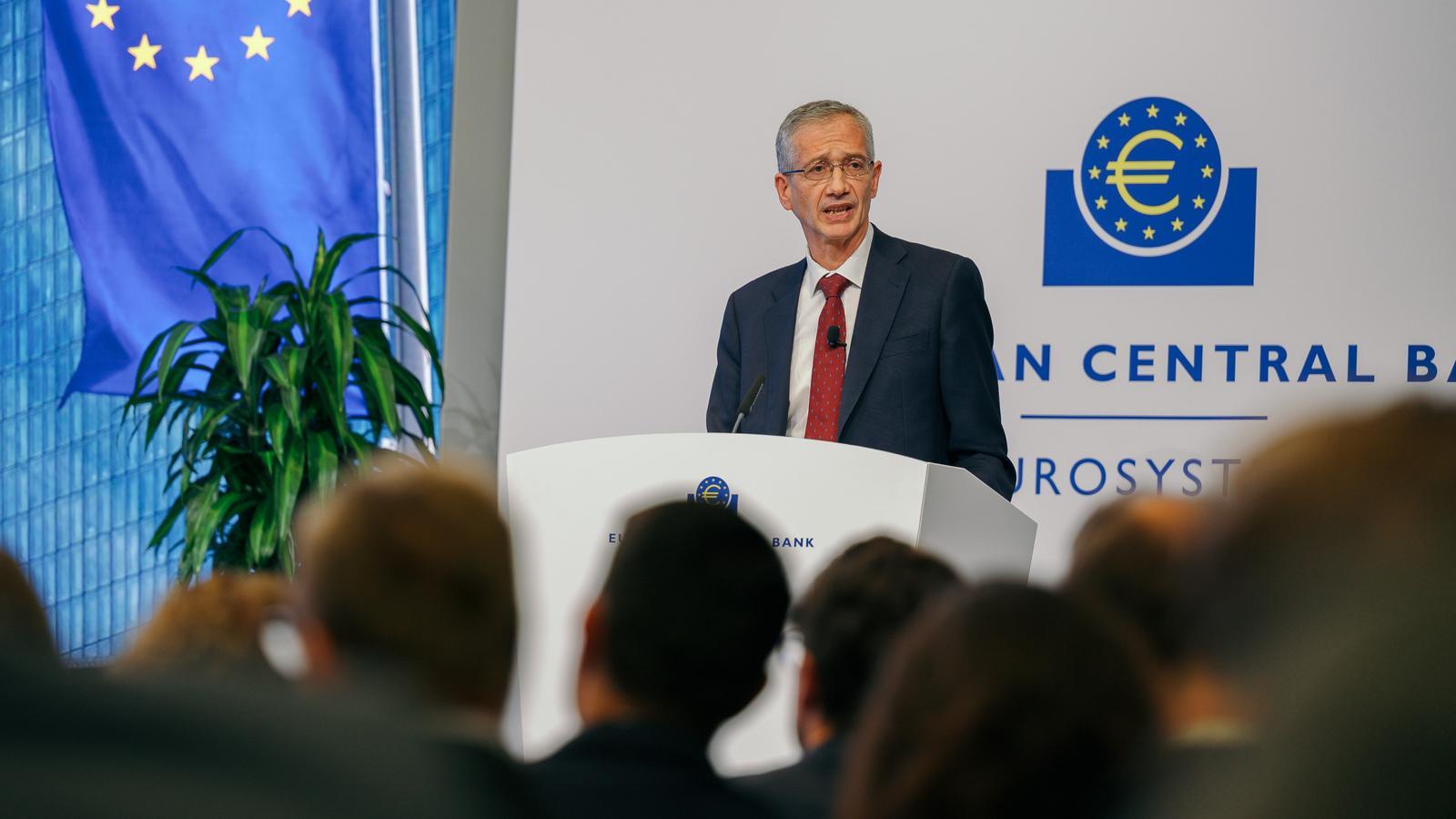
BrusselsPablo Hernández de Cos will be the next president of the European Central Bank. The Spanish economist has received the endorsement of the twenty-one countries of the eurozone this Thursday, and now only procedural steps remain to catapult him into the most important economic seat on the continent. The current managing director of the Bank for International Settlements will replace Christine Lagarde –who announced her intention to resign because she could not remain neutral at the gates of the French elections– at the head of the monetary institution starting in February.
The presidency of the ECB is one of the most internationally significant positions ever held by a Spaniard, comparable only to the NATO secretary generalship that Javier Solana held between 1995 and 1999. Until now, the Spaniard who had gone the furthest in this institution was Luis de Guindos, who held the vice presidency of the institution until May 2026. De Cos has achieved the unanimous support of the leaders, according to diplomatic sources who informed this newspaper, in a summit which the Spanish president, Pedro Sánchez, missed, citing the final stretch of the election campaign, and delegated his representation to his French counterpart, Emmanuel Macron.
For days, the financial press had taken for granted the victory of the Spanish economist, once the Franco-German pact to fill the two other vacancies in the ECB leadership was made known. But the landscape was not the same when Lagarde announced her early departure. In fact, De Cos has managed to turn the tide of a race that initially seemed favorable to the Dutch candidate.
At first, the French president leaned more toward Klaas Knot, in exchange for France getting the position of chief economist of the ECB. But, in a plot twist, on November 9 he announced his support for Hernández de Cos, renouncing that portfolio in favor of Germany. A change of direction that can be explained by the interest of Paris –immersed in a debt crisis– for a looser monetary policy, like the one advocated by De Cos.
The Franco-German pact distributed the two remaining pieces of the ECB leadership. Germany has proposed Markus Brunnermeier, a Princeton professor, as chief economist, and France has chosen Laurence Boone, former chief economist of the OECD, to direct market operations. The distribution of seats between the two largest economies in the bloc shielded the support for the Spanish candidate and left the Dutchman Klaas Knot out of the game.

The pressure from the Netherlands
The main obstacle that delayed the announcement of the Spaniard's nomination has been the insistence of his opponent. Knot, former governor of the Bank of the Netherlands, held out until the end, despite knowing he had no options in the race, with the goal of having a stronger negotiating position to obtain another position.
“It is a very important position and we need an in-depth discussion,” Dutch diplomatic sources opined before the meeting, who were asking for the opportunity to assert their candidate before the rest of the governments. In fact, this very morning, the Prime Minister of the Netherlands, Rob Jetten, already acknowledged that his candidate had “little chance” of getting the position, but still praised his value as an “experienced crisis manager.” Finally, the Dutch delegation chose not to fight the battle by demanding a vote and supported the Spanish candidate (who was the majority consensus) in a gesture of solidity for the financial markets.
Having obtained the approval of the leaders, the procedure to make the decision official now begins. The governors of the ECB will have to issue an opinion confirming the candidacy, and on December 7th, De Cos will have to undergo a hearing at the European Parliament so that the MEPs can issue a recommendation. Afterward, the European Council will formally appoint him. It will not be until the month of February, when Lagarde leaves the position, that De Cos will take office.
