Who have been the great missing ones of the 29-N campaign?
Zapatero and Puente have not participated in the PSOE rallies; Aznar and Rajoy have not coincided with Feijóo, while Yolanda Díaz and Pablo Iglesias have had a testimonial role
-
CAT -
CAST
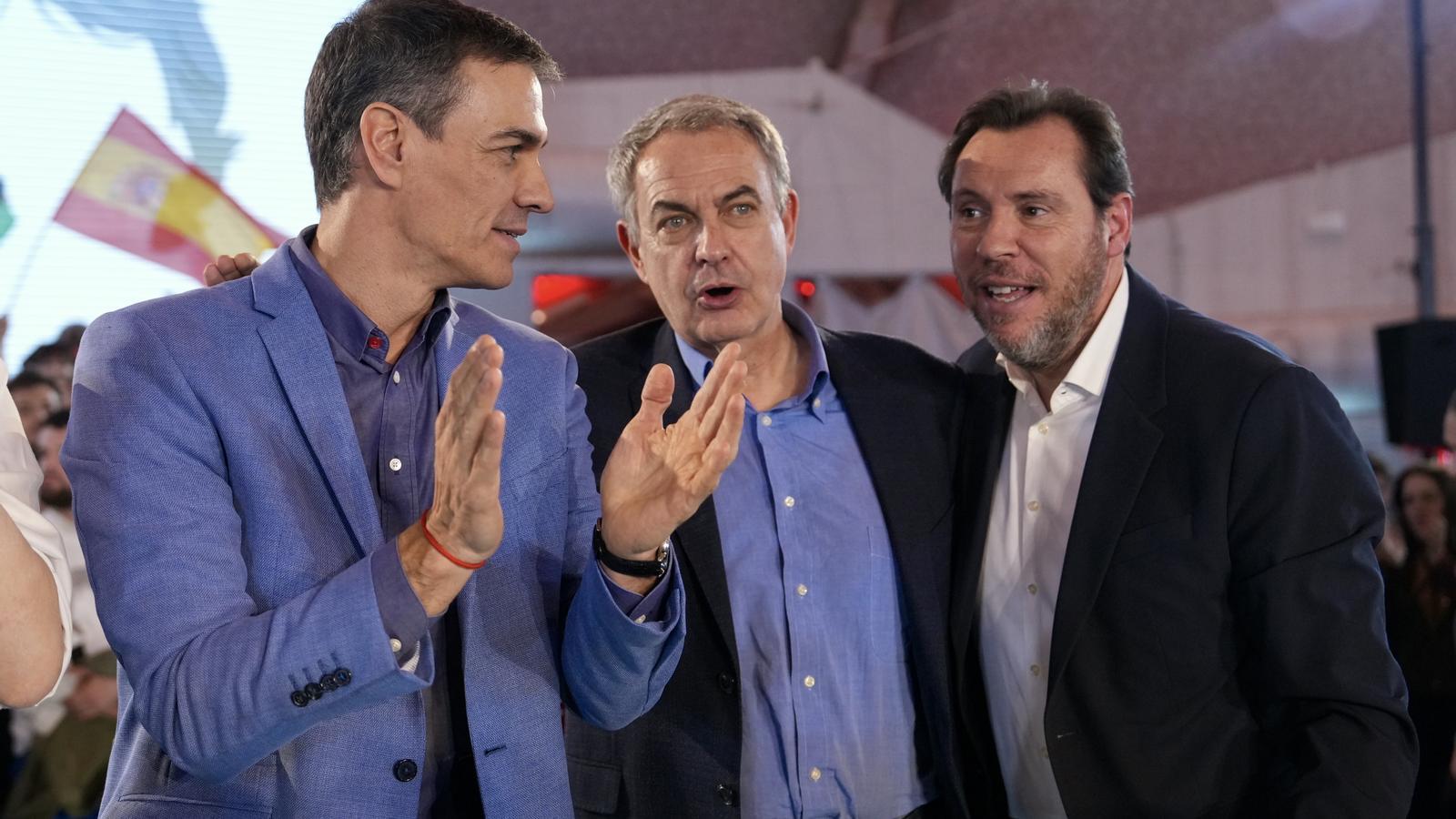
MadridPedro Sánchez has had to change what would have been his starting lineup for the November 29th election campaign. The PSOE leader has done without important party assets who, under normal conditions, would have played a leading role. The great absentee has been José Luis Rodríguez Zapatero, who has been under investigation by the National Court for six months. He was a crucial figure in motivating the comeback in 2023 and, although in September Sánchez said he was counting on him, the former president has decided not to get involved publicly. That said, he has played a role in the shadows “helping” and “advising” the Spanish president, who continues to defend that he is an “asset” to the party. Also not participating is the former Minister of Transport Óscar Puente, who carries the baggage of the recent train tragedy in Adamuz and Urda. After standing out at rallies during the pre-campaign, he was called to be a catalyst for the socialists, but resigned at the start of the campaign. That said, he has remained very active on X and was seen at the final campaign event in Madrid.
In fact, the socialists are the ones with the most losses among their ranks. Sánchez was also left without the party spokesperson. The one who was to be the head of the list for Lleida, Montse Mínguez, stepped aside due to her partner's real estate dealings. Faced with these two shortcomings, Sánchez has resorted to other attention-grabbing stunts. The most notable has been the participation in rallies – kiss included – of his wife, Begoña Gómez, who, despite being in the eye of the hurricane for alleged corruption, generates euphoria among the socialist base. The PSOE has also resorted to other media figures, such as the actress Loles León.
On the other hand, there is a historical figure who has taken a step forward: José Bono, who has played an active role that he had not exercised on other occasions. He has even publicly confronted Felipe González, whom he called a “fool” for having announced that he would cast a blank vote. Despite this, the former Spanish president has avoided stirring up bad blood on the eve of the elections: “If I publicly explain why I cannot vote for this government, they will lose millions more votes,” he justified. Beyond this episode, Sánchez has managed to keep the most problematic figures for his electoral interests in the background. Another person who has not been seen much is Emiliano García-Page, who has been a thorn in Ferraz's side throughout the legislature. He made his debut at an electoral event last Saturday at a meeting called by the Socialist Youth after having been absent from Pedro Sánchez’s massive rally in Albacete because he was on an official trip.
Separate campaigns in the PP
Regarding the Spanish right-wing bloc, the PP has deployed numerous parallel campaigns. While Alberto Núñez Feijóo was carrying out his own route alone, joining up with local Popular Party leaders from the place he was traveling to, the regional barons and the rest of the party's leaders have done so on their own. With Isabel Díaz Ayuso, for example, Feijóo has coincided in only two events, but the Madrid president has carried out her own campaign that even took her to Catalonia and has caused more than one controversy from which the Popular leader has maintained a prudent distance. Who he has also not surrounded himself with, unlike on 23-J, are the former presidents José María Aznar and Mariano Rajoy, who have participated in other secondary events, albeit with a very low profile.
Santiago Abascal's campaign has been even more personalistic. The Vox leader is the absolute protagonist, just as it already happened even in the regional elections that took place in some communities at the beginning of this year, in which he was not even the candidate. In the case of the extreme right, the leaders who now accompany Abascal denote the internal fracture of recent years due to the disappearance of figures who had been relevant, such as Javier Ortega Smith or Iván Espinosa de los Monteros.

Two secondary actors on the Spanish left
In the Spanish left, there have also been profiles that had great prominence in previous elections and that have now participated from the second line. Yolanda Díaz founded Sumar in 2023 and was the candidate on 23-J, but this time she has intervened very little. At the central rally of the Broad Front in Barcelona, she reproached Gabriel Rufián for ERC voting against the labor reform and criticized the PSOE, stating that the goal is not to “be the first”. Days later, she also participated in an event in Asturias and also intervened in the final campaign event.
On the other hand, Pablo Iglesias debuted less than 48 hours before the elections by participating in the final event of Podemos. Throughout these two weeks, he has indeed had a presence in talk shows of different media outlets and has disseminated the events of the purple party and the most prominent interventions of Irene Montero on social media.
The role of the Catalan ex-presidents
During the election campaign we have also been able to see former presidents of the Generalitat. Jordi Pujol and Artur Mas participated in the central event of Junts and José Montilla campaigned for the PSC in Anoia and signed a manifesto of support for Pedro Sánchez. But there have been two who have had a more discreet role.
Quim Torra has not been seen. On Friday he gave a lecture in Balaguer about the Catalan language and on Monday he published an article in the Punt Avui in which an implicit support for Alhora could be understood: “One cannot defend the break by voting for the managers of autonomism, nor can one build one's own state by endorsing those who only aspire to return to pacts, negotiations, and influence with the State from which we want to become independent”, he wrote.
On the other hand, Pere Aragonès only appeared as an opening act for Gabriel Rufián at an informative breakfast. He introduced him as a “thoroughbred politician” and a “very authentic” person who has managed to bring politics closer to young people and migrants. And he acknowledged that he is the only politician his students from the Faculty of Business and Communication at the University of Vic have asked him about. The ballot boxes will tell if the brains of the party machines have been right in choosing the protagonists, supporting actors, and those absent from this election campaign.
