Why do authors change publishers? Seven recent controversial cases
Following the announcement of the Planeta prize to Isabel Allende, we review some of the controversies in the sector during the last decade

-
CAT -
CAST
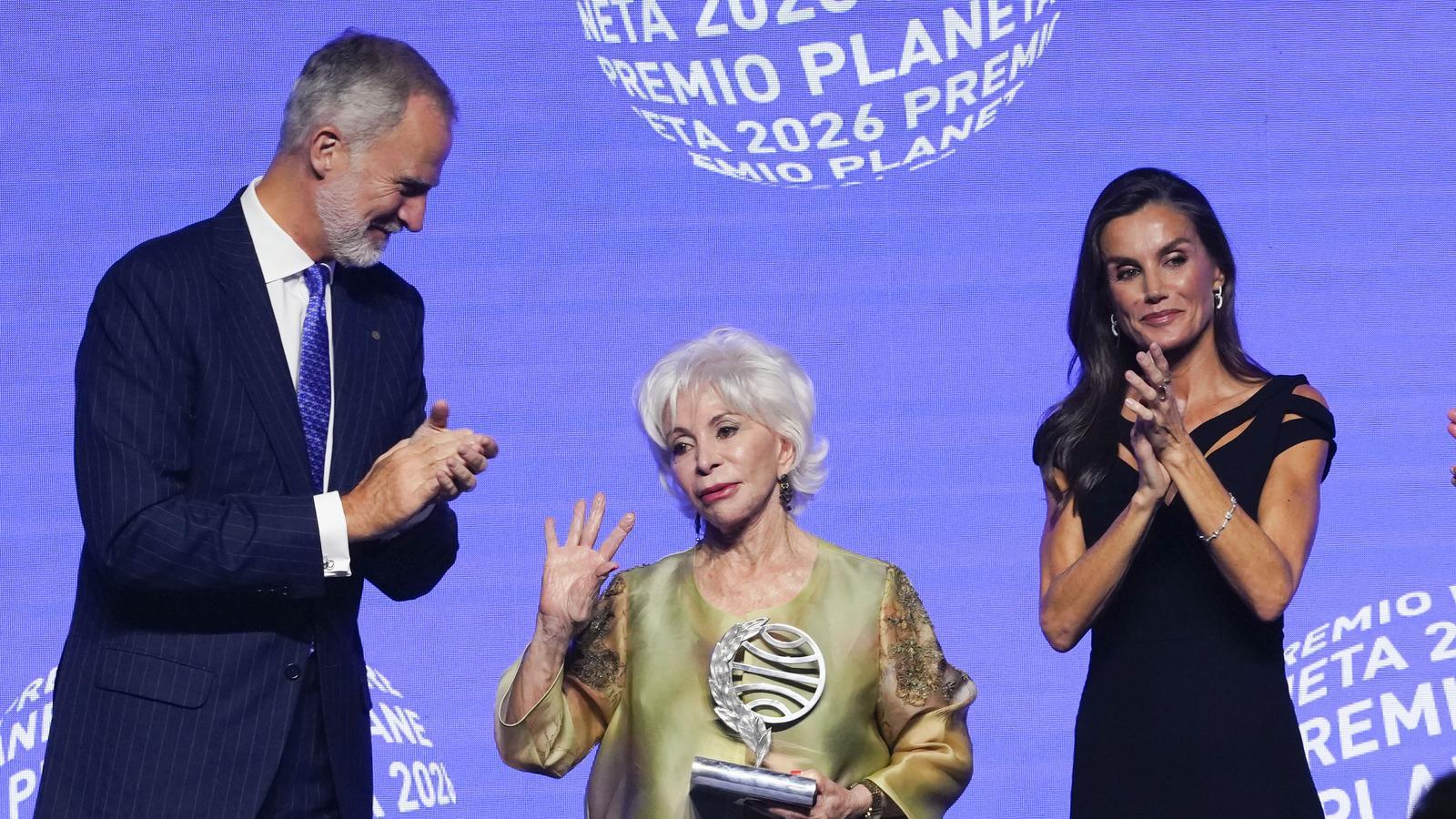
Barcelona"I had never entered a literary contest to avoid coming in last,", asserted Isabel Allende during her acceptance speech for the 75th Planeta Prize, endowed with one million euros, which meant she would leave Penguin Random House and join the group currently presided over by José Creuheras. The news has reopened, once again, the controversy over authors changing publishers, often spurred by literary awards for unpublished works, but also by financial offers that are difficult to refuse (though they do not usually transcend), by the desire to give a new boost to their career by changing houses, and even as a sign of protest.

Linked to Plaza & Janés since she debuted with The House of the Spirits in 1982, Isabel Allende (Lima, 1942) has left the current Penguin Random House imprint having become one of the house's most important bestsellers. The more than 80 million copies sold of the 32 works she has published there make the editorial change financially painful. Since the awarding of the prize, it has been rumored that, in addition to the million euros from Planeta, Allende may have negotiated, through her current agent –Johanna Castillo, of the American firm Writers House–, three million euros more, which could correspond to the imminent transfer of part of Allende's work from one publishing house to the other.
From time to time there are independent publishers that achieve great editorial success, as has happened at Siruela with La península de las casas vacías, by David Uclés (Úbeda, 1990), of which they have sold more than 300,000 copies in two years. The young author took advantage of the momentum of the La península... phenomenon to win the last Nadal prize, endowed with 30,000 euros, with La ciudad de las luces muertas. Published by Destino, a Planeta imprint, the novel has had a great reception among readers, but it has not been as exceptional as on the previous occasion.
In the spring of 2016, it was made public that the heirs of Roberto Bolaño (1953-2003) had closed the transfer of his work from Anagrama to Alfaguara –a Penguin Random House imprint– for 500,000 euros. The change implied that, on December 31st of that same year, Anagrama had to withdraw all the novels and short story collections by the Chilean author that were still circulating in bookstores, in parallel to the Alfaguara editions of Los detectives salvajes, 2666 and El espíritu de la ciencia-ficción, published in the month of September.
In 2021 the Planeta award for Carmen Mola for La bestia involved unmasking, in exchange for the million-euro prize, who was hiding behind that pseudonym, and to the surprise of many readers it turned out that it was not a woman, but three men, the screenwriters Jorge Díaz, Agustín Martínez, and Antonio Mercero. Mola had become known with La novia gitana at Alfaguara in 2018, the start of a very profitable trilogy for Penguin Random House: more than a million copies were sold. After the Planeta, the trio of screenwriters still published one last novel with Alfaguara, Las madres (2022), although from then on the authors have stayed with Planeta. Their latest novel, Los huérfanos, is one of the best-selling books this autumn.
Last April, more than 130 French authors made public their letter of resignation to continue publishing with Grasset for two reasons: the sudden dismissal of its editorial director for 26 years, Olivier Nora, and the shift of the catalogue to the right after its acquisition by the millionaire Vincent Bolloré. Among the authors who left Grasset were such well-known names as Frédéric Beigbeder, Bernard-Henri Lévy and Virginie Despentes. The author of King Kong Theory debuted there in 1998 with Les jolies choses, and since then she had published the rest of her work there. Just from the Vernon Subutex trilogy (2015-2017), Grasset sold more than a million and a half copies in French.
When Albert Sánchez Piñol (Barcelona, 1965) published Cold Skin with La Campana in 2002, he became one of the most successful authors in Catalan literature. With more than 150,000 copies sold and translations into 37 languages, the author even improved his figures by changing language, but not publisher: Victus (2013) exceeded 250,000 copies. Since then, the Barcelona-born author has continued to deliver good adventure books like The Monster of Saint Helena (La Campana, 2022), but sales have not accompanied him as before. This spring, Sánchez Piñol debuted at Univers, an imprint of Abacus Futur, with After the Shipwreck, which was the third best-selling fiction book in Catalan for Sant Jordi. The author has not explained why he has left La Campana, which has been part of Penguin Random House since 2019.
The lure of the Planeta prize when it comes to signing authors from the competition has been working for decades: it happened in 1978 with Juan Marsé, author of the then-independent Seix Barral, in 1989 with Soledad Puértolas, who had published before with Anagrama (and returned there later), and in 1993 with Mario Vargas Llosa, who left Tusquets and shortly after moved to Alfaguara. When, in 2019, Javier Cercas received the Planeta (Ibahernando, 1962), he broke a decade-long editorial relationship with Literatura Random House, a Penguin imprint, in exchange for the 601,000 euros in prize money that the award had at the time. Terra Alta was the first of the three novels that Cercas published with Planeta. After El castillo de Barbazul, the Catalan author returned to Penguin Random House with one of his most peculiar books, El loco de Dios en el fin del mundo (2025), which was a bestseller and has been translated into about thirty languages. The figure that Penguin paid Cercas in exchange for leaving Planeta is not known.
