Science, art and innovation: Gaudí inspires the 31st Science Week
The initiative, coordinated by the Catalan Foundation for Research and Innovation (FCRI), started on Friday and will last until November 15 with a wide program of scientific dissemination activities throughout the territory.
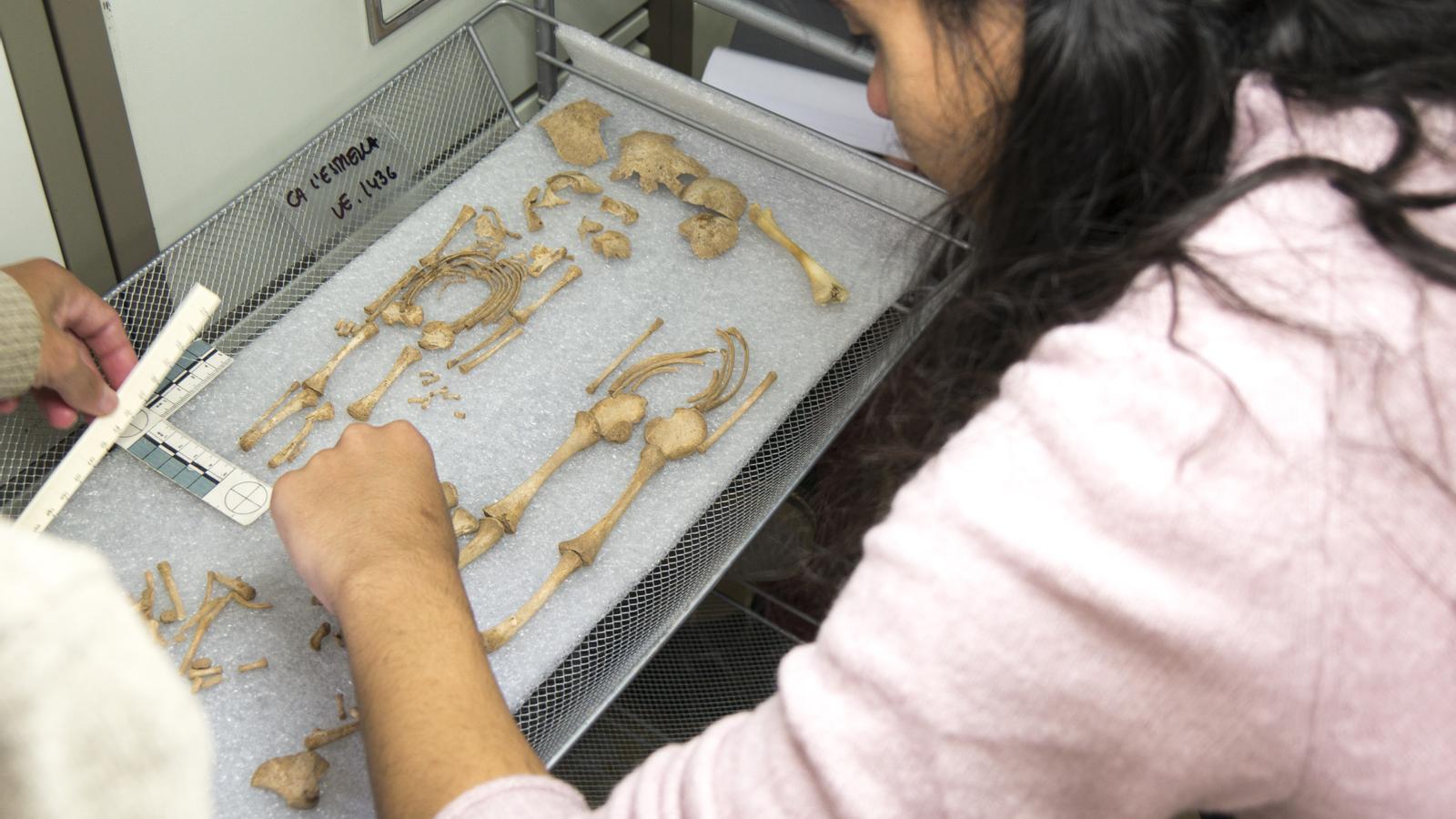
Scientific research is once again the protagonist with the 31st edition of Science Week (SC’26), organized by the Catalan Foundation for Research and Innovation (FCRI), with the support of the Department of Research and Universities of the Government of Catalonia and the participation of more than a hundred institutions and entities. Universities, research centers, large infrastructures, academies, museums, schools, scientific associations, libraries, and companies are collaborating on an event that kicked off this Friday and will run until November 15, with more than 300 free activities planned throughout the country, including talks, guided tours, routes, exhibitions, workshops, conferences, and other outreach activities.
The director general of the FCRI, Miquel Gómez Clares, has highlighted that “Science Week 2026 reinforces the role of scientific knowledge as an essential tool to combat misinformation and promote a more informed, critical, and participatory citizenry aimed at all audiences”.
The programming of the Science Week, which is supported by BBVA, Amgen, and the La Caixa Foundation, places a special emphasis in this edition on the intersection between scientific thought, creativity, and cultural heritage, with particular attention to the figure of Antoni Gaudí, in commemoration of the current Gaudí Year. The work of the universal architect stands as a common thread of the Week to demonstrate how science and art can meet again to provide answers to complex challenges, both from the past and the future.

The virtual reality exhibition Gaudí Code: The unprecedented experience opened on Friday the SC'26 at the Espai Imagina in Barcelona and will be followed by the workshop The secret geometry of Gaudí (November 10, CiènciaLab Viladecans), for primary, secondary, high school and vocational training students, and the children's activity Create a nature trencadís (November 13, Séquia Interpretation Centre, Parc de l'Agulla in Manresa).
The SC’26 will also present other scientific events of special relevance, such as the exceptional sequence of two total solar eclipses and one annular eclipse, visible from the Iberian Peninsula between the years 2026 and 2028, a unique opportunity to continue promoting astronomical outreach, especially after the total solar eclipse of August 12 in Catalonia.
The Week maintains its thematically polyhedral philosophy, one of its main distinctive features. Other notable anniversaries this year are the Year of Volunteering for Sustainable Development; the 150th anniversary of the death of Ildefons Cerdà, engineer and urban planner; the 100th anniversary of the birth of Maria del Tura de Bolòs, a geographer specializing in biogeography and landscape science; the 100th anniversary of the birth of Marta Mata, pedagogue and researcher in the teaching of the Catalan language, and the 150th anniversary of the Hiking Center of Catalonia, which has its origin in the Catalanist Association of Scientific Excursions, founded in 1876.
The grand final of the scientific monologues, in Girona
One of the highlights of the Science Week agenda is the final of the competition The Science Club Monologues, a dissemination format that originally combines humor and science. The competition, organized by the FCRI with the support of the Vives Network of Universities, the Banc Sabadell Foundation, and the collaboration this year of the University of Girona (UdG), is already in its eighth edition. On Friday, November 20, starting at 12:30 PM, the Narcís Monturiol Space of the UdG Research and Innovation Park will host its grand final, which will feature eight finalists selected from across the Catalan-speaking territories. The event will be presented by actress and comedian Agnès Busquets.
The goal of the competition is to promote the communication of science in Catalan in a concise and entertaining way, using only personal communication skills. The initiative rewards the three best monologues, which will receive prizes of 1,000 euros, 600 euros, and 400 euros, respectively.
The SC’26 program aligns with the Department of Research and Universities' Gender Equality in Science Strategy (EIGEC) and organizes various activities to promote and increase the visibility of women's participation in scientific and technological fields. Of note is the lecture series '(In)visible Ingenuity', running until November 12, at the Terrassa School of Industrial, Aerospace and Audiovisual Engineering (ESEIAAT), led by Núria Salán Ballesteros, a professor at this institution.
On November 15, the Historical Botanical Garden of Barcelona will host a literary and naturalistic itinerary with a gender perspective, focused on poetry written by women and organized by the Museum of Natural Sciences of Barcelona. The program also includes the talk 'Can we anticipate unwanted loneliness? The NOT ALONE project', which will take place on November 12 at the TecnoCampus Mataró-Maresme university campus. The session will focus on older women and will present the results of a study led by the Chair of Aging and Quality of Life at this institution.
