Special education centers have 30% more students than ten years ago
The Government bets on expanding the number of places, while families and teachers denounce that the lack of resources forces them to leave the mainstream school
-
CAT -
CAST
Barcelona / VallsWhen Noemí Blazquez saw that the inclusive decree was approved in Catalonia in 2017, she didn't have children yet. "I thought: how advanced we always are here in Catalonia, how good it is that they want to ensure there is no separation of children in special education centers, that there is no apartheid". A couple of years later she became pregnant and, experiencing it from the inside, her perception began to change. "My son is wonderful, but the educational journey we have had to follow has been hard and it is also a grieving process," she explains. Her son, who is now seven years old, has level 3 autism (the highest), attention deficit hyperactivity disorder (ADHD), and episodes of epilepsy.
His journey began at a private school –"I took him to the school where I had grown up," he explains– where they asked him to pay for extra support for his son and, after a few months, they directly told him that they did not want him. Then he made the leap to an ordinary public school with a SIEI place (Intensive Support for Inclusive Schooling), which has more professionals to attend to students with special educational needs. "It was very lovely. The tutor did everything possible so that my son had the right to an inclusive education, but it reached a point where she was honest with me and told me that he had every right to stay, but that they believed he needed therapeutic attention. That at school they could give him all the love in the world, but they did not have the resources to help him," remembers Blazquez.
Once she and her husband accepted that their son would attend a Special Education Center, they found that it was not so easy to gain access due to a lack of places. "By law, one of the criteria is the orientation that the parents want and a report from the EAP [the psycho-pedagogical counseling and guidance teams of the Generalitat], and I met them all. They could not deny it to me due to a lack of their own resources," the mother insists. After a journey of meetings and complaints in which Blazquez even prepared a contentious case that she ultimately did not have to file, they were awarded the place at the center they needed. "Now we are delighted with the school and I dedicate the little free time I have to helping other families in similar situations, but with fewer resources or knowledge about the bureaucratic odyssey they have to take on," she explains.
2,000 new students
Blazquez's is not an isolated case. Since the approval of the inclusive education decree in 2017, which aims to ensure that fewer and fewer students with any disability or special educational need leave mainstream school to attend a Special Education Center, the number of students enrolled in Special Education Centers has grown by 32% across the system.
According to Idescat data, it has gone from 6,839 students in 2017 to 9,030 last academic year with a significant increase in post-compulsory education. In the case of compulsory education –from primary to ESO– the increase has been more modest: there are 5% more students in special education centers (6,140 last academic year) than in the year the inclusive decree was approved.
Behind this sustained increase in students in special education centers are various factors ranging from an increase in diagnoses to the lack of resources in mainstream schools that teachers and families have been denouncing for years and which make it very difficult to attend to students with greater needs under proper conditions. "At first, families go through a very grueling process so that their children can go to mainstream school, but over time they end up seeing that they are not well cared for," explains Elena Martínez, a pedagogue from the Autism Catalonia Federation.
"Since [the decree] is not accompanied by all the necessary measures to be able to attend to the students, it is true that not all cases can be well cared for and many families prefer to go to the Special Education Center where they will be able to have better support," agrees Patrícia Morales, an early childhood teacher and coordinator of the Inclusive School group at USTEC. "Mainstream school is currently suffocated, it is very strained, even with this inclusive decree in place," she insists.
In this sense, the pedagogue from the Autism Catalonia Federation –an entity that constantly assists families who need a diagnosis or advice– assures that "there are autism cases with a diagnosis that could fit well in a mainstream school, but because they do not have the supports they need, they end up asking to go to a Special Education Center," where they can find speech therapists, psychologists, or psychotherapists. Martínez regrets that "in mainstream school, even if it is called inclusive, these professionals are still not all present."
This situation is also denounced by the AFFAC, the federation that encompasses the associations of families of public schools and institutes. In their latest report, they denounce that since the approval of the inclusive education decree, "enrollment in special education in compulsory stages has not decreased in a system that is overall losing students" and they insist that "situations that require very high support exist, are real, and must be addressed, but they are in the minority." Furthermore, they also warn that "not all families have the same time, the same knowledge, or the same resources" to face the processes to obtain a diagnosis that would open the door to having more support in mainstream school.

New places
The Department of Education is not oblivious to this reality either: this academic year, 175 new mandatory special education spots have been opened with an investment of 6.3 million euros. However, the increase comes after the number of spots had remained stagnant or even fallen slightly in recent academic years, despite the increase in students receiving the report to be enrolled in a Special Education Center.
Sources from the Department of Education recall that the inclusive decree establishes that "schooling in a Special Education Center is considered exceptionally, when the student's needs require a high intensity of educational support and highly individualized measures". In this sense, they explain that the Government is committed to "continuing to increase the number of places", but that "it is not a matter of prioritizing a specific schooling model, but of guaranteeing an adequate, inclusive educational response adjusted to the needs of each student".
In view of this increase in places, AFFAC questions that "after approving a regulation that situated special education as an exception and provided for its transformation, the decision is to expand it".
In parallel, from Education they explain that this year they have launched "a single telematic application procedure" to facilitate the procedures for families to enroll their children in Special Education Centers.
Regions without centers
Beyond the specific number of places, Blazquez warns that many of the families she has helped in the process of finding a Special Education Center encounter the problem that they do not have one reasonably close to home. In fact, there are some regions that do not have any center, neither public nor state-subsidized, of this type. "Sometimes they are offered the solution of continuing in an ordinary center with a SIEI place, but it is not the same," explains Blazquez. This is also denounced by Ustec: "There are families who have to go to the Special Education Center and, due to the zone, they cannot," criticizes Morales.
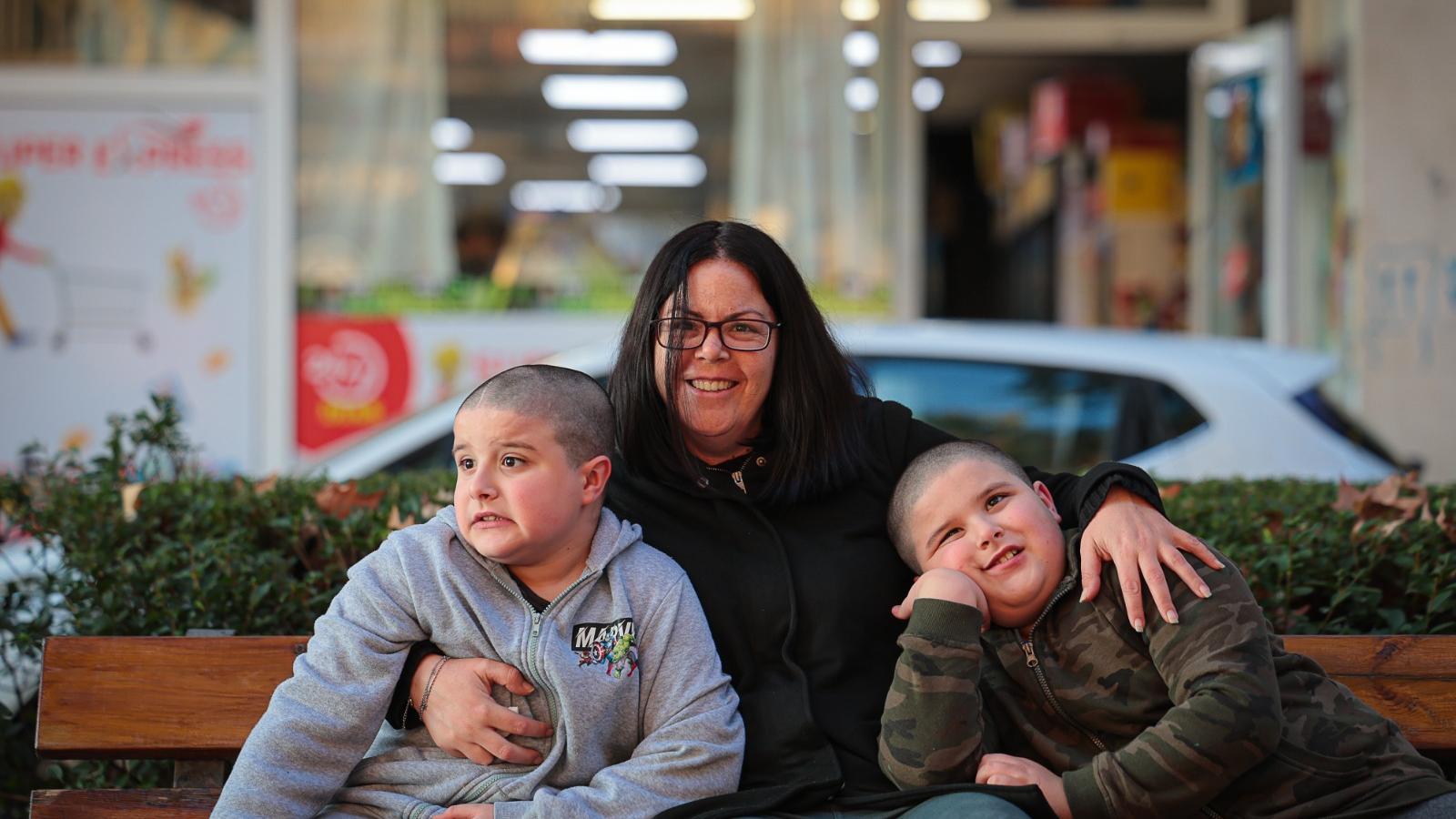
Someone who finds herself in such a situation is Ana Galera, mother of three children, two of whom have autism. Both are in the fifth grade of primary school at the Eugeni d'Ors school in Valls, which is an ordinary school, but one that has reinforcement—a SIEI Plus, that is, with more support hours—to attend to other children with special needs. Although the Eugeni d'Ors has more resources and professionals than other schools, it is not enough. "The teachers give their all, but they can't keep up," laments Galera. "If the school had the necessary staff, it would be ideal, but the Generalitat does not provide enough professionals," she complains.
As this mother explains, the teachers have told her on occasion that her two children would be better off in a Special Education Center. The added problem that Galera faces is that there are none in the entire Alt Camp region. The closest one is in Montblanc. The Department of Education has offered her spots and also transport, but she worries about how her children might react without her during the journey and prefers to stay in Valls. The other problem that has worried her for some time is what will happen once her children finish primary school because, in Valls, there is also no high school with the reinforcement of a SIEI Plus.
