"In the Spanish elections I will vote Vox and in the Catalan ones Aliança"
ARA collects eight testimonies of the dual vote between Santiago Abascal's party and Sílvia Orriols' party depending on the electoral contest
-
CAT -
CAST
Barcelona"Immigration is out of control and if Aliança doesn't run, we have no alternative in these elections." David, a middle-aged man from Reus, will vote for Sílvia Orriols' party when elections are called in Catalonia, but on November 29 he will choose the Vox ballot, just as, in fact, one in five Aliança voters will do, according to the latest poll by the Center for Opinion Studies (CEO). "We have a party against immigration in Spain and another in Catalonia," he celebrates to defend this split-ticket voting. Until now, he had always voted for the PSOE. ARA has spoken with several people who have decided to engage in this split-ticket voting and the migratory factor is the main reason.
Alberto, also middle-aged, says he is fed up with Moroccans: "My daughter's phone was stolen by them and whenever there are problems they are involved; with Abascal or Orriols in power, sentences will be toughened and that is what we need, a firm hand against all these young immigrants," adds this resident of Vallès Oriental, following the theses advocated by the far-right, both Catalan and Spanish.
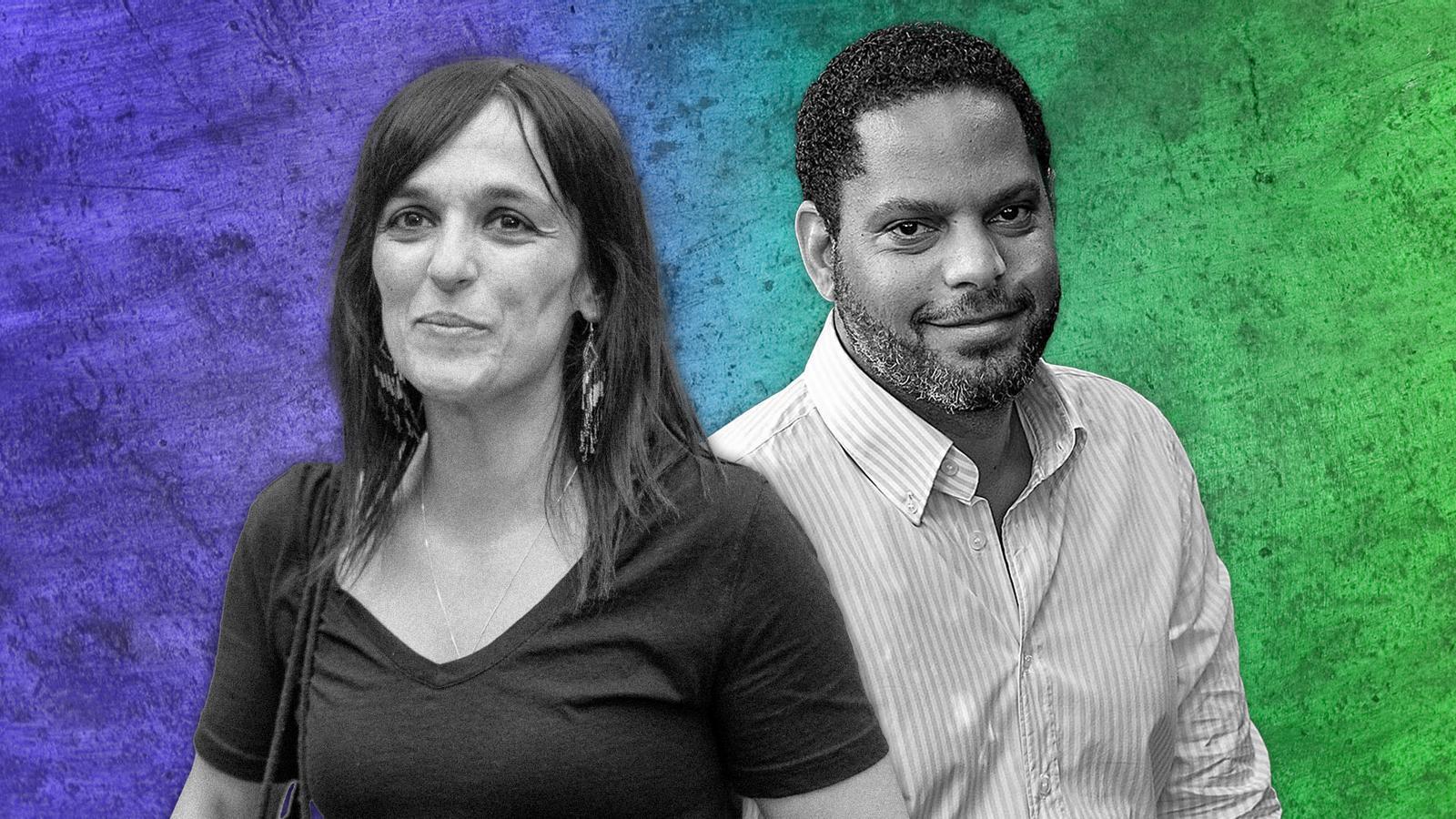
"Voters, in the context of the Spanish elections, put their trust in whoever they deem appropriate, and in the Principality they put their trust in us because they consider that our project, which involves the restitution of the Catalan state, is the most appropriate to reach the welfare state they yearn for," expressed Sílvia Orriols in a recent interview on Ràdio 4. For her, it is not contradictory to vote for Vox in the general elections and Aliança Catalana in the Catalan ones. A statement that no other pro-independence party would subscribe to.
Diego is a 25-year-old engineer from Sant Boi de Llobregat and believes that "the main problem of Spain and Catalonia, from which a good part of daily problems derive, is uncontrolled mass immigration." He focuses "his voting intention on immigration" and, therefore, is clear about who he will vote for: "In the general elections, with possibilities and a real intention to do something, there is Vox, and in Catalonia, Aliança," he stresses. He is indifferent to the national issue: "I don't care, I am as much Catalan as I am Spanish, but the problem I want them to address is immigration and that in Catalonia the Catalan cultural identity is maintained and in Spain, the Spanish one. I prioritize functionality and if it is Catalonia or Spain it's all the same, I want it to work well," he concludes.
In his view, "there is a clash of cultures," not only with Islam, but with people coming from South American countries. "We must ensure that they adapt to our culture and customs and not that they segregate themselves and impose their way of life," he says after declaring himself ideologically right-wing. A case that has points in common with that of Àlex, a 24-year-old from Barcelona who is a university student. In the previous elections, he claims he voted for Pedro Sánchez, but now he says that "immigration must be limited because it is needed, but not so much." "One must vote for a party of order and fix the problems of immigration and insecurity," he states emphatically, and also reproaches that with Sánchez, Spain has become "the country of squatters." Independence also "does not matter" to him: "Since I believe independence will not be achieved anyway, for the sake of order I think Orriols will be good," he maintains. "And in Spain, Abascal with the PP".
The leitmotif in all cases is the rejection of immigration. This is the reason why Jose, Albert, and Manel will also vote for Vox in the Spanish elections and Orriols in the Catalan ones. All three are agents of the Mossos d'Esquadra force and are between 30 and 45 years old. Mainly, their vote is driven "by immigration and insecurity," but they are also bothered by other issues such as "subsidizing so many senseless things" or the proliferation of "irrelevant positions" in left-wing governments in Catalonia and the State. They like what Abascal says, but also everything Orriols says, except for independence, which they do not favor.
Catalanists who switch to Vox
There is also a Catalanist sector that embraces Vox, although it is very minority. "Vox has moderated its discourse against Catalonia, it no longer talks about abolishing the autonomies, but about cutting powers or superfluous expenses, they are no longer anti-Catalan as Ortega Smith was," states Jordi, a young university student from Barcelona, who highlights that it now "embraces diversity" in a change of strategy by Abascal's party.
"I have it very clear. In Catalonia, Aliança, and in the general elections, Vox. If we love Catalonia, it is what I believe is necessary. And I will get flak from all sides, but I have thought this for a long time," says Isabel, a 35-year-old from Barcelona. The economic issue is the main reason that drives her to trust Vox, although she admits she would prefer for Aliança to run. "They are drowning us in taxes and we cannot go on like this," says this self-employed woman who runs an insurance brokerage in the capital. It is not the only reason why she will vote for Abascal. "I have always voted for Junts, but there are things I cannot forgive, such as the fact that they favored a socialist government for their own personal interests, which were to achieve the amnesty," she criticizes, before stating: "I feel cheated".
Junts is the party that suffers the most in the polls due to the emergence of Aliança, but precisely the general elections, without the presence of the pro-independence far-right, are a more favorable scenario for its electoral expectations. According to the polls, just as in the case of Vox, one in five potential Aliança voters could opt for Junts in the general elections.
Isabel declares herself an independence supporter who advocates for reforming the Constitution to hold a legal referendum. She also minimizes Vox's willingness to end the autonomies or illegalize pro-independence parties. "They won't do it because here in Catalonia they will get votes and it would be shooting themselves in the foot. The more votes they receive, the more lukewarm they will be with these postulates". Nor does Vox's uninhibited Spanish nationalism cause her hives: "I understand Vox's nationalism as I understand my own Catalan nationalism, everyone defends their own homeland, but with Aliança they could come to an understanding sooner than with the PSOE because they share many points of view". In this sense, she also does not hide that she is concerned about "the lack of control of immigration" because "there is a pull factor and you cannot give aid to everyone and in the end they have to fend for themselves".

Polls indicate that it will be precisely the growth of Vox, also in Catalonia, that could tip the next Spanish government towards the right.
