Mar Pujol: "The day after the concert I woke up as if with a teenage hangover, feeling very guilty"
Music. Releases the album 'D'aquesta aigua no en beuré'
-
CAT -
CAST
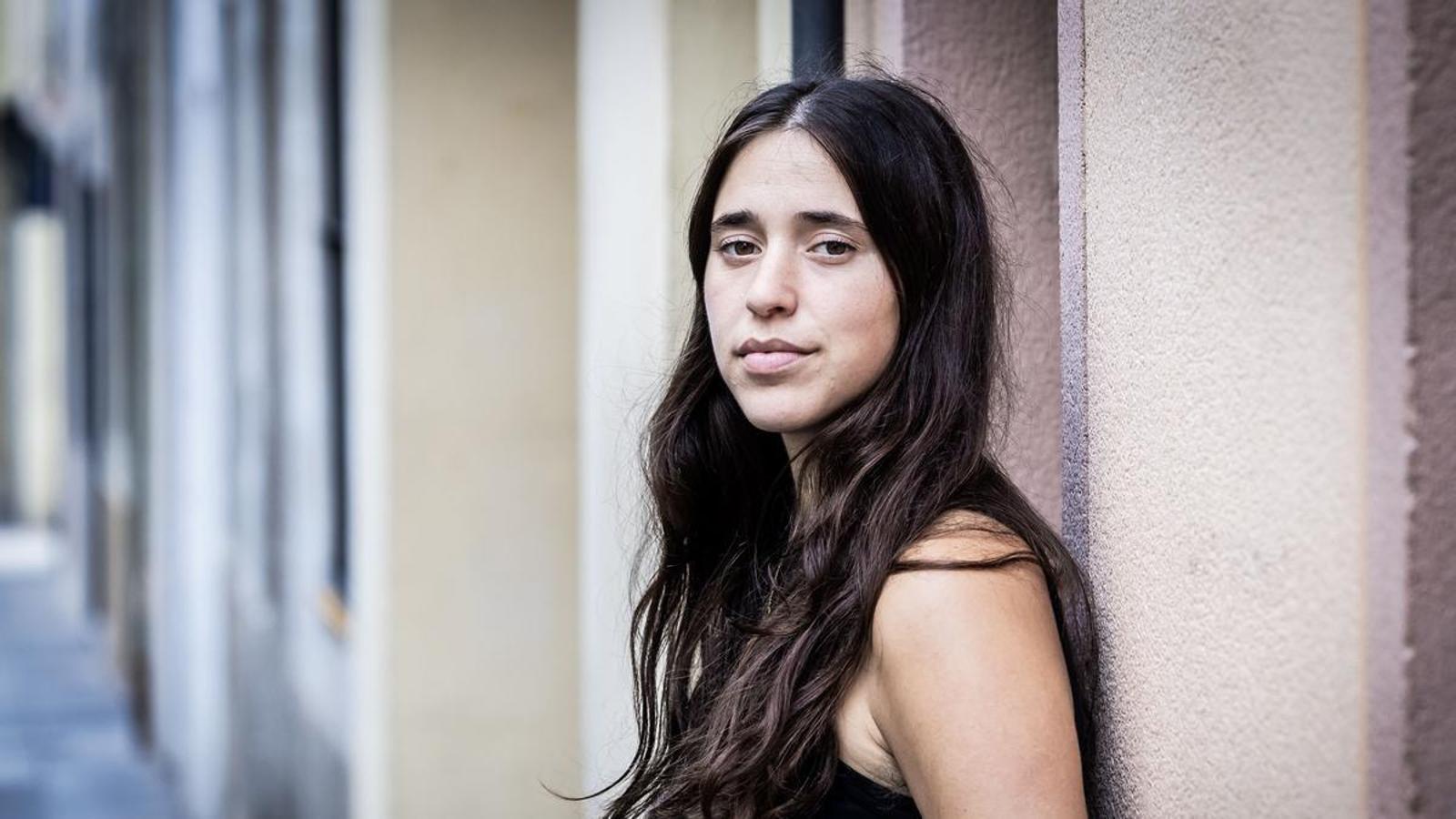
BarcelonaMystery and sensitivity coexist in the compositions of Mar Pujol (Prats de Lluçanès, 1999), folk of guitar and cello played with hands full of moss and fog. Two years after the notable Cançons de rebost (2024), she releases D'aquesta aigua no en beuré (Hidden Track, 2026), a candidate to appear in the lists of the best albums of the year. Mar Pujol, a kind of Vashti Bunyan of the Lluçanès, premiered the new songs in September at the Mercat de Música Viva de Vic, and is now starting to tour them everywhere accompanied by Bruna González.
Were you happy with the concert at the Mercat de Música Viva de Vic and, above all, with the audience's response?
— I wasn't very happy with the concert I gave. I was nervous and didn't experience it very well. There were many things to improve. But I was very surprised by the people's reaction, who from what I heard left very moved, and that made me very happy. The day after the concert I woke up with a sort of teenage hangover, feeling very guilty. I only remembered the negative things. After breakfast, I started to put things into perspective, to give value to the songs and to see the positive things.
What came across at the Atlàntida Theatre, apart from the initial nerves, was that you were very comfortable, both you and the cellist Bruna González, and that there was a very interesting emotional warmth. It is curious that you experienced it in one way and the audience in another.
— Yes, that is very intense. It is true that there were moments of great connection. One thing does not rule out the other, but there was a nervousness, for me, that was too strong.
When you presented the song Quilòmetres llum, you championed a "more intuitive, less productive, less capitalist, more wild" way of relating to time. I thought you were describing your music.
— Totally. I want it to dominate the song, as if it were something you don't know where it comes from, and make a home of that.
Casa is also the cello and guitar format, which are instruments that dialogue very well live and that you have been working with for a long time. However, I find that on the new album you have gone one step further.
— I think we have gotten to know each other better. It is a matter of time and depth, I suppose, and trust. We have found the sound more, the taste of knowing the needs, the intensities, the volume. But the fluidity that is perceived live is not always present in the process of making the record.
In the interviews about the previous album, you explained how it had been hard for you to find the sound. Apparently, when you already have the sound, everything flows better, but from what you say it is not that simple.
— It is just impossible to find the perfect recipe. It depends so little on you whether it flows or not... Everything helps, but when it is not one thing, it is another. Furthermore, the mechanism keeps getting bigger, and more agents and responsibilities are involved. It can flow very well, or you might have to go with a chisel and hammer.
Bruna, what does it bring you?
— Everything. Depth, a lot. And it has made me grow a lot as a person. Bruna is a very sincere person. I have not known a more sincere person than Bruna. This makes you feel calm because you know that she will always tell the truth. We are not used to so much sincerity.
You have a lot of melodic complicity, don't you?
— Yes, we have talked about it a lot. When you listen to a cello in acoustic, it overwhelms you. One of the magical things that happens with the cello is that it makes you vibrate. And we try to make that happen. It is very powerful, because when we meet to make music, we rarely disagree on something. Every time it is better, but from the first minute we already had a very strong understanding.

Regarding the album title, I will not drink from this water, have you ever found yourself in that situation?
— There are things that I think are true, but at the same time I live with this contradiction of thinking that what you think today might turn around in the future. I would like to have a heart open enough so that my grandchildren or the generations to come, if I don't have grandchildren, can teach me things that surprise me, and even make me see that I was wrong for a long time. This seems fascinating to me.
The lyrics of the album, and in a way the music too, touch upon uncertainties and doubts. Is this what your existence is going through right now?
— Totally. You couldn't define it better. I think the music I have made until now has always been transparent, in the sense of showing how I have lived things, and that the song helps me navigate life and understand the world. It can be said that with Cançons de rebost I started to feel like an adult, and that with D'aquesta aigua no en beuré I consolidate my adult life and I can understand why sometimes I feel conflicted with how I do things.
Have you had any run-ins with the dynamics of the music industry?
— Yes, every day. And every time I feel more fear, more embarrassment, posting on social media, because many times I think: "Who cares?". Obviously, there are many people who are interested in me, and I have had a lot of media support. But having 10,000 followers doesn't guarantee you reach people, because you depend on the algorithm. I know I have people who are interested in what I do, but it doesn't reach them because it gets lost in this algorithm. Furthermore, this very fast pace, this urgency to make "content", that thing of "come on, let's record a minute telling me the things that interested me from the interview"... These things stress me out. I am an artist, but that doesn't mean I have to know how to do these things.
Especially because your music has very little to do with that.
— Exactly, precisely.
In fact, even aesthetically you are almost countercultural, because now many approaches to folk are made from electronics or urban rhythms, while you go towards something more essential, just strings and nothing else.
— Well, I have never experienced it as countercultural, but I understand that given the situation it is.
Can you explain the choice of the three collaborations on the album: Carmen Aciar, Sílvia Pérez Cruz, and Rita Payés?
— They were more like flashes of inspiration than choices. I would write the song and the person's voice would come to me. It happened first with Carmen: I told her and it fit perfectly. And the same with Sílvia and Rita.
With Sílvia Pérez Cruz you blend very well in He vist l'amor. It is a real duo, not a simple juxtaposition of voices.
— It's just a song that I could only do with her. We had met before, but she said yes to me exactly on Christmas Day; it was like a gift from the Christmas log. And with Rita, we had been talking for a while about doing something together.
And you take the opportunity for the song with Rita Payés to start with the trombone.
— Yes, I really felt like it. Furthermore, that song, No diguis mai, has a very jazzy aura.
In the song La mà a la mel, you adapt a poem by Anna Tobias...
— I love it! Her poetry has completely stolen my heart. It was very intense, because I went to do a residency in Pontós, where Anna lives, and I was very stuck with this song, which had a very lousy lyric, and then a verse by Anna came to my mind. I went to her house, asked her for the book of poems and suddenly it was like putting a sock on the melody. It fit perfectly.
Anna Tobias's poem fits more with the Cançons de rebost record than with the new album, right?
— Many people have told me that it reminds them of the universe of Cançons de rebost. Yes, because it also includes food, they are monosyllables. Actually, I wanted to make a continuation of Cançons de rebost. I didn't manage to do it, but...
Well, you have taken the songs from the pantry to the room and to the forest, to a place with emotional warmth.
— Exactly!
What music did you listen to while you were making the album?
— I have been listening to a lot of Momi Maiga, Lucía Fumero, Lau Noah, Anna Andreu. I also had a long phase of Derby Motoreta’s Burrito Cachimba, which is a completely different universe from mine.
By the way, Ullsclucs, the piece in which Carmen Aciar sings, is a great song about love dressed as a miniature.
— "I look at the promise askance, I look at the certainty with closed eyes!". It's like when something excites you, but you see that it won't go well. That there is a lot of love, but at the same time there is something that tells you it won't go well and that, deep down, it's not your desire. This game between love and analysis. I would like to be light and love and not judge people, but it's not like that. I mean, lucky that reason exists in our heads. Or rather, luck and misfortune.
As it says in Moralina: "There is no saying that cannot be said to me". We are one thing and the opposite.
— All the time. And sometimes we insist on thinking that if we are one thing we cannot be the other. In Moralina I also reflect on how much I like proverbs, that wisdom like a grandmother giving you advice, although over the years it may happen that a proverb no longer serves you because things have changed.
