Women do not reach even 5% of the governing boards of the agricultural cooperatives of Lleida
They are holders of only one of every five farms in the demarcation
-
CAT -
CAST
Ivars / SanaüjaThey research, sow, harvest, milk, feed the livestock, pack, or keep the accounts. But when it comes time to decide, they hardly ever sit at the table. In Lleida's agricultural cooperatives, women make up one in every five producing members and only represent 4.81% of the members of the governing boards. In the presidency, there is only one in the entire region.
The disproportion has a history. For generations, women have worked on family farms without appearing on paper; they have handled the accounting and management, but the name listed as the owner and occupying the seat of responsibility was usually the man's. According to the 2026 DUN, women assume 27.5% of farm ownerships in Lleida. Likewise, the latest agricultural census from Idescat indicates that women are 21% of the farm managers, a total of 4,216. “A large part of the functioning in the field is thanks to women, but their name hardly ever appeared anywhere. In the family business, don't even think about it!”, exclaims Ramona Mota Noró, a benchmark of Catalan agricultural cooperativism and a defender of female leadership and innovation in the field. The trend is reversing, but there is a long way to go, because when starting from so far back “the work is arduous and very slow”. Today, the Federation of Agricultural Cooperatives of Catalonia (FCAC) identifies access to land and shared ownership as one of the specific challenges that especially affect women.
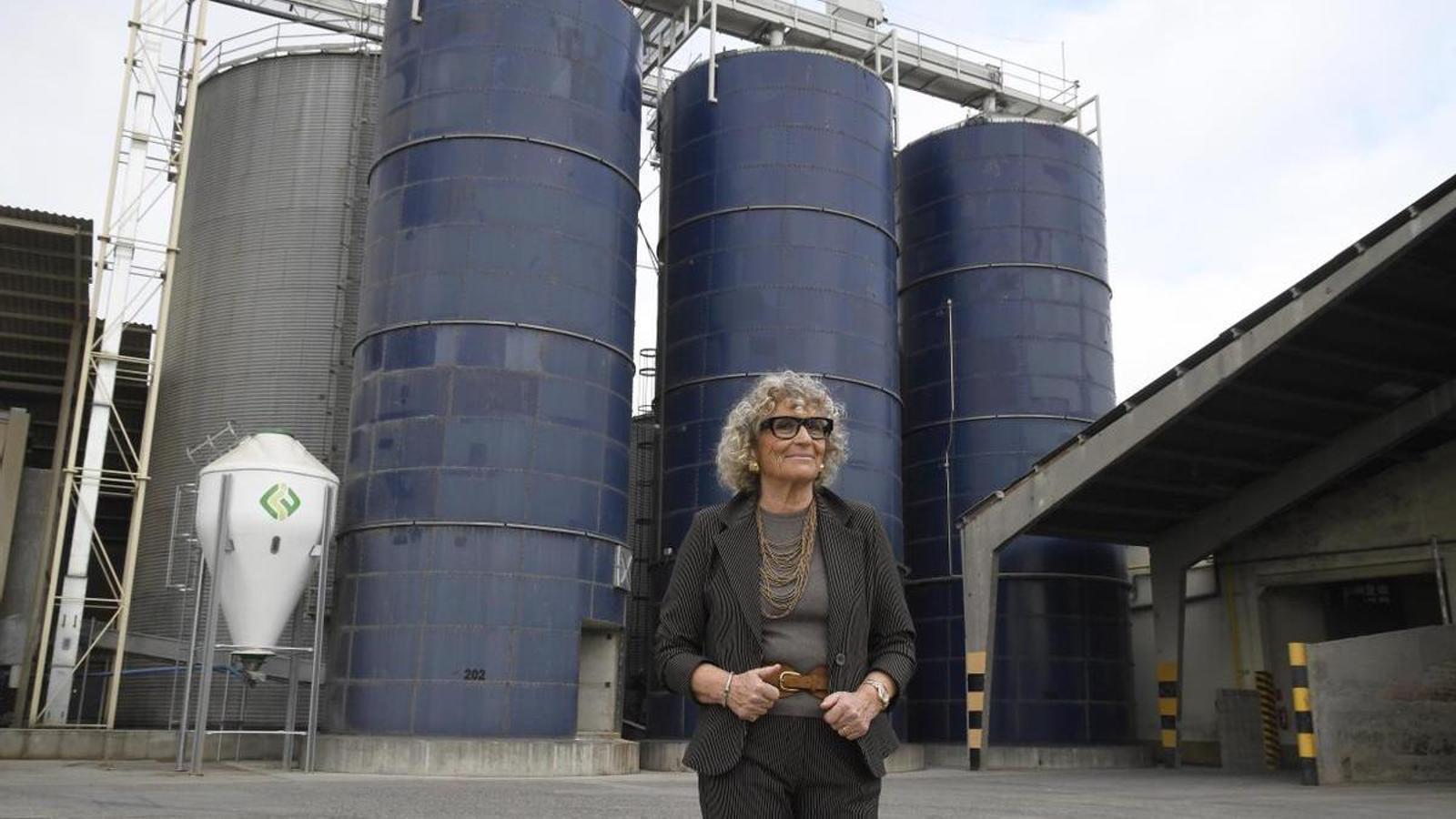
Daughter, granddaughter and great-granddaughter of farmers and livestock breeders from Ivars d’Urgell (Pla d’Urgell), Ramona carries the land in her family memory. She has dedicated 35 years to agronomy and the seed sector. In 2017 she joined the governing board of the Ivars Cooperative, but first she had to fight for its statutes to be modified: when she announced that she wanted to run, they replied that they did not foresee a woman joining. She did not give up and today she is its secretary.
Data on agricultural cooperativism in Catalonia as a whole highlight the remarkable difference between being in the field and having a voice in decisions. According to the FCAC, women represent nearly 40% of the workforce, but only 21% of the members. On governing boards, the proportion falls to 6.5%, and only five cooperatives have a female president. In Lleida cooperatives, on the other hand, the percentage of female members is even lower – it does not reach 20% – and that of governing board members remains below 5%. There are twelve female managers out of a total of 56 and a single female president, that of the Pallars de Sort Cooperative – a pioneer in dairy production in the country –, Montse Laguia.
Maria Casoliva, mayor of Sanaüja (la Segarra), knows these spaces from the inside. A farmer and fruit grower, she returned to the family farm in 2015, after studying environmental sciences, and decided to bet on mountain apple cultivation. She presided over a small cooperative before it joined the Fruits de Ponent Cooperative Group, and since 2022 she has been part of the FCAC governing council, where there are currently three women, and she is a spokesperson in the fields of fruit, citrus, and horticulture, among others. Casoliva believes that representation in the decision-making positions of cooperatives should reflect the reality of the farms. She argues that if in an organization there are one hundred farmers and twenty are women, the proportion in leadership roles should be similar. She has not encountered resistance within the federation for being a woman, but in her day-to-day life she still clashes against gender stereotypes. The problem lies in the foundations: “There are still those who doubt basic things like whether I can drive a tractor or spray crops. When no one questions that there are no differences in this regard, we will have progressed a great deal,” she says. Casoliva argues that fifty years ago working in the field required a significant physical effort, but today that tasks are much more automated, this barrier does not exist.
Furthermore, the burden of domestic responsibilities absorbs the time available to take on other commitments. “If the fact that caregiving and housework have been offloaded onto us already generates inequalities in society as a whole, the problem is even more accentuated in a traditionally masculinized field with a greater lack of services for work-life balance in the rural world,” adds Casoliva. She celebrates that progress is being made in the equitable distribution of family responsibilities, which translates into more time, an ally in the empowerment of women to take charge of a farm or a governing council, “as in any business or entity.” “If we can gradually untie ourselves from these weights, we will also have wings and energy to take on other challenges,” she concludes.
Ramona Mota emphasizes that women must take the step, get trained, and apply for positions of responsibility, even if no one invites them to do so. “Sometimes we have to go and offer ourselves.” She also warns of the limits that one imposes on oneself. That is why she encourages female farmers to trust in their capabilities. For Mota, who for several years led the Women's Group of the FCAC and represented Catalonia at the Association of Women of Agri-food Cooperatives of Spain (AMCAE), having role models is fundamental: when a woman occupies a position, she opens a door so that others can imagine themselves there.
Would gender quotas fit as a corrective measure in the decision-making bodies of cooperatives? Maria Casoliva does not consider that mandatory quotas are necessarily the answer. She advocates working on equality from the base to guarantee the same opportunities for men and women. The woman from Sanaüja calls for governing boards with diverse perspectives: “A woman can have a vision, just as a young farmer who has just joined or an elderly person who is retired can have another, and they are all exactly equally valuable.”
Generational renewal
But there is another cardinal challenge on which all others hang: the future of the countryside. “The goal must be to be able to make a living from it, and that will ensure there is generational renewal and, from there, more women in positions of responsibility,” states Casoliva. Both interviewees agree that the lack of generational renewal is, in fact, the main threat. Low profitability, rising costs, market volatility, and the uncertainty of harvests make it difficult for new generations to join. They also warn that female succession is even more difficult than male succession.
On the same day of the interview, Mota was running in the elections to preside over the number 2 collective of the General Community of Irrigators of the Urgell Canals, and she explained that she had received pressure and derogatory comments in a space with no female precedents. She won with nearly 63% of the votes, a victory that illustrates to what extent one must still prove that they can occupy positions that are automatically assigned to men.
Year of the Peasant Woman
The International Year of Rural Women, this 2026, has contributed to placing this reality at the center of the debate, and the loudspeaker of the FCAC Women's Group to demand more recognition and participation has reached the media with greater strength. But it is about ensuring that visibility does not remain limited to photographs, conferences, and campaigns. “May people know that we women are willing to enter positions of hierarchy, that there is no need for them to hide us,” claims the secretary of the Ivars Cooperative. Her wish is that ten years from now there will be more cooperative members and women who are heads of farms, and that parity will no longer be a pending subject. Perhaps the change will come the day there is no need to count how many women sit on governing councils, nor to highlight that one of them holds the presidency. For the moment, however, there are still too many chairs that do not have a woman's name.
