Local bookstore, national publisher
Eclecta, the imprint linked to the La Fatal bookstore in Lleida, of the brothers Ramon and Jordi Souto, closes its first year with twelve titles and good market positioning
-
CAT -
CAST
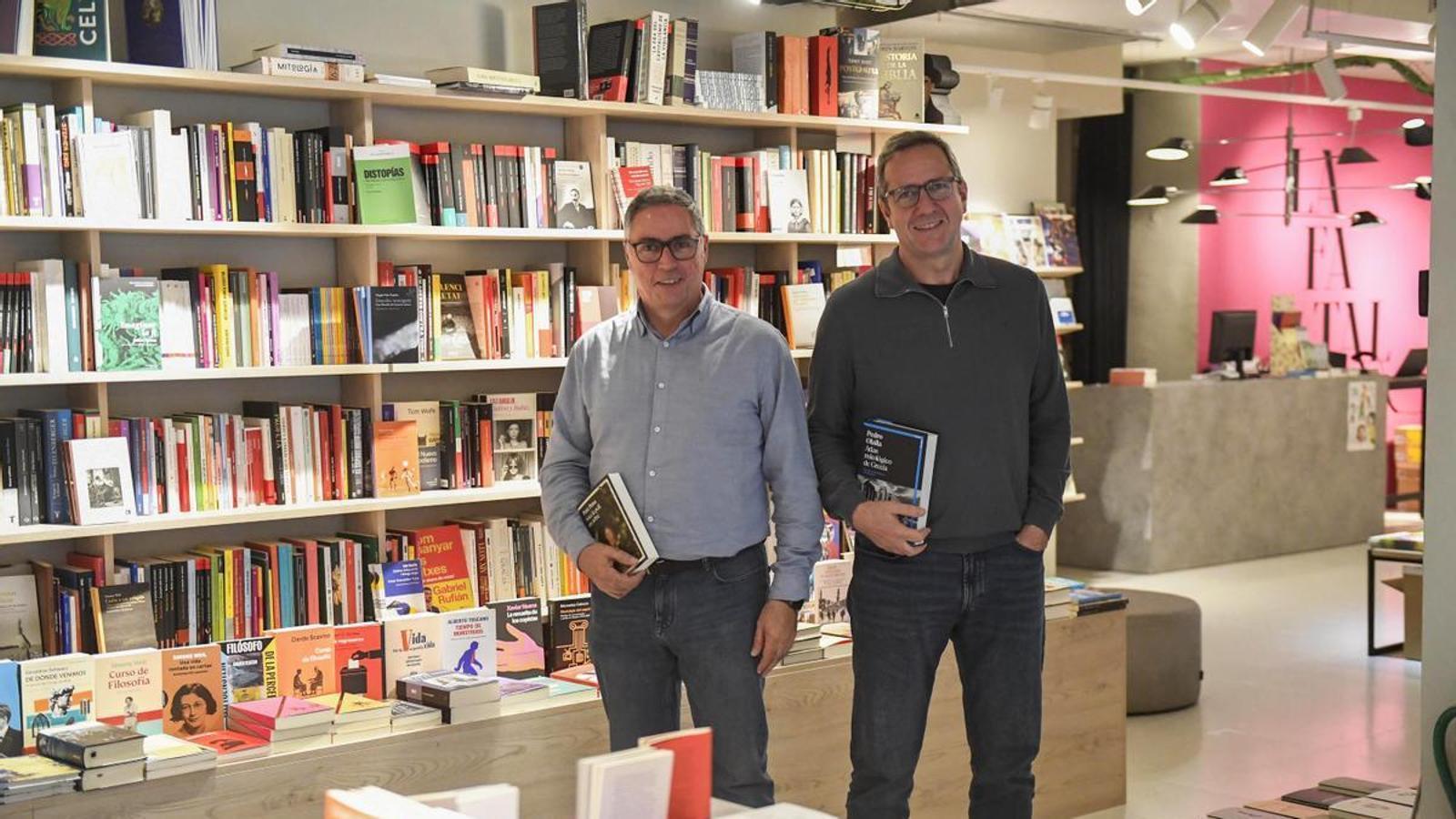
LleidaThe La Fatal bookstore in Lleida opened in 2021 and since then has become a reference for the reading community of the Segrià capital. Three years later, the brothers Jordi and Ramon Souto, its founders, made public their intention to launch an imprint that would publish in both Catalan and Spanish: Eclecta.
"The day we posted the first tweet announcing the publishing house, we already received an original manuscript," recalls Jordi. It was a warning to navigators: the problem would not be finding manuscripts, but choosing them. Finally, Eclecta was publicly presented on October 23, 2025, with a novel by the philosopher Ferran Sáez Mateu, L'altra hipòtesi, which they published simultaneously in both languages.
La Fatal is an exceptional vantage point from which to observe and keep up to date with what publishers are releasing and what citizens are looking for, buying, and reading. In the Spanish market, an average of 250 titles are published every day; being aware of this and managing it from a bookstore allowed them to be realistic before starting: "There is no one waiting for you in the market, and if you only release two books a year or are inconsistent, every time you have a new release, it's like starting from scratch. Our goal is to maintain a publishing pace that is manageable for booksellers and readers and reach the point where there is curiosity about what the next release will be. Winning the battle of credibility," points out Ramon.
From the very first moment, they bet on a diverse catalog: fiction, essays, originals, international translations, biographies, short stories, contemporary classics, and translations of current Catalan authors into Spanish. The latter is, perhaps, the line that generates the most skepticism among those who know the sector. "We refuse to believe that there isn't a community of readers across Spain interested in contemporary Catalan authors. We don't expect tens of thousands of sales, but we do need a minimum to be viable. We want to verify if the myth of Catalanophobia is true," they quip.
In parallel, this first year they have published novels such as The Ides of March, by Thornton Wilder, which did not exist in Catalan; a biography of Tolstoy; the first novel by the poet Pere Pena –Sota la pell, un arbre-–; the debut of Chari Rodríguez from Lleida with the short story collection No hubo días hermosos, and the Atlas mitológico de Grecia, by the prestigious Hellenist Pedro Olalla. The main thesis of the Souto brothers is that “for good books there is always a potential audience. “Now, you have to know how to find it and you have to make sure it knows you exist. It is a long-distance race in which you should not rush nor can you stop”, they add.
If for the Catalan market we are talking about hundreds of original manuscripts, when it comes to international translations the figure multiplies exponentially. “It is impossible to keep track of everything that is published and there is no need to obsess over a specific book, because if you cannot get it, you will find another one that is also excellent”, explains Jordi.
For a small publishing house with no track record, it is vital to be agile, intuitive, and have a good network of trusted recommenders. “We are not backed by the financial muscle of a large group, and at the same time we can decide to buy the rights to an international Booker Prize in an afternoon and get ahead of other labels that are subject to management committees and very rigid structures that make them slower than us”, points out Jordi.
“The key is to be well-advised and know that every bet is of quality”. It is also true that agencies bombard them every day with bulletins that are impossible to digest, but “as they get to know you and know what you are like, they send you more refined proposals”, clarifies Ramon.
Then, once you have decided which book you will publish, you must turn it into a nice product to have a chance of placing it. “Design is very important, it must be attractive at first sight. This positions you at such a crucial and uncontrollable moment when the bookseller decides to place you on the new releases tables, hidden on a shelf, or in the boxes for returns. There is a very important battle for visibility in bookstores –they acknowledge– and you have to work with all the tools at your disposal so as not to get left behind”.
Ramon does not hide the uncertainty of creating a publishing house in a saturated market, but he also defends it as a romantic adventure that is worth attempting. Regarding the diversity of the catalog, he confesses: “We are aware that not having a defined theme makes it harder to reach a specific audience. At the same time, we believe that variety and quality will allow us to build a reading community loyal enough for the project to be sustainable”. Everything starts from a maxim: “Good readers are eclectic by definition”.
