From the Gulf of Finland to the Libyan coast: the increasingly distant attacks of the Ukrainian army
Kyiv has more than doubled its long-range attacks this year and has expanded the range of action outside of Russian borders
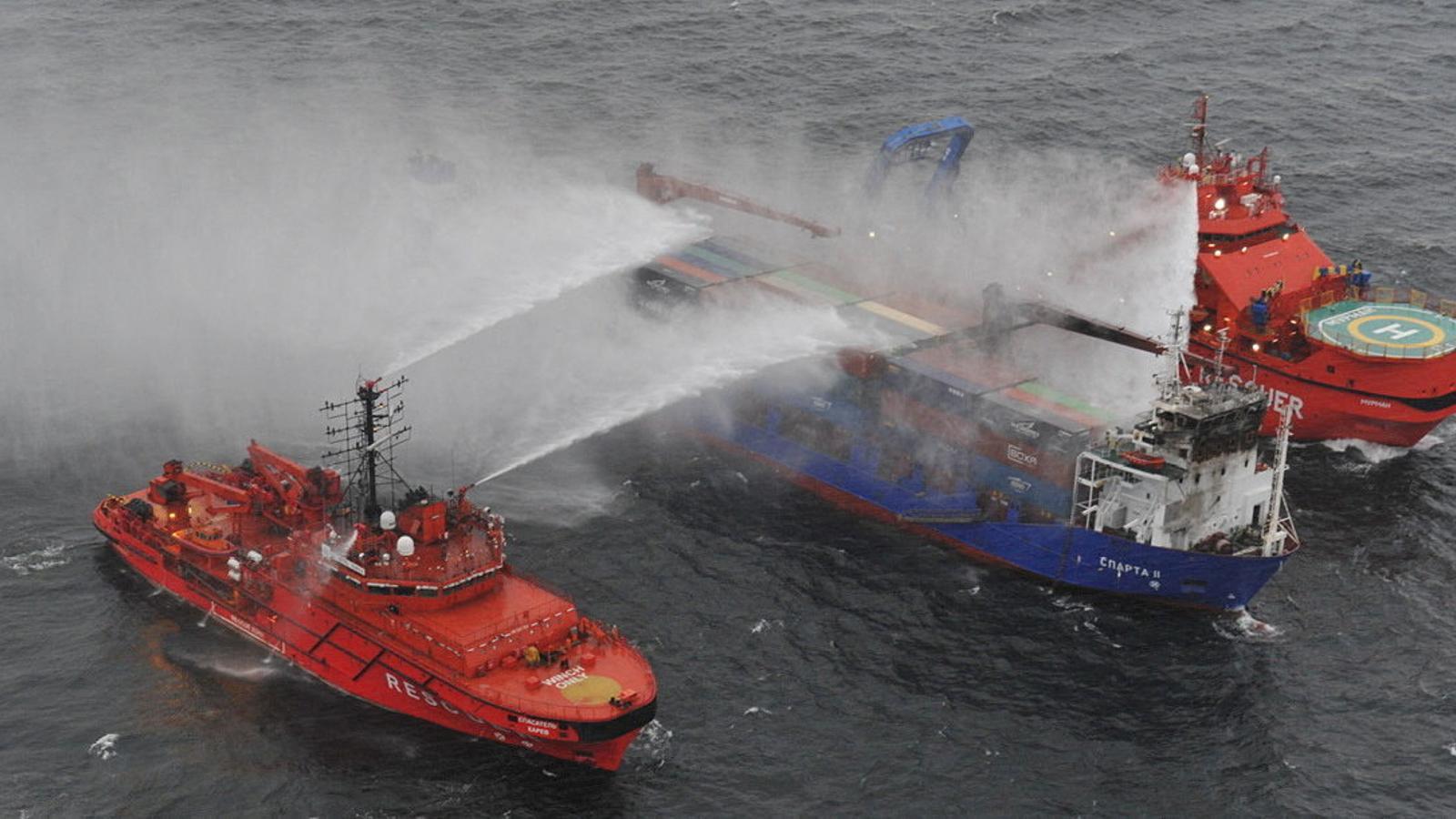

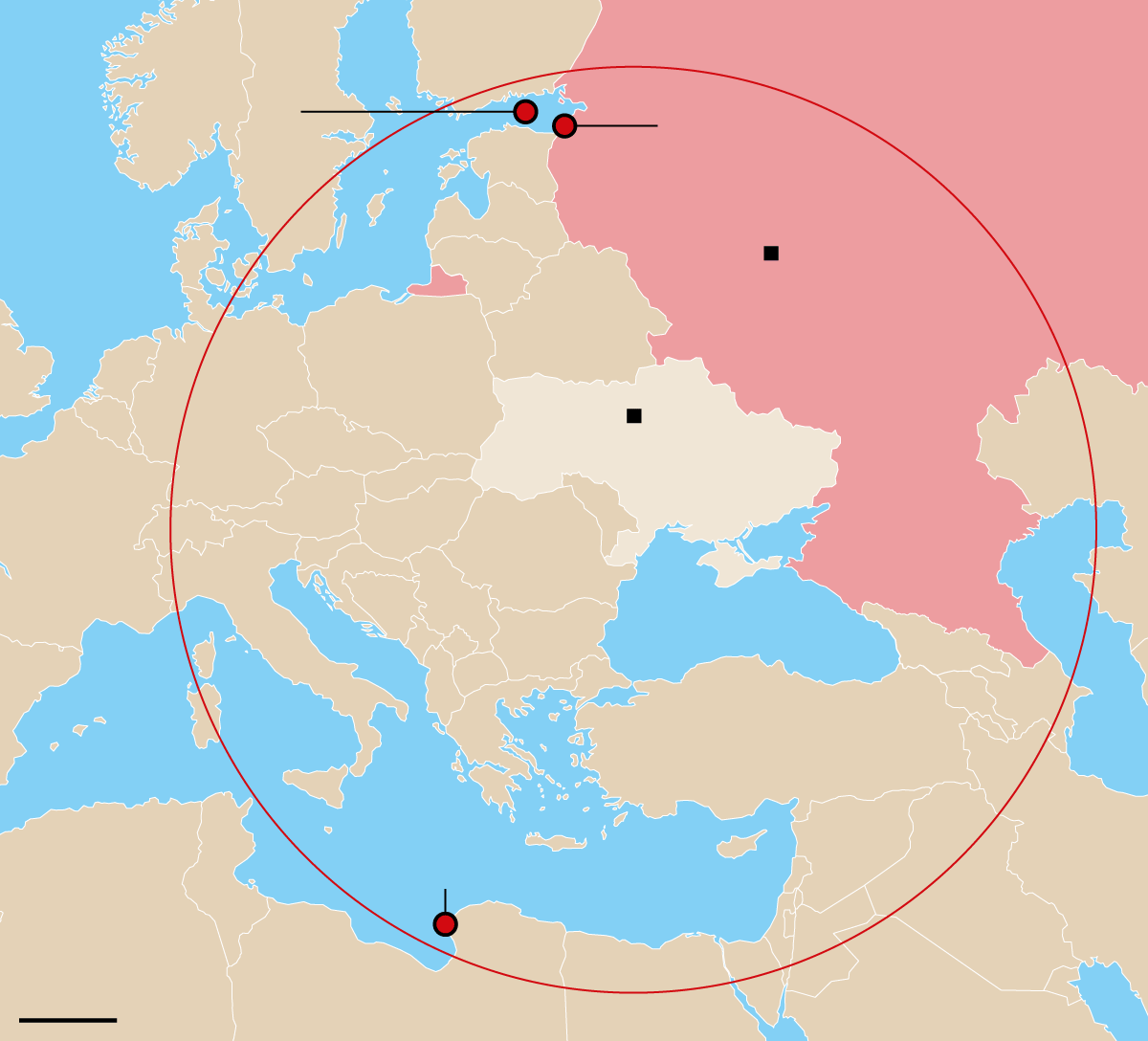
BarcelonaThis weekend, hours apart, the Ukrainian army attacked three Russian ships located more than 3,000 kilometers apart from each other: two were at the military port of Benghazi, in Libya, and the third, in the Gulf of Finland, in the Baltic Sea. The success of Ukraine's two most recent long-range operations confirms that the war is expanding further and further from the front and even beyond the borders of the two countries involved.
Since the beginning of the full-scale invasion, Russia has martyred the Ukrainian rear with constant aerial bombardments hundreds of kilometers away from the battlefield. A strategy that has intensified this year, which has caused civilian casualties to skyrocket to levels not seen since the first months of the war. Ukraine carried out some isolated attacks on Russian or occupied territory in the first year of the invasion, such as the one that sank the warship Moskva in the Black Sea, the first attack against the Crimean Bridge and the attacks against the Engels and Diagilevo airbases, hundreds of kilometers from the border. In May 2023, Ukrainian drones reached the center of Moscow for the first time, in one of the most symbolic attacks of the war. But the Ukrainian army's ability to penetrate Russian territory was very limited by the restrictions of international partners on using their long-range missiles outside of Ukraine and the occupied territory.
One of the keys to Ukraine's success—despite the front line having been stagnant for many months—has been the country's industry's ability to develop domestically manufactured long-range missiles and drones, including naval drones, such as those used to attack the Russian warship Merkury on Sunday in Libya. Especially starting in 2024, this capacity translated into a systematic campaign against Russia's oil infrastructure and military industry thousands of kilometers away from the front.
And in June 2025, Operation Spiderweb, one of the most significant of the entire war, allowed drones to be smuggled into Russia, hidden in trucks, which were later activated simultaneously to attack various airbases. The furthest one, the Belaya base in Siberia, was 4,300 kilometers from the Ukrainian front.
A portal that keeps an interactive record of official Ukrainian reports on long-range attacks against targets in Russia finds that this type of bombardment has skyrocketed this year, especially since the month of May. Last year 265 were recorded and this year (still unfinished) 695, with which they have more than doubled.
One of the most notable, due to its long distance, was the drone attack against the Russian port of Ust-Luga on November 11th, which put the Baltic Sea countries on alert. Russian air defenses shot down 150 drones over the Leningrad region in the most massive attack in this area since the start of the war. Kyiv has been striking oil terminals and refineries in northern Russia for months, and this has shifted attacks to the Baltic Sea region as well. Some of the devices miss their targets and end up diverted, which forces the neighboring countries' security systems to be activated. The three Baltic republics and Poland are increasingly suffering the consequences of a war that is expanding more and more.
Attacks on ships outside war zones
Romania and Bulgaria also suffer from this, countries with coastlines on the Black Sea, where attacks on merchant ships have soared, both by Moscow and Kyiv. There is no consolidated and verifiable figure for all the ships attacked outside the territorial waters of Russia and Ukraine. According to the maritime intelligence firm Ambrey, at least 45 merchant ships had been attacked this year, up to mid-September, outside what was considered a risk zone in the Black Sea –not necessarily all in international waters–, a third of them in the last three months of the period. And according to a count by the Reuters agency, between October 5 and November 17, at least 15 ships had been reported attacked, with a toll of 32 crew members dead or missing. This leaves a total of at least sixty ships affected this year.
To this must be added the latest Ukrainian attacks against Russian ships far from their borders, in the Mediterranean and the Gulf of Finland, which highlight Ukraine's growing capacity to attack Russian military and logistics networks in various regions with home-made weapons.

finland
Gulf of Finland
November 21
Cargo ship
Ust-Luga
'Sparta II'
November 11
estonia
Ship 'Naro-Fominsk'
Moscow
RUSSIA
Kyiv
Ukraine
Black Sea
Benghazi
Mediterranean
Sea
November 22
Ship 'Merkury'
Cargo ship
'MV Angara'
Libya
500 km
finland
Ust-Luga
November 11
Ship 'Naro-Fominsk'
Moscow
Gulf of Finland
November 21
RUSSIA
Cargo ship
'Sparta II'
Kyiv
Ukraine
Black Sea
Benghazi
Mediterranean
Sea
November 22
Ship 'Merkury'
Cargo ship
'MV Angara'
Libya
500 km
finland
Ust-Luga
November 11
Ship 'Naro-Fominsk'
Moscow
Gulf of Finland
November 21
RUSSIA
Cargo ship
'Sparta II'
Kyiv
Ukraine
Black Sea
Benghazi
November 22
Mediterranean
Sea
Ship 'Merkury'
Cargo ship
'MV Angara'
Libya
500 km
The warship Merkury and the merchant vessel MV Angara were located at the military port of Benghazi, that is to say, approximately 1,700 kilometers from the southern coast of Ukraine and about 2,400 kilometers from the front. “The Ukrainian Defense Forces have demonstrated once again that the Russian military fleet and its logistics networks have no safe routes, not even beyond the Black Sea,” the Security Service of Ukraine remarked this Monday.
But Sunday's attacks in Benghazi are not Ukraine's first in the Mediterranean. In March, a Russian liquefied natural gas carrier sank off the coast of Libya after an attack that Moscow attributed to Ukraine—although Kyiv has not claimed responsibility for it. And earlier this year, Greece said it would launch an investigation after a naval drone with explosives was discovered in the Ionian Sea. Greek and Ukrainian media identified it as a likely Ukrainian-made Magura drone.
The weekend attacks in Benghazi coincided with an attack on the Russian ship Sparta II in international waters in the Gulf of Finland. This Tuesday, Ukrainian President Volodymyr Zelenskyy confirmed that the Ukrainian army was also responsible for the attack on this vessel, which is operated by the Russian defense logistics company Oboronlogistika.
Two weeks ago, the Ukrainian army already attacked another Russian ship, in this case the warship Naro-Fominsk, in the Gulf of Finland, in the same drone operation in which they bombed the Ust-Luga oil export terminal on the Baltic coast.
“Today, Russia feels our response from Western Siberia, where its refineries are burning, to the coast of Libya, where its warships are sinking,” Zelenskyy summarized Monday from Berlin, addressing the NATO Parliamentary Assembly.

