Barcelona inaugurates a biennale that wants to explain the 21st century through digital art
The first edition claims a new space of creation with pioneer works and immersive installations

-
CAT -
CAST
Barcelona“We narrated the 20th century through photography and cinema, and we can explain the 21st century with screens, algorithms, and communities,” states researcher Irma Vilà, the curator of the exhibition that opens this Wednesday at the DHub, marking the first Digital Arts Biennial of Barcelona. “Innovation does not arise from competition, but from the desire to share,” says Vilà. The exhibition includes around forty works by 33 national and international artists, from the pioneers of the 60s and 70s to the present day, including pioneers such as Vera Molnár, Elena Asins, Manfred Mohr, John Whitney, and Lillian Schwartz, who engage in dialogue with contemporary creators such as Mario Klingemann, Joana Moll, Mónica Rikić, Anna Carreras, Alba G. Corral, Hamill Industries, Playmodes, and Zachary Lieberman.
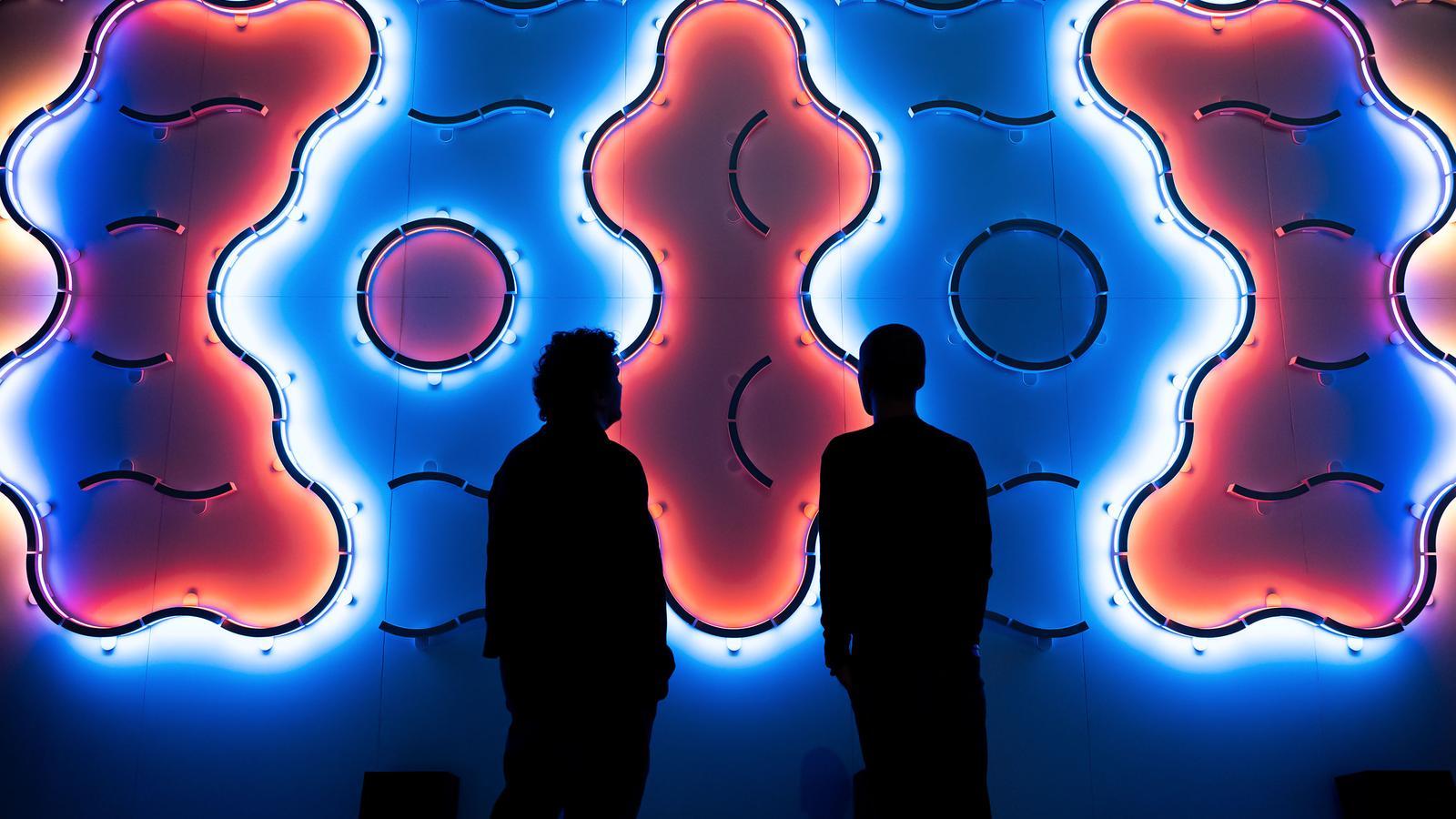
The route is divided into five thematic areas that reveal how digital art can become a space for resistance, as is the case with Deep Frictions, by Marc Vilanova, the result of making audible the sound waves from fracking operations in the United States. Digital art can also be a field full of surprises, as demonstrated by Daily Sketches, by Zachary Lieberman, a selection of the code sketches he has made daily since 2016. And one of the most spectacular works is Liquid tiles, by the studio Playmodes: a generative kinetic installation made with rotating light modules, arranged in a triangular Truchet matrix, very common in hydraulic tiles.
The Digital Arts Biennial program will include, until March 2027, exhibitions, professional meetings, and activities for all audiences. As the general curator, Pep Salazar, says, the goal is to “bring the public closer” and “normalize” digital art. Another of the exhibition proposals of the biennial is Resonances. The City That Resonates, an audiovisual creation program curated by Irem Erkin that is expected to be deployed starting in December 2026. The project will inaugurate Pantalla DHub, a new digital art exhibition platform located in the future lobby of the Glòries metro station, on the ground floor of the DHub. Through a panoramic screen 15 meters long and 2.36 meters high, it aims to transform a space of daily transit into a meeting point between contemporary creation and the citizenry. Pantalla DHub is born to be a platform that gives continuity to the biennial and will exhibit a digital art program every year.
The international dimension of the Barcelona Digital Arts Biennial will have one of its main exponents in the professional program, which will concentrate a good part of the activities between February 2 and 5, 2027. The DHub will host the second edition of The Shift Salon on February 2 and 3, an international meeting organized in co-production with the Barbican Centre in London that will bring together heads of museums, art centers, festivals, and cultural institutions from around the world, as well as professionals in curatorship, management, and research. And on February 3 and 4, the International Symposium on Digital Arts and Culture will also be held. The professional program will be completed on February 5 with Circuit, an initiative that will open the doors of studios and creative spaces to introduce the local digital arts scene to the participating professionals.
The Digital Arts Biennial is co-organized by the Barcelona City Council, the Department of Culture of the Government of Catalonia, and the Barcelona Creativity & Design Foundation, and is funded by the Ministry of Culture, within the framework of the Barcelona Cultural Capital, promoted by the Ministry of Culture and the Barcelona City Council.
