The dark ghosts of the peasantry by Josep Maria Miró
'The cub' shows a society dominated by the male figure of the heir
-
CAT -
CAST
- Cast: Mercè Aránega, Lurdes Barba, Màrcia Cisteró, Roberto G. Alonso, Àurea Márquez, Alba Pujol, Rosa Renom, Marc Tarrida
- Sala Petita. TNC. Until November 1st
Catalan farmhouses and ancestral homes are the memory of a time and a country. They are the memory of a society, a way of living, of loving, of working and, consequently, the memory of those who lived and, all too often, died there. The memory of a peasantry.
And of memory, of tradition and of heritage speaks the new work by Josep Maria Miró, The Puppy, a rural drama inspired by the acquaintances (the aunts) and the territory where the author was born. The text connects with the dramaturgical tradition of Àngel Guimerà (Terra baixa), Jordi Pere Cerdà (Quatre dones i el sol) and Víctor Català (La tieta) to show a society dominated by the male figure of the heir but sustained by the women.
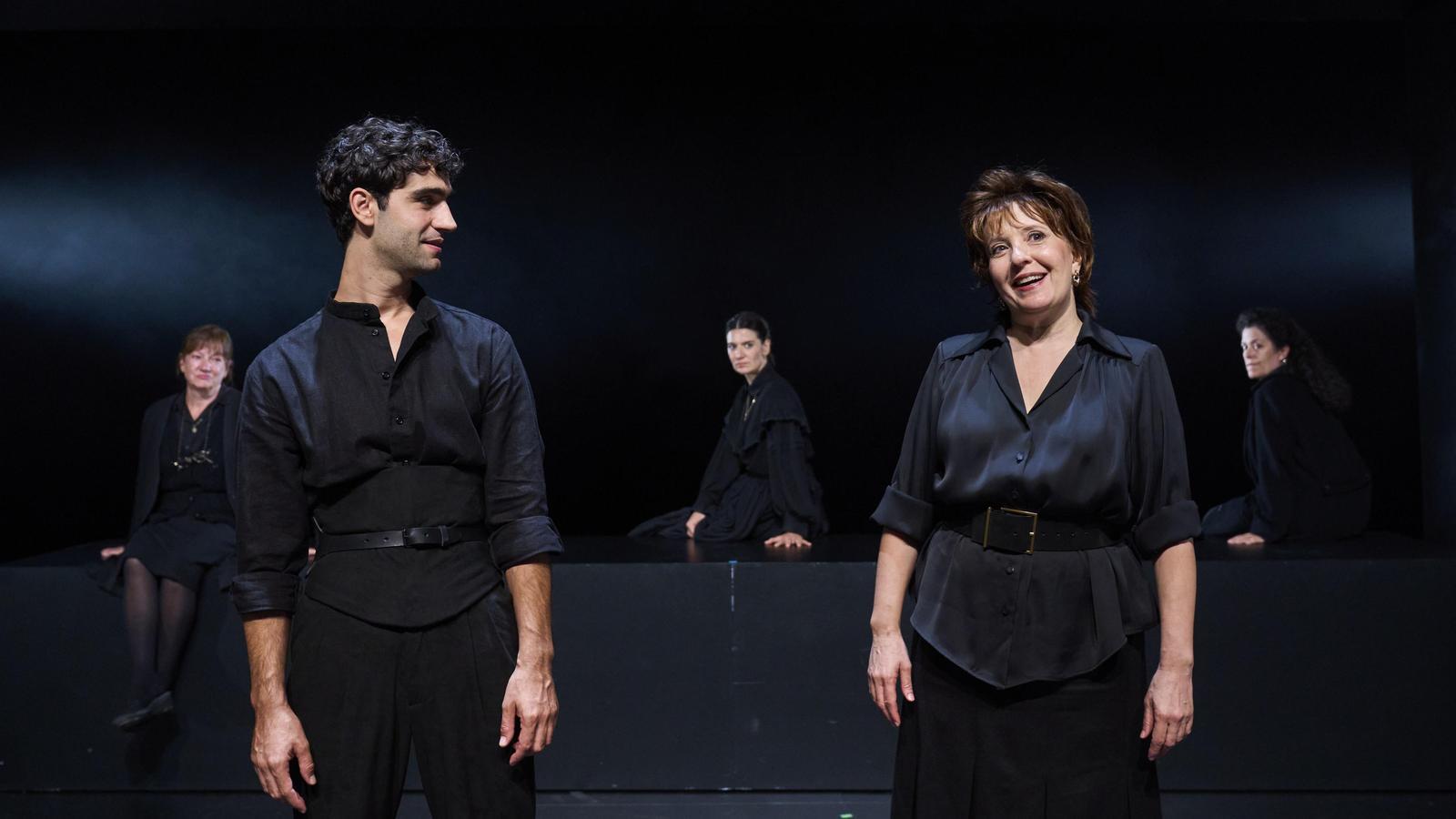
They are, after all, the defeated protagonists –through acceptance or the impossibility of fleeing– of this ambitious text by the author of The Most Beautiful Body Ever Found in This Place and of The Housekeeper. Miró portrays with great precision a range of female characters who are denied even their own names, as they are baptized with nicknames. It is a text that moves between narration and dialogue and which Miró has directed by placing all the strength on the word over the interpretation, as if those addressing us were ghosts of the oppressive house. We are facing dark ghosts subjected to the will of the cub/heir and the whim of tradition, all of them very credible.
Although the text does not speak of acts, the play has three well-differentiated parts. The first is the dark and lugubrious portrait of the house (I do not know if it was necessary to emphasize it so much), a silent protagonist. Also of those who inhabit it, dressed in very black costumes, who transit through a bare and also black stage space. Even the module that evokes the large table of the farmhouse kitchens is of this color. The text works due to the precision of the language and the careful definition of each profile, under an elaborate and somber lighting design (Toni Ubach) that has a great prominence. The second part takes a leap in time and color to speak of the death of the last inhabitant, the aunt, and of the future of the house in a fabulous monologue by Mercè Aránega. The work could end here, but the author has more things to say and in the third part he makes us return to the darkness to avenge the Fura (Àurea Márquez) and claim a change of character with the new cub.
