Dies at 97 years old Yayoi Kusama, the iconic artist who turned trauma into art
The creator, one of the most singular and radical of recent decades, lived voluntarily in a mental institution
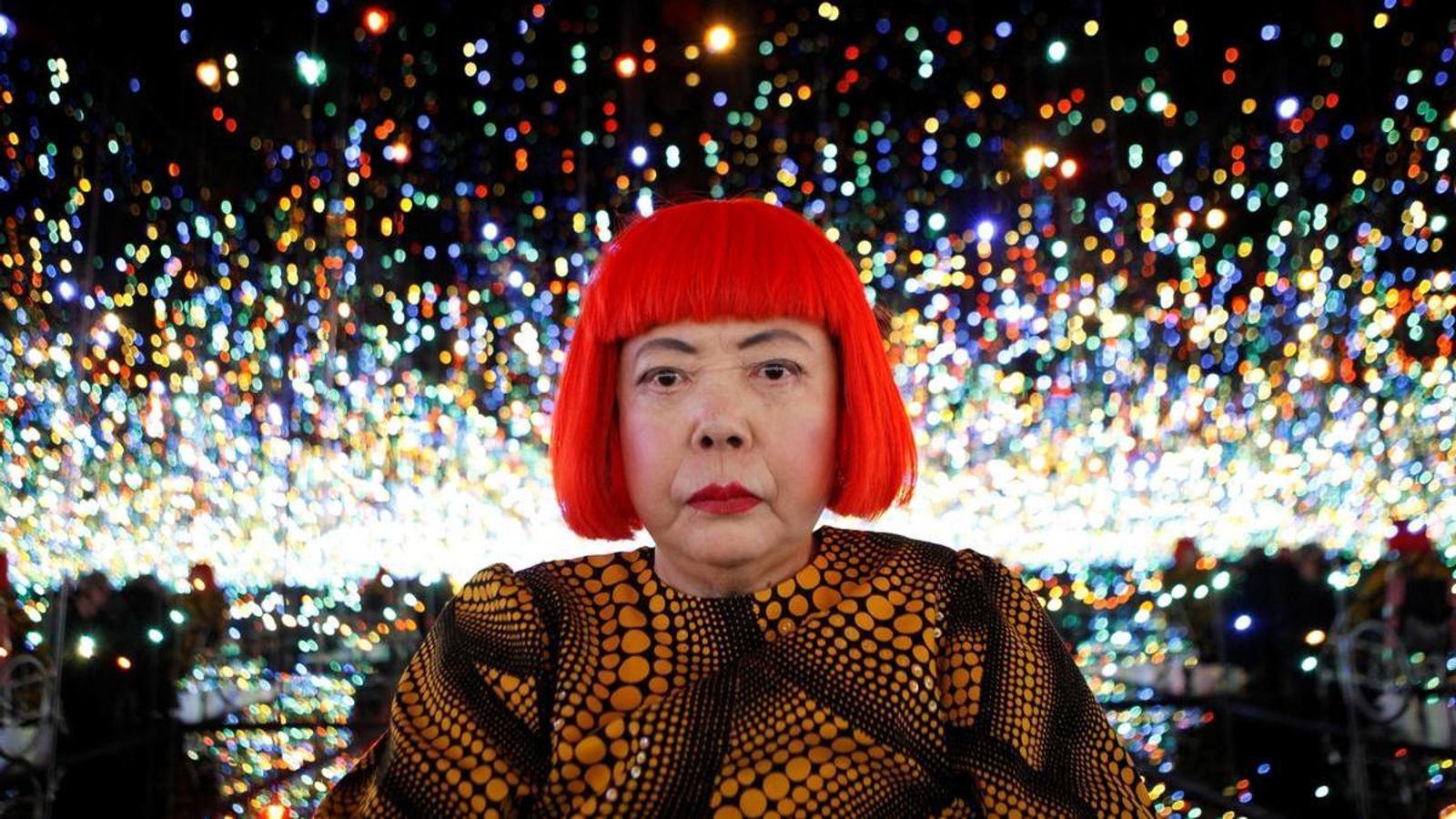
-
CAT -
CAST
Yayoi Kusama, one of the most unique and radical creators of recent decades, died on August 14 at the age of 97 in a Tokyo hospital, as reported by her website. According to the statement, which does not specify the cause of death, Kusama painted until her final days, she never put down her brush, obsessed with exploring and finding harmony and collective healing, beyond differences. This will sustained her from the Vietnam War era.
Born in the city of Matsumoto on March 22, 1929, her career was marked by a succession of struggles and traumas that accompanied her from childhood. Afflicted from the age of 10 by obsessive-compulsive disorder, suicidal tendencies, and visual hallucinations, she suffered abuse from a mother who destroyed her works and forced her to spy on her father. But Kusama knew how to transform it into great creative strength. The infinite nets that haunted her mind from a young age became her personal signature and one of the greatest exponents of global psychedelia. For her, painting colored dots on different supports or human bodies was an act of therapy. Art was the way to confront fear.

The 'hippie' era
During World War II, at the age of 16, she worked in a parachute factory where she learned to sew, a technique she later used in her fabric sculptures. The war and the atomic bombs of Hiroshima and Nagasaki profoundly marked her and also her work. In the late 1950s, fleeing the rigid formalism of Japan and with the support of artists like Georgia O'Keeffe, she emigrated to the United States. In New York, she became a key figure of the avant-garde and influenced icons such as Andy Warhol and Claes Oldenburg. She was a pioneer in immersive installations with mirrors and lights, happenings anti-war activists in Central Park against the Vietnam War and performative actions. In the 60s and 70s she was a visionary, celibate, and dominant priestess to dozens of acolytes who danced and had sexual relations during the happenings. They burned United States flags and bibles in the streets to protest the Vietnam War.
On August 24, 1969, Kusama staged one of the most unique performances at MoMA without the institution's permission: the Great orgy to wake the dead at MoMA from New York. A group of volunteers and friends of the artist submerged themselves completely naked in the museum's central fountain. While the volunteers played with each other and embraced, also on the marble sculptures, Kusama remained dressed, officiating the ritual and covering the participants' naked skin with her iconic polka dots. The action was a double denunciation. Kusama accused the MoMA of preferring to venerate dead artists rather than give space and support to living, avant-garde creators. Ironically, the artist named this incursion her "first solo exhibition at MoMA." On the other hand, for Kusama, sexual liberation, collective nudism, and love were peaceful political weapons to combat militarism, capitalism, and government control.
She never liked the press describing her as the queen of the hippies at that stage: "Some journalists started describing me as the "queen of the hippies" and assuming I was the type of woman who slept with everyone and anyone, but the truth is I had no interest in drugs or sex. For this reason, I drew a line between the rest of the group and myself. They all called me sister, because for them I was like a nun. I am a person who does not practice any kind of sex", she declared.
In 1959 she presented the first samples of the series Networks of the Infinite, which received very good reviews and also acquired great value in the art market. In 1965, one of her first works with mirrors could be seen: Infinity mirror room. In 1973 she returned to Japan due to the worsening of her mental health and subsequently voluntarily admitted herself to a psychiatric institution in Tokyo, from where she maintained a tireless production of paintings, novels, and sculptures. Among all her production, works such as Narcissus garden, the series of 900 paintings My eternal soul, the iconic pumpkin on the island of Naoshima, the body painting performances with fleas, or highly successful public retrospectives in museums such as MoMA, Tate Modern, Centre Pompidou, and Guggenheim Bilbao stand out.
Awarded the Praemium Imperiale – she was the first woman to receive it – her ability to transform psychic vulnerability into a mass phenomenon made her the most visited artist on the planet, demonstrating that creation can be the most powerful antidote to clinging to life. She is one of the most sought-after artists on the planet with a long career. She immersed herself in movements such as surrealism, abstract expressionism, pop art, and minimalism.
