The great love of Roberto Saviano

-
CAT -
CAST
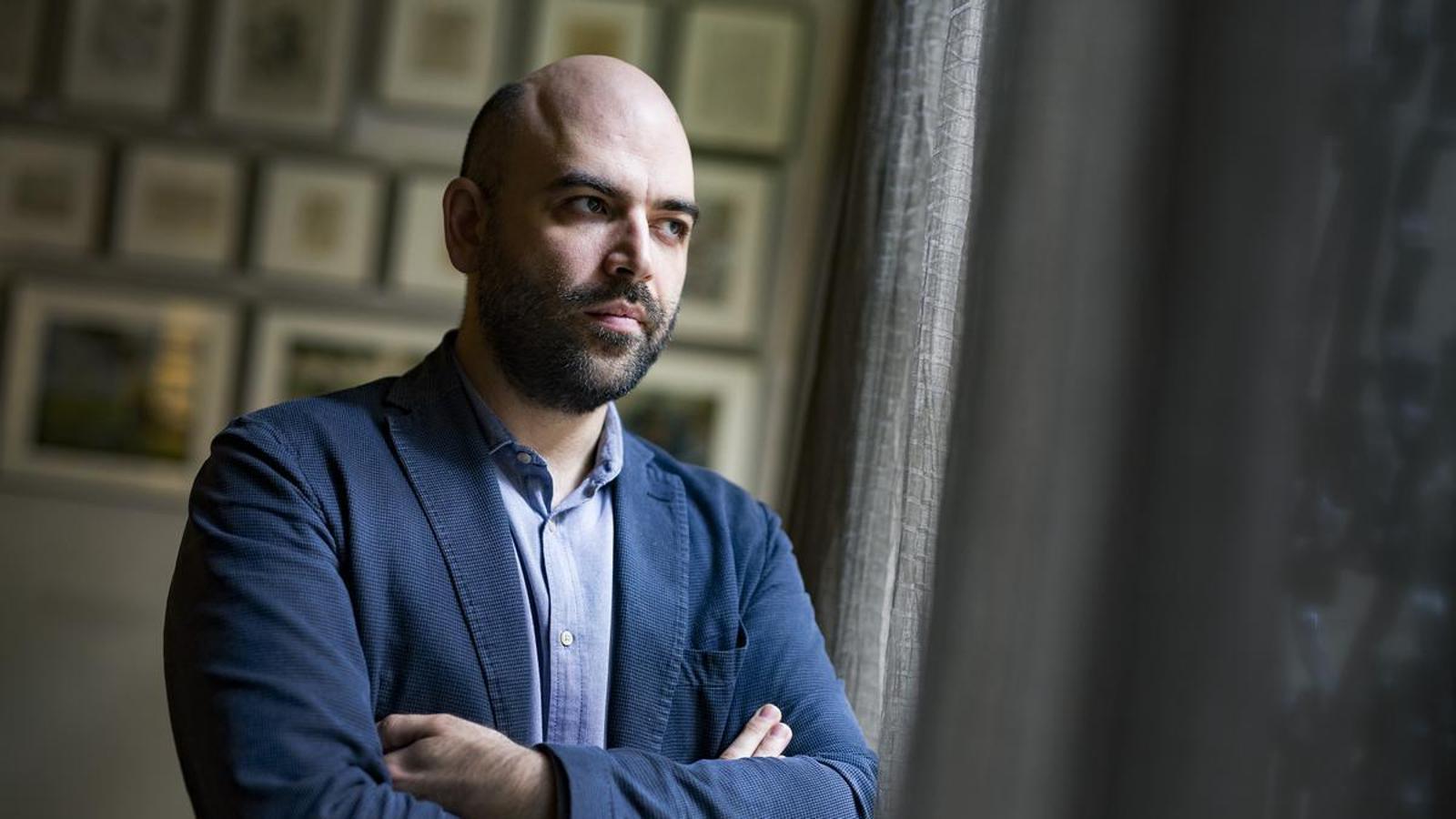
BarcelonaThe great love of Roberto Saviano (Naples, 1979) is the love of truth, a passion that almost led him to his death. When he was still a young man in his twenties, passionate, he wrote the work that has marked his entire life, Gomorrah (2006). Since then, he has been under a death threat. It cannot be easy at all to wake up every day under police protection, wherever you are, wherever you go. Perhaps his bitter survival is today a propaganda claim for the Camorristi or perhaps vengeance will eventually arrive. Meanwhile, he takes advantage of the only space of true freedom that remains for him, that of writing. He does the only thing he knows how to do: write in search of some kind of truth. Depending on how you look at it, that is a lot or very little.
Today, his search is no longer about that direct, primary, very hard knowledge of the beginnings. Now he has sophisticated and humanized the truth, made it more fickle, more sinuous and imprecise. This is the meaning of his latest novel based on real events, My love does not die (Ara Llibres, translated by Mar Vidal). He was supposed to come and present it in Barcelona this autumn, but he has postponed the trip. Is Barcelona not a safe destination for Saviano? It is a question that floats in the air of our city of wonders, so dense with diverse humanity, where it is easy to launder money. Saviano has said more than once that here, a safe territory, many accents from the Italian south are spoken. We understand him, right?
What love is the novel talking about? Well, about a beautiful and fiery love on the fringes of the 'Ndrangheta, the Calabrian mafia. We are at the end of the 70s and Rossella Casini, a university student from Florence born on May 29, 1956, meets Francesco Frisina, a young Calabrian, also a university student. The mutual attraction is instantaneous. The rapport, total. They become one body, one thought. Nothing distracts them, not their studies, nor politics—these are years of ideological effervescence, of Red Brigades and Eurocommunism—, nor drugs, nor friends, nor family... They are alone against the world.
Simultaneously, Saviano introduces us, the readers and the protagonists, both into their intimacy and into the web of the Calabrian family and criminal world. Both of them think or claim that they will be able to make it out, that they will escape their fatal destiny. But their destiny is love, which binds them with invisible threads. Just as the Stromboli volcano with its sulfur dyes the water violet at the beach of Palmi, their relationship is tinged with the insidious color of a stray dog, which is the dirty and grayish color of atavistic hatred, of family honor, of slippery blood, of roots sunken and driven into the depths of the earth. It happens, however, that they cannot escape from themselves. How do you flee from overwhelming love, how do you surrender to it? And how do you avoid a war when it has already broken out?
That is what Saviano's book is about. About love and war. There is no possible peace. Only a muffled struggle to preserve love, a tragic struggle to avoid death. This is Saviano's truth: giving meaning to his life as a fugitive by revealing the depth of so many wasted lives, of so many shattered love stories. To write to live.
