5 key passages Christopher Nolan leaves out of his 'Odyssey'
The stay in the land of the Phaeacians, the conversation with Polyphemus, the encounter with Achilles in Hades or Penelope's bed are some of the significant omissions of the film adaptation by the British director

-
CAT -
CAST
GironaChristopher Nolan's Odyssey lasts 2 hours and 53 minutes. Almost three hours of epic footage to narrate Ulysses' adventures for ten years, from when he leaves the shores of Troy until he finally returns to Ithaca. The film covers practically all the essential episodes and themes of Homer's poem, the foundational work of the journey myth, created from oral tradition about 2,800 years ago. But, like any adaptation (or reinterpretation), it is by no means exact: the filmmaker alters the order of some passages, summarizes others, and eliminates important scenes that, in the original text, add nuances and help to understand the protagonist's psychological depth. These are the most significant.

The stop in the land of the feacis
The first major absentees from Nolan's film are the Phaeacians. In the poem, before reaching Ithaca, Odysseus shipwrecks without his crew on the island of Scheria and Princess Nausicaa, daughter of King Alcinous, discovers him naked on the beach. She takes him to the palace and, there, after hearing the rhapsode Demodocus sing the glories of the Trojan War, Odysseus becomes emotional, reveals his identity and recalls all the adventures in a retrospective narrative full of temporal jumps.
In the film, this same device of flash-backs and metadiagetic narratives, in which Nolan is in his element, is assumed by the nymph Calypso (Charlize Theron), who has the hero, played by Matt Damon, held captive on her island for seven years, amnesiac, until he begins to remember and reconstruct the story. With a substantial difference: in Homer's poem, Odysseus never loses his memory and the sexual encounters with the nymph (and also with the sorceress Circe) are conscious and explicit.
Polyphemus and "Nobody"
The episode of Polyphemus could not be missing. Nolan, however, avoids the plan to make the cyclops sleep by getting him drunk with wine, and also the dialogue with Ulysses, in which he assures him that his name is Nobody (Outis). These are relevant lines for capturing the Mediterranean character of the work and the cunning (mètis) of the character, a quality that Homer already highlights from the first verses, when he presents Ulysses as the "polýtropos man or ""man of great cunning", in the translation by Carles Riba.
Then, in Homer's song, wounded and blinded, Polyphemus, son of Poseidon, calls for help from the other cyclopes by shouting that "Nobody" is attacking him. His brothers interpret the words literally and decide not to intervene, in a kind of ancient joke that does not fit the film.
Achilles and Anticlea in Hades
References to the Trojan War are present throughout the film and the poem. When the battles are named, however, it is surprising that Nolan, alongside Agamemnon and Menelaus, makes Achilles, the greatest of Greek warriors, disappear, who is not even mentioned. This alters one of the most profound episodes in Ulysses' descent into the underworld of Hades to consult the seer Tiresias, where he meets many dead heroes, including Achilles. Ulysses lets him know that he has achieved eternal glory, but Achilles, a destroyer, replies that he would rather be a simple day laborer among the living than reign over all the dead, in a very powerful reflection on the senselessness of war, which, on the other hand, is indeed well reflected in the film as a whole.
Instead of Achilles, Nolan gives prominence to Sinon, played by Elliot Page, who is irrelevant in the original poem. In Hades, another moving scene is also cut short: Ulysses' meeting with his mother, Anticlea, who died while he was away from home.

The olive tree bed
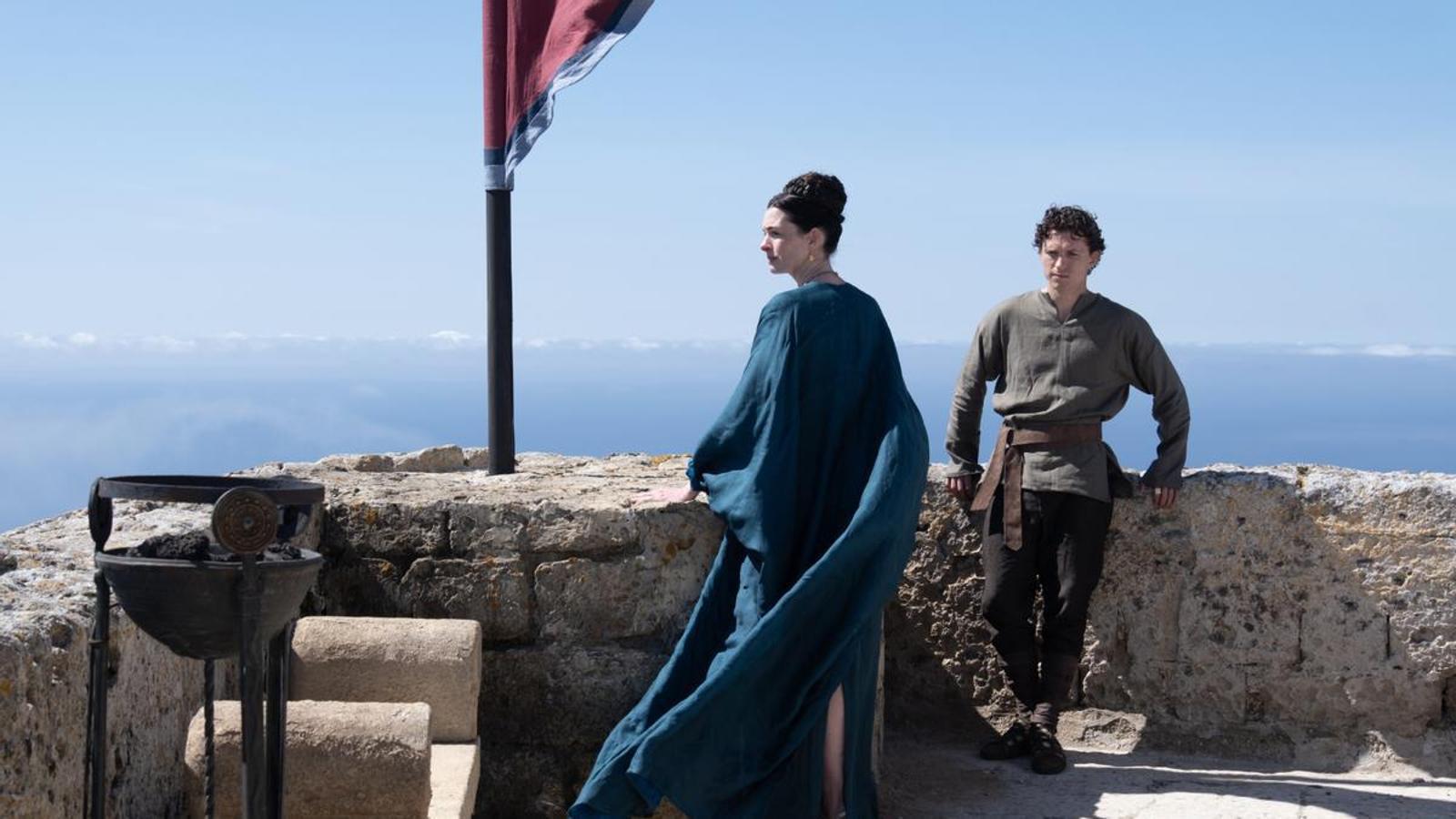
Finally, in the return to Ithaca, the filmmaker also eludes some of the most beautiful moments of the poem. They have to do with the signs of recognition (anagnorisis). The dog Argos and the scar that the maid Eurycleia discovers while washing his feet do appear, although with little emphasis, but in the book, after killing the suitors, there is still one last test. Penelope (Anne Hathaway in the film), after so many years of waiting, is not entirely convinced that that man is truly her husband and orders the marital bed to be moved out of the room. Ulysses replies that it is impossible, since he himself built it around the trunk of an olive tree. Only the two of them knew this secret, which becomes the definitive revelation, an unequivocal symbol of their love. In Nolan's Odysseythis cathartic moment is replaced by a clothespin in the shape of Athena invented by the director.
The conclusion of the story also presents divergences. In the poem, after reuniting with Penelope, Ulysses visits his father, Laertes, and fights with the relatives of the suitors who demand revenge, until Athena, by order of Zeus, imposes peace. In Nolan's ending, on the other hand, there is no war (but there is the invented threat of the sea peoples) and Ulysses goes into exile with Penelope to leave the kingdom in the hands of Telemachus. In this way, the filmmaker eliminates the supernatural resource of the deus ex machina, so typical of Greek literature, and introduces a twilight and transcendental idea of the end of an era, more contemporary, but nonexistent in Homer's text.

