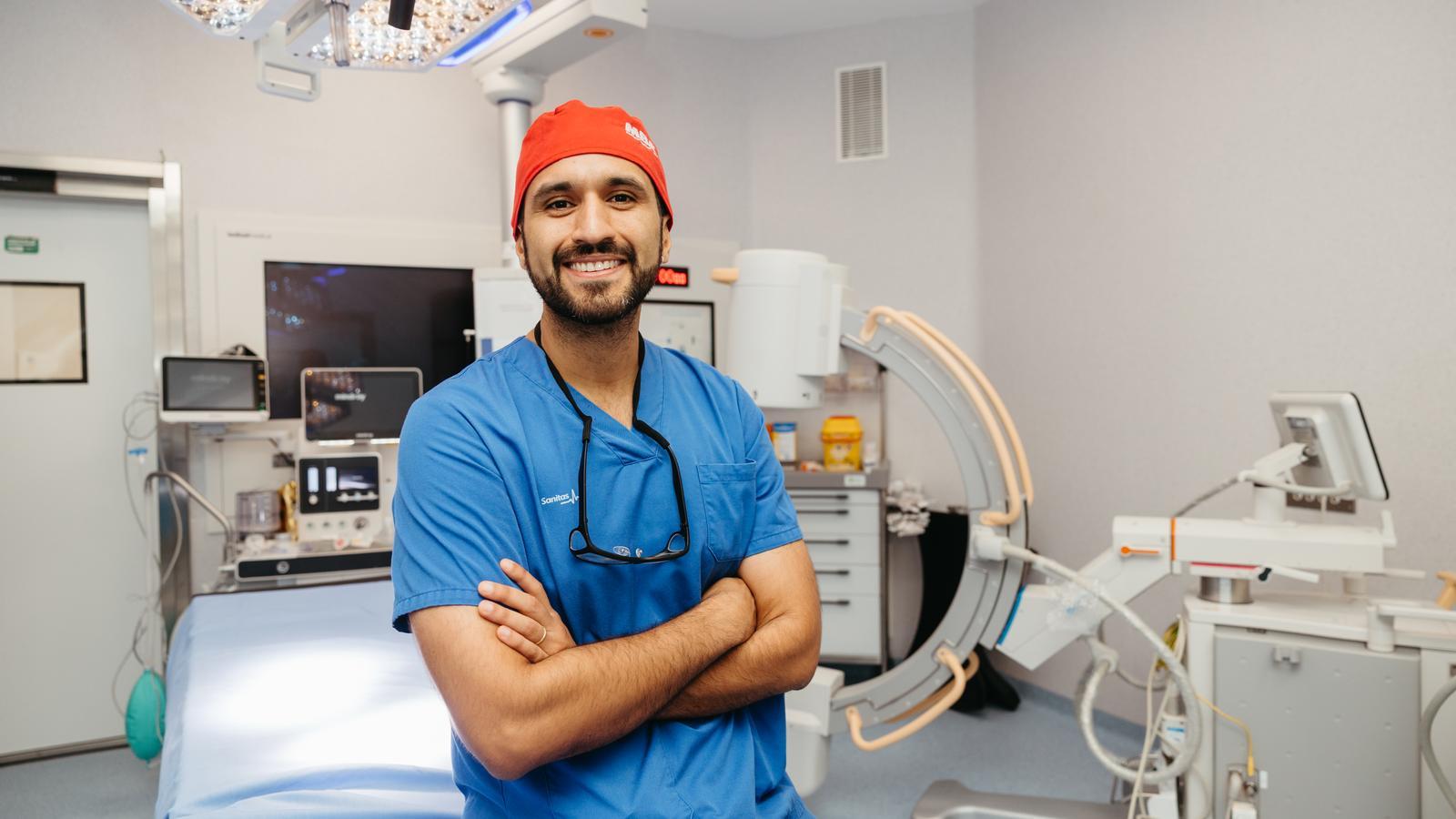
The Sanitas Pain Unit provides an answer to one of the most invisibilized and, often, least understood health conditions: chronic pain. Reducing pain, recovering autonomy and the quality of life of people is the recipe of its comprehensive and personalized model
Chronic pain is one of the most invisibilized health conditions and, at the same time, one of those that has the greatest impact on people's quality of life. It often does not have a single or easily identifiable cause and ends up affecting not only physical well-being, but also emotional state, social relationships, and the ability to carry out daily activities. Despite this, even today there is a certain tendency to normalize it or address it partially.
To respond to this reality, Sanitas is committed to a comprehensive and personalized model through its Pain Unit. The goal is not just to reduce pain, but to help the patient regain their autonomy and quality of life. To do this, it combines different therapeutic tools, from pharmacological treatment to interventional techniques, rehabilitation, and therapeutic exercise, taking into account both physical symptoms and the emotional and functional impact.
"Chronic pain does not exclusively affect one part of the body. It is essential to make a global assessment to improve the patient's quality of life," explains Dr. Roger Moreno, a specialist doctor in Pain Treatment at Sanitas at the Hospital CIMA in Barcelona. He adds: "Pharmacological treatment remains an option and there is no single valid solution for all cases. Therefore, the assessment by the Unit expands the available options. Different strategies are combined in a personalized way."
There is no need to suffer in silence
Pain, as its specialists explain, is not fought only by alleviating it, but it must also be understood and treated from all angles. Those who suffer from chronic pain often do so in silence. "It's just a part of aging" is a phrase that many sufferers have heard time and time again, to the point of ending up normalizing the pain, just as those around them do. Dr. Ana Trescolí, from Sanitas, asserts that "persistent pain should not be considered an inevitable consequence of aging. When it is prolonged over time, it can end up conditioning aspects as important as rest, mobility, autonomy, mood, or social relationships. Furthermore, delaying its assessment can favor the pain becoming chronic and more complex to treat. Faced with persistent pain, it is important to identify its origin and assess the different options. For this, there is the Pain Unit."
Dr. TrescolíSanitas
Combined therapies
At Sanitas, pain is not understood as an isolated symptom, but as a condition that impacts multiple dimensions of a person's life. Therefore, the goal is to recover the quality of life, autonomy, and physical and emotional well-being of patients through joint, yet individualized care. When conservative treatment is not enough, Sanitas also has minimally invasive interventional techniques guided by ultrasound imaging and fluoroscopy, such as blocks, epidural injections, or radiofrequency.
"In some cases, it may not be possible to eliminate it completely, but we can find strategies that allow us to reduce it, recover mobility, rest better, and return to activities that had been abandoned. The most important thing is not to normalize a situation that limits daily life," adds Dr. Trescolí.
Without a combination of therapies adapted to each patient, lasting results over time or a real improvement in quality of life cannot be achieved. For this reason, the Sanitas Pain Unit concentrates diagnosis, treatment, and medical follow-up in the same space to simplify the care process, saving patients time and favoring more efficient and coordinated care.
Types of pain
Chronic pain can have multiple origins, from old injuries to degenerative diseases. Identifying the cause is the first step to achieving significant improvement.
As Dr. Carlos Fernando Gómez, a specialist in anesthesiology, resuscitation, and pain treatment, says, "spinal pains, such as cervicalgia, lower back pain, or pain associated with certain vertebral pathologies; joint and musculoskeletal pains; neuralgias and other pains of neuropathic origin, as well as persistent pain after some surgical interventions, have in common that the pain is maintained for a long time and can deeply affect the quality of life. The goal is to improve it."
Dr. GómezSanitas
A wide network and two new centers
Sanitas is developing a growth plan in Catalonia, where the company has the CIMA Sanitas Hospital Barcelona, in addition to nine medical centers, 37 dental clinics, and 11 centers for the elderly. Furthermore, it plans to inaugurate the Marina Hospital in 2028.
The Sanitas Sabadell Medical Center, inaugurated last December, is Sanitas' 30th in Spain and its sixth in Barcelona. With a surface area of 1,900 m², it has 13 consultation rooms, offers more than 20 medical and surgical specialties, as well as specific diagnostic rooms for cardiology, ophthalmology, and otolaryngology. It also has a clinical analysis laboratory with access to the most common tests.
In Barcelona, the new Sanitas Provença Medical Center, opened in February 2025, is Sanitas' 27th in Spain and its fifth in Barcelona. It has a surface area of 2,000 m², 9 consultation rooms, and more than 20 medical and surgical specialties, along with specific diagnostic rooms for cardiology, ophthalmology, and audiometry. The center offers nursing and psychology consultations, in addition to clinical analyses. Also, the Robresa Medical Center, on Balmes Street, features a pain unit among other medical services for adults and children, and facilities covering 800 m².