Every day, a world: the firefighters of the Generalitat from within
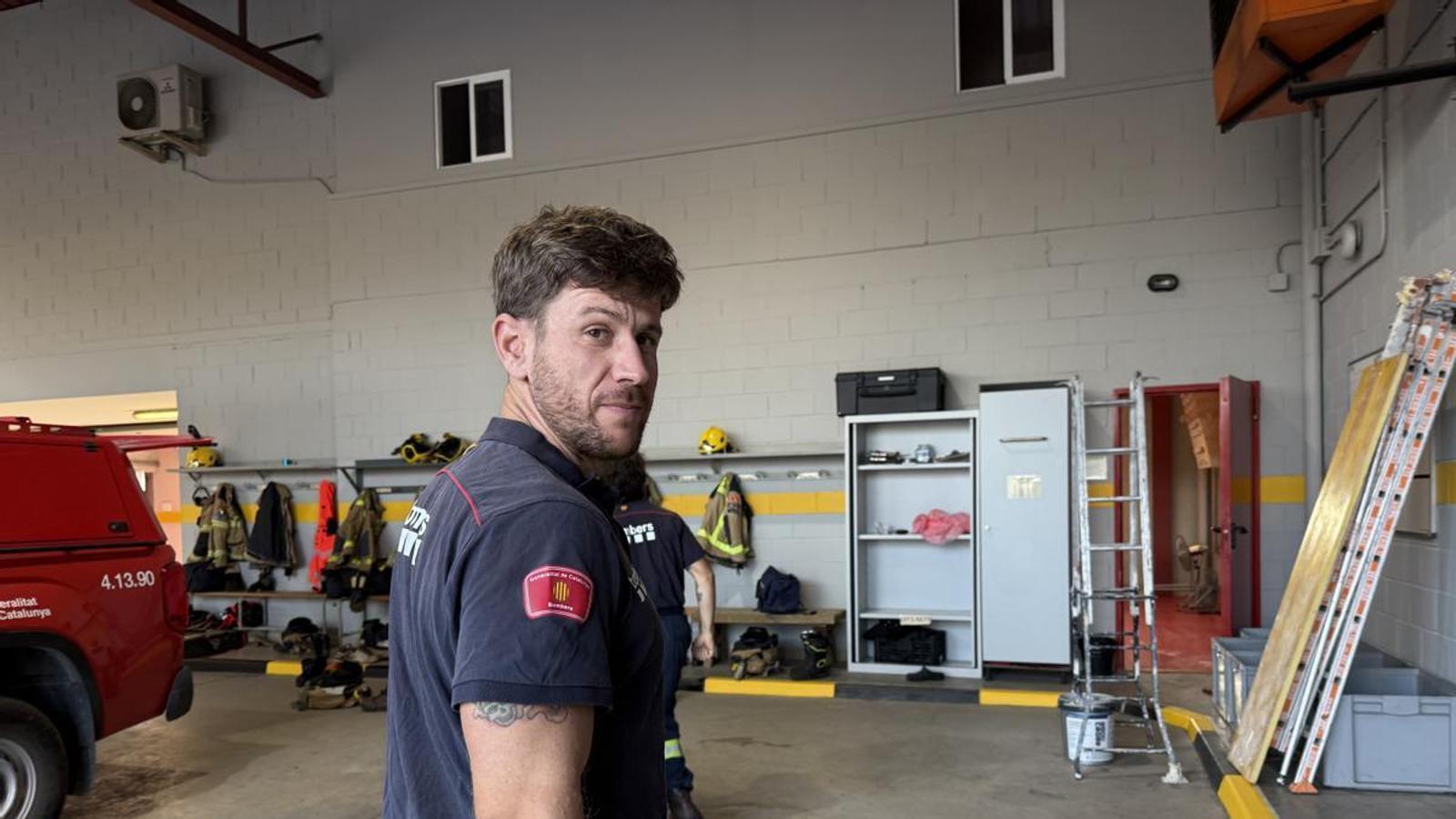
What motivated them to join the Corps? Discover the story of Albert and Joan, two firefighters from the Rubí station

-
CAT -
CAST
The day-to-day life of the Generalitat firefighters is marked by uncertainty. They begin their shift at the station, but they do not know where they will end up, at what time an emergency will arise, or even when they will have their next meal. At breakfast time, the firefighters joke among themselves: “take the chance to eat as much as you can”. The reason is that their workday is so uncertain that they do not know when they will be able to eat again. But this same unknown is what motivates them in their profession.
The Rubí and Sant Cugat Fire Station is a very busy station with a large number of call-outs. It is located in a strategic place and is one of the specialized centers in Catalonia for chemical risks. In Catalonia, the Maçanet, Rubí, and Tarragona stations are strategically placed along the AP-7 axis, through which most dangerous goods pass and where specific infrastructure and vehicles are needed to be able to deal with this type of service.
For this reason, the services they have to cover vary from those of other stations. On any given Friday, just during the morning, the Rubí and Sant Cugat station team attended to 3 different services: an electrical transformer fire, a building pathology check to verify it was not structural, and an outdoor gas leak.

Albert Staromiejski has been a firefighter for the Generalitat for six years. He decided to take the step forward because he was looking for a professional change of direction. In the first instance, he was attracted by the fact that it is a job where "a part of thinking and solving problems" is combined with "a job involving physical tasks and teamwork".
Albert, just like his colleagues at the Rubí station, receives specific training in chemical risk services and emergencies. Even so, the shift distribution is very similar to that of other stations. The shifts consist of 24-hour days and start at seven in the morning. First thing in the morning, they hand over with members of the previous shift and, immediately after, they begin the equipment check.
On the other hand, Joan Torres has been a firefighter for over 5 years. He first started in Santa Coloma de Farners and later moved to the Rubí station. In his case, he began working as a firefighter motivated by a family matter: his great-grandfather had been a firefighter. “I saw pictures of my great-grandfather, volunteering in Sabadell, and it was something I always had in mind, but I couldn't find the right time to start studying for the competitive exams.”

Material inspection might seem routine, but it is the guarantee that all tools, equipment, and vehicles are ready for any emergency that may arise. Afterwards, they all have breakfast together and hold the briefing where the roles and tasks of each firefighter are determined in case of a service call. Despite prior planning, this day there was no time to hold the briefing: before 09:30 in the morning, they had already received notice of two service calls. Neither of the two required a “full turnout,” which is when all the firefighters from the station must go, and the two departures were distributed in such a way that they were able to address both emergencies. After the briefing, drills and service simulations are carried out.
Joan describes the day-to-day life of being a firefighter as "very varied". "You can have days that can be very quiet and where you really do little, then you have days that are the complete opposite, where you don't stop, you don't step into the station".

The general perception of firefighters with regard to their work is very positive. The vocation of service, the commitment to the citizenry, and the professionalism with which the firefighters respond, define the Corps and have made it a benchmark inside and outside of Catalonia. The 2030 Firefighter Plan contemplates reaching a staff of 4,000 firefighters to be able to guarantee that the Corps continues to stand out for its human service and its effective response when it comes to dealing with emergencies.
