The German businessman who won the favor of the king of England
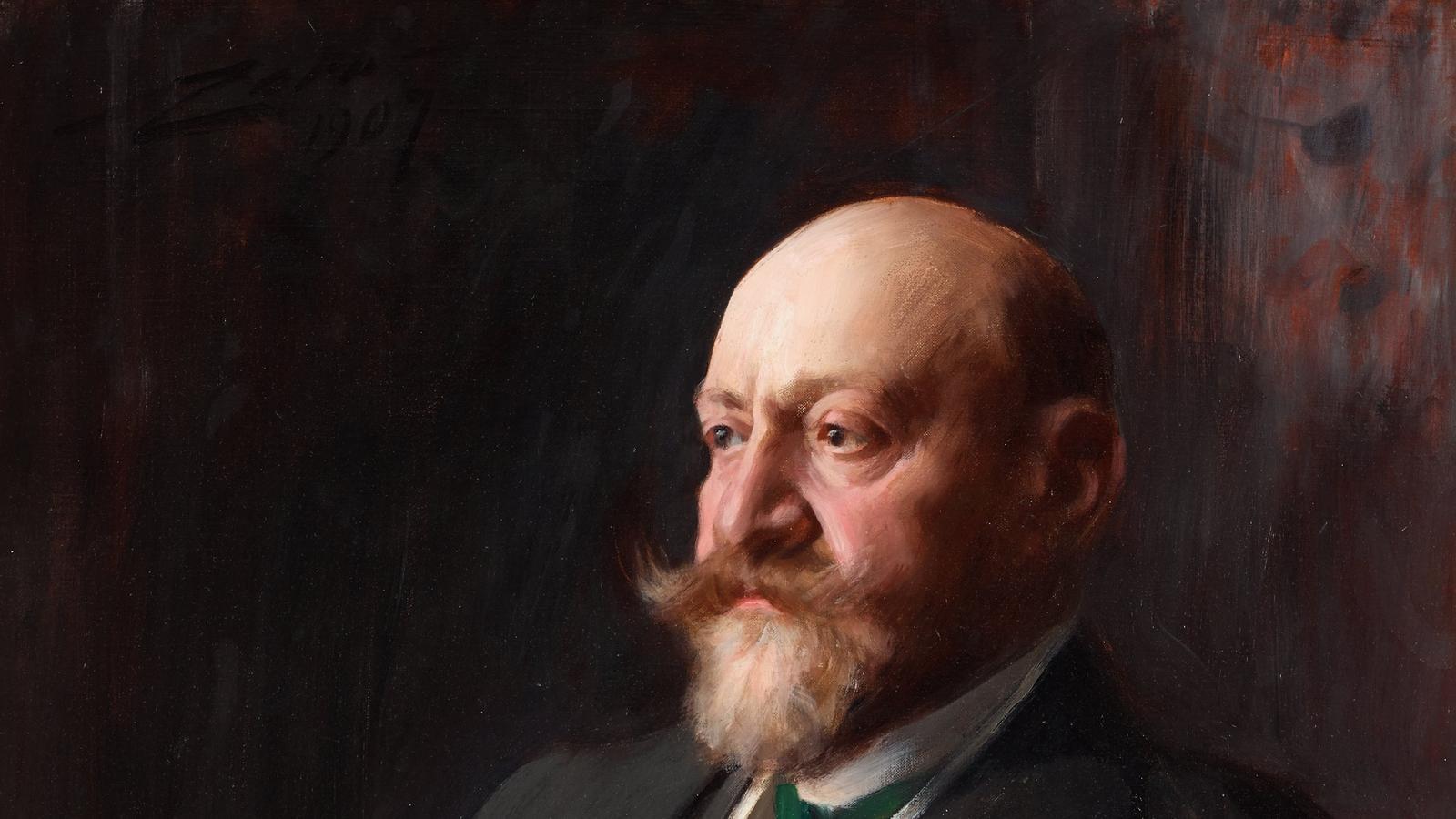
Ernest Cassel, financier of the British Crown at the beginning of the 20th century, was a friend of Churchill and received all state honors
-
CAT -
CAST
- Businessman and philanthropist
From being born in Prussia to managing the finances of the English Crown, being friends with Winston Churchill, and having a granddaughter married to Louis Mountbatten. There is no doubt that the life of Sir Ernest Cassel was fast-paced.
His father, an Ashkenazi Jew, was the owner of a small local bank, so when Cassel began his adventures, he already had finance in his blood. After accumulating his first work experience at a bank in Cologne, just after finishing his primary studies, he traveled to Liverpool at sixteen years old and without money, in order to start working at an Anglo-Egyptian bank in the capital of Merseyside. Very soon he was assigned to Paris, but his stay there lasted a short time due to the outbreak of the Franco-Prussian War, which, because of his origins, affected him very directly.
Upon returning to London, thanks to the efforts of his friend Baron Moritz Freiherr von Hirsch auf Gereuth (popularly known as Baron Maurice de Hirsch), he was able to join the firm Bischoffsheim and Goldschmidt, an investment bank in the British capital. They were so pleased with his work that in one year his salary multiplied by twenty-five. In 1878, he married Annette Maxwell, the daughter of a landowner, who died only three years after the marriage. Before the age of thirty, he had already accumulated a small fortune working for others, but the talent he showed for finance pushed him to set up on his own, which he did in 1884.
In the nineties, his friend Baron De Hirsch—who was the financial advisor to the Prince of Wales—did him a favor again, because he introduced him to the future monarch Edward VII, with whom he forged a great friendship that would last until the King's death. But before that, when Hirsch died in 1896, Cassel took over as advisor for monetary issues within the royal family.
The main characteristic of Cassel's investments is that he did not make them in United Kingdom assets, but rather preferred to invest abroad, and he assumed more risk, but achieved higher returns. He carried out operations in Turkey, Sweden (he financed a good part of the Swedish Central Railway Association and merged several small-scale mining companies), the United States, Latin America (Mexican railroads), South Africa (diamond and gold mines), China (mining and transport), and Egypt. In the period 1899-1902, he was one of the financiers of the Aswan Dam (the initial one, known as the Low Dam) and his money was also key in the expansion of the London Underground. He also discovered the benefits of lending money to powerful people, which in the long run brought him very lucrative favors in return (this is what became known as the “Cassel system of greasing relationships”).
More social status
His accelerated career in the world of finance went hand in hand with his social ascent. Both spheres fed into each other, so that his money served to enter the circles of influential people in England and, at the same time, the new contacts opened doors for him to do more business. In addition to the key relationship with Edward VII, his fondness for horses led him to meet Lord Randolph Churchill—Winston's father—and the Prime Minister of the time, Herbert Henry Asquith. This equestrian interest ended up being more than a hobby for Cassel, because he decided to invest in the breeding of racehorses.
Luxury was also an important component of his life; it is not for nothing that at the beginning of the 20th century he was one of the most important clients of Cartier and Fabergé. There is unanimity in considering him one of the most important figures of the Edwardian era.
He retired from business in 1910 and from then on carried out very relevant philanthropic works, especially in the field of education and mental health: the psychiatric hospital he founded in London in 1919 still bears his name. During the First World War, he also made important contributions to the British Red Cross.
The number of recognitions he received throughout his life is impossible to reflect here, but among the different titles are those of member of the King's Privy Council, Knight Grand Cross of the Order of St. Michael and St. George and of the Royal Victorian Order, as well as awards in most of the countries where he worked: Sweden, France, Prussia, Egypt, etc. When he died, since his only daughter was no longer alive, almost two-thirds of his fortune went into the hands of his granddaughter, who married Lord Mountbatten, uncle of Elizabeth II (and also a second cousin, such are the ways of royalty).
