Bellini on-the-fly
Anodyne production of the opera 'I Capuleti e i Montecchi' at the Liceu, saved by some voices and musical direction
-
CAT -
CAST
- Music: Vincenzo Bellini. Libretto: Felice Romani.
- Stage direction: Allex Aguilera. Musical direction: Riccardo Frizza.
- Performers: Lisette Oropesa, Raffaella Lupinacci, Iván Ayón-Rivas, Marko Mimica, Alejandro López and the Orchestra and Chorus of the Gran Teatre del Liceu.
I admit that I cannot be objective with Bellini, and even less so with one of the works that I personally consider most useless in the repertoire: I Capuleti e i Montecchi. An opera that only justifies its programming if the pretext is the exhibition of good voices with bel canto musculature to sustain the anti-dramatic and anti-climactic architecture of a benchmark in the world of Italian romantic melodism but which, in my modest opinion, adds nothing to the greatness of the lyric genre. Whether due to the excess of self-borrowing, or the scarce dramatic substance of Felice Romani's libretto, nowadays it is difficult to justify opera houses programming a work like this one. In case of doing so, perhaps it would be better to opt for a concert version, because staging it turns out to be very difficult if one does not want to fall into ridicule.
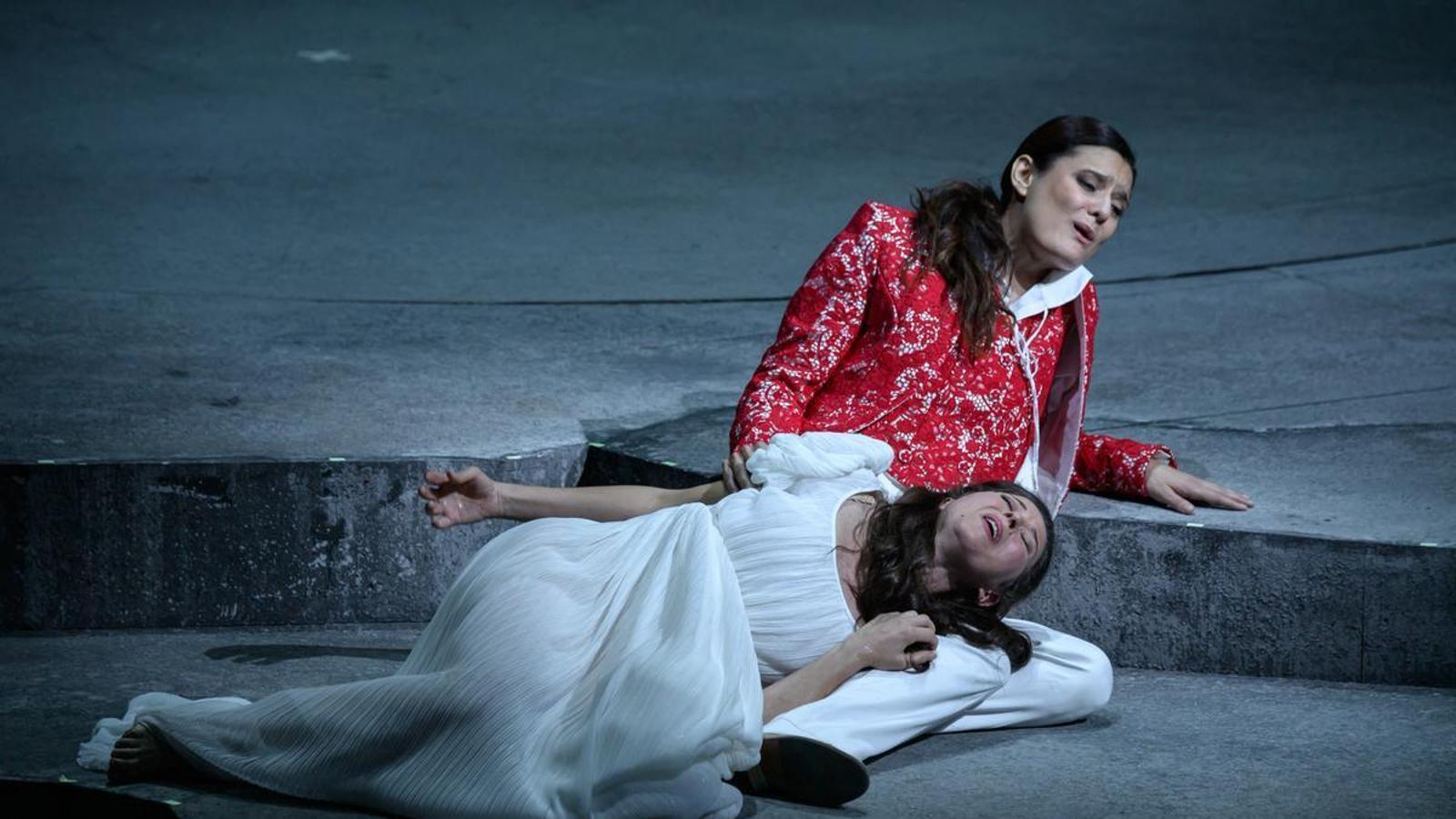
Even so, the Liceu has bet strongly on the two great protagonists, a Lisette Oropesa in a state of grace in the service of Giulietta and a Raffaella Lupinacci with abundant means in that of Romeo. Oropesa, who according to reports had a premiere night on October 30th with some vocal problems, was simply delightful on Monday in attack and emission, in the mastery of dynamic control and in musicality. And the understanding with Lupinacci worked, because the mezzo Italian exhibits a generous and ductile singing, served by a beautiful timbre and color.
Iván Ayón-Rivas also shone, the tenor who took on the role of Tebaldo and who had moments of great brilliance, such as his great scene in the first act and, above all, the duet with Romeo in the second. Projection and attacks on the high notes and phrasing of exquisite taste were some of the best assets of the Peruvian tenor.
It was a pity that the bass section paled incomprehensibly: the singing—usually noble and nuanced—of Marko Mimica sounded disjointed in the upper register and with slight tuning problems in his interventions as Lorenzo. On the other hand, it is incomprehensible that a theater with the category and vocal tradition of the Liceu has relied on a voice like that of Alejandro López for the character of Capellio. Let’s leave it at that.
A success, indeed, having Riccardo Frizza as musical director. The Italian maestro is an excellent conductor and stands as the heir to the great Italian batons specialized in the late bel canto romantic repertoire. And once again he demonstrated it, leading a ductile orchestra with stellar interventions in the sections with "obligatos" (harp, clarinet, and horn). Good performance also from the resident chorus, this time reduced to the male section.
The production by Allex Aguilera, rented from the Walloon Opera, is forgettable. Neither beautiful nor interesting, with ridiculous choreography and some bizarre ideas that, being completely out of place (Tybalt molesting Romeo?), were downright laughable. If it were not for the quality of the three lead voices and the baton of Frizza, we would have forgotten this performance the next day. And that would be the end of it.
(By the way, a minute of silence was held on the opening day for the recent railway tragedy, but the theatre did not make any mention on either day of the stage assistant who had an accident during rehearsals. It would have been a nice gesture, while preserving all the privacy that was desired, but remembering her during these performances).
