How was it to live in a textile colony? A journey to the industrial past of Catalonia
From the workers' houses to the masters' towers, passing through factories, schools and churches: we propose six old textile colonies to discover what daily life was like in industrial Catalonia.

-
CAT -
CAST
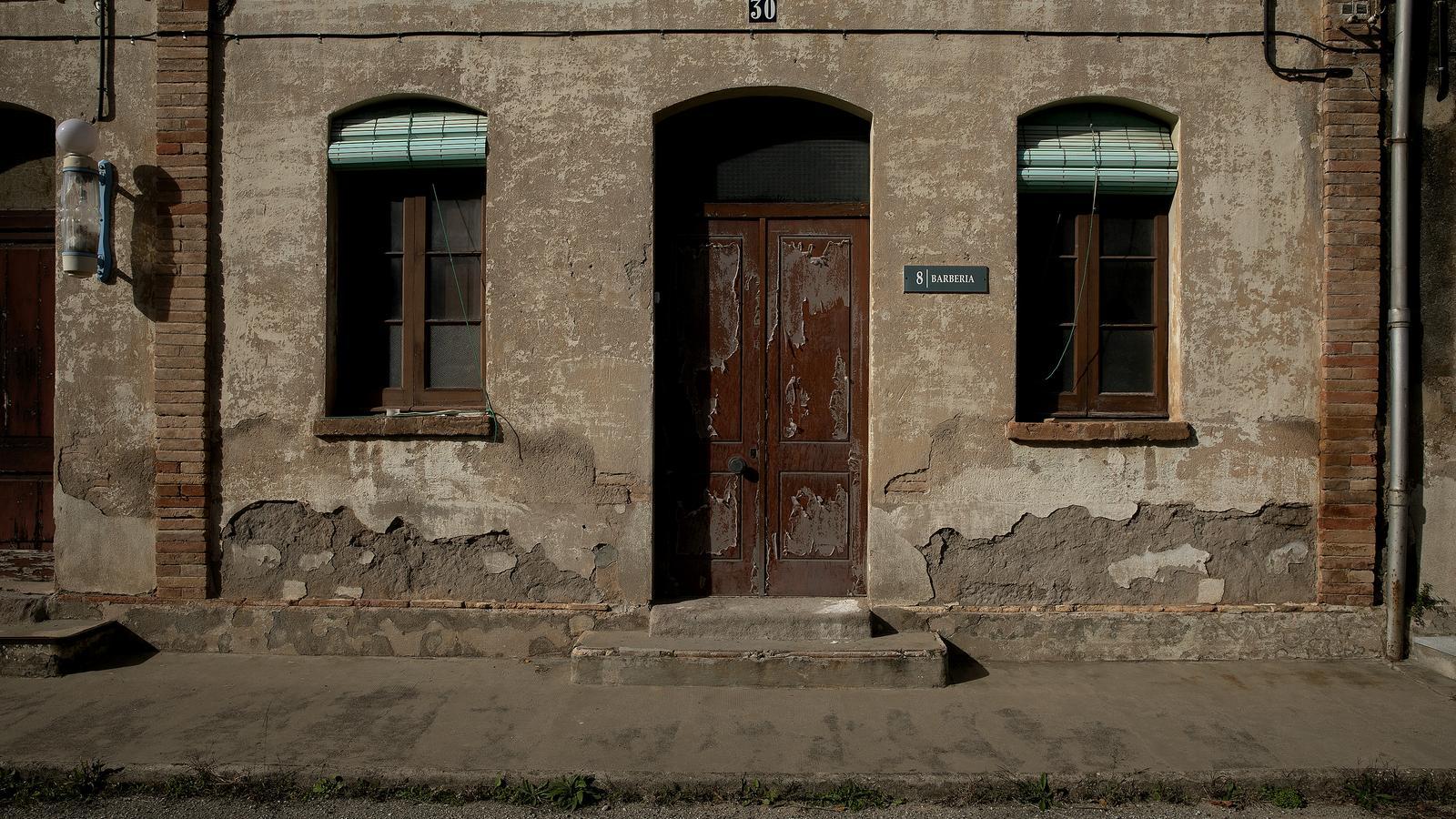
On both sides of the street, a row of brick houses, all practically identical. In the background, a chimney that rises above the rooftops. A little further on, a church, a school, and a grocery store. The streets are narrow, the distances short, and everything seems designed so that no one has to walk far to get from one place to another. Today, silence dominates much of these spaces, but a little over a century ago, the landscape was quite different. Early in the morning, hundreds of workers entered the factory, the looms began to run, and families lived their lives on streets where almost everyone knew each other. That was what it was like to live in a textile colony, one of those small industrial communities that, between the 19th and 20th centuries, transformed the landscape and the lives of thousands of Catalans.
Today, many of these old colonies can still be visited. Some remain inhabited; others have converted the factories, dwellings, and facilities into museums and interpretation spaces that allow you to discover how people lived there. Because behind the chimneys and industrial buildings hides a history that goes far beyond the manufacturing of fabrics: that of the families who worked, studied, shopped, and spent their free time within precincts where the owners had a decisive influence. We propose six questions and six old textile colonies where you can find the answers; a journey into the past to discover what it was like to live, work, and grow up in industrial Catalonia.
Colònia Vidal (Puig-Reig): What was the day-to-day life of a working-class family like?

In Puig-reig, in the Berguedà region, the Colònia Vidal Museum allows you to enter the home of a working-class family from the beginning of the 20th century. The visit tours a workers' dwelling with the furniture and utensils of the era, but also other spaces where daily life took place: the school, the fishmonger's, the laundry basins, and the communal showers. Founded at the end of the 19th century right next to the Llobregat river, the colony functioned almost like a small town, where workers had a good portion of services just a few meters from home. The route also includes the industrial facilities, where you can see a loom in operation. An opportunity to discover how the life of the families who lived and worked in the shadow of the factory was organized.
Colònia Sedó (Esparreguera): How did a textile factory work?

To understand how fabrics were manufactured, one of the most spectacular visits is to the Colònia Sedó Museum, in Esparreguera, in the Baix Llobregat region. Founded in the mid-19th century, it became one of the largest textile colonies in Catalonia. Its peculiarity is that it harnessed the power of the Llobregat water to move the factory machinery. Today, visitors can enter the interior of an enormous hydraulic turbine, explore the underground galleries, and discover how the energy of the water was transformed into movement to operate the looms. The tour allows one to understand the industrial mechanism that was hidden behind every piece of clothing.
Viladomiu Nou (Gironella): How did the owners of the colonies live?

While the workers were crowded into modest dwellings, the owners of the colonies usually had large stately residences. To discover this contrast, one must visit the Torre de l'Amo de Viladomiu Nou, in Gironella, in the Berguedà region. Built at the beginning of the 20th century, it was the residence of the family that owned the colony and today it has become an interpretation center. The visit allows you to tour the rooms of the house and travel to the summer of 1906 with the help of Teresa, a domestic worker who explains what the masters' lives were like and what kind of relationship they had with the workers. A way to discover the social differences that were hidden behind those small industrial communities.
Borgonyà Colony (Sant Vicenç de Torelló): What did the workers do when they finished their shift at the factory?

Life in the textile colonies did not end when the looms stopped working. There was also time for football, theatre, parties, and meetings between neighbours. A good place to discover this is the Borgonyà Colony, in Sant Vicenç de Torelló, in Osona. Founded at the end of the 19th century by the Scottish company J&P Coats, it preserves a good part of the facilities that articulated the social life of the workers, such as the theatre casino, the football pitch, and the gardens. Guided tours, organised by the Ter Museum, allow you to explore these spaces, enter an old worker's dwelling, and learn about the history of a colony that is still inhabited today.
Rusiñol Colony (Osona): What was the relationship between art and industry?

In Manlleu, in Osona, there is an old textile colony closely linked to one of the great names of Catalan Modernism: Santiago Rusiñol. The Rusiñol Colony belonged to the family of the painter and writer, who spent seasons there and turned the old owners' tower, known as Cau Faluga, into a meeting place. Today, guided tours from the Ter Museum allow you to walk through the gardens, enter the tower, discover the director's apartment, and visit the factory facilities. An opportunity to discover a less common facet of textile colonies, where the world of industry coexisted with the artistic and cultural concerns of the Catalan bourgeoisie.
Pons Colony (Puig-Reig): How far did the owners' power reach?

In the textile colonies, the owners did not only control the factory. They often also had a decisive influence on housing, education, religion, and a large part of the daily lives of the workers. A good example is the Colònia Pons, in Puig-reig, in the Berguedà region, founded in 1875. The site preserves an imposing neo-Gothic church, known as the Cathedral of the Alt Llobregat, as well as other buildings that allow for an understanding of industrial paternalism. Guided tours of the complex and its interpretation center explain how the owners offered services and facilities to worker families, but also established rules that conditioned their lives beyond the working day. A good way to discover that, in those small communities, the boundary between work and private life was very blurred.
