A Catalan technology that wants to regenerate marine life in ports
95 plates distributed in nine Catalan ports manage to generate 1,540 tonnes of biomass
-
CAT -
CAST
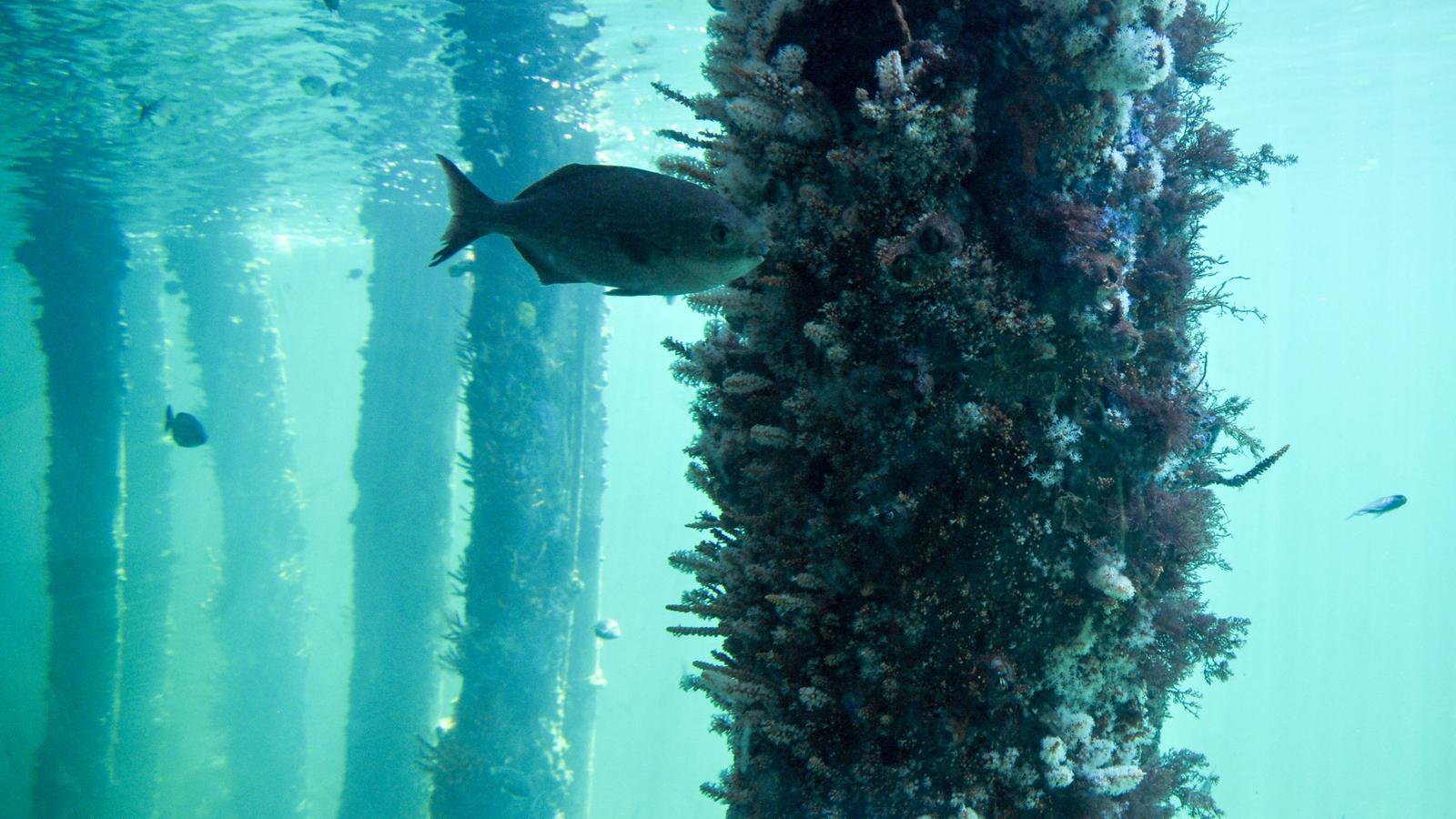
BarcelonaAnd what if they told you that Catalan ports can become points for regenerating marine life? Life Boosting Units (LBU), biomimetic panels installed on the walls of ports and other human-made marine infrastructure, prove that this can be a reality.
Unlike the usual smooth, vertical concrete surfaces (such as docks or artificial reefs), LBUs incorporate a rough structure full of reliefs and cavities that become points for marine life colonization, thus transforming artificial and inhospitable spaces, like ports, submarine cables, and oil plants, into rich and complex communities.
“The most beautiful thing about this project is seeing that, in a few months, lifeless places turn into oases,” explains Ignasi Ferrer, CEO and co-founder of Ocean Ecostructures, the company founded by three sea-loving friends who conceived this project. Currently, there are 95 LBUs installed in nine Catalan ports: Club de Vela Blanes, Port Fòrum, Club Nàutic l’Escala, Club Nàutic Estartit, Marina Palamós, Port Masnou, Pendennis Vilanova, Club Nàutic Port d’Aro, and Port de Sitges-Aiguadolç.
To measure this impact, the installations incorporate a monitoring system. According to data collected in the nine Catalan ports by the company, there is a significant difference in both biomass and CO₂ fixation capacity. In total, areas with LBUs have generated 1.542 tons of biomass, compared to 0.749 tons recorded on control walls, and have fixed 0.656 tons of CO₂.
An opportunity for local fishing
Furthermore, with this intervention, 80% more fish have been detected on the walls of ports with installed LBUs, 40% of which are species of interest to fishermen. “Catalan ports could become sources of traditional fishing,” suggests Ferrer.
A notable increase in the presence of species indicating water quality has also been observed, such as the dusky grouper or nudibranchs, a group of small mollusks. In the case of the dusky grouper, for example, 32 have been found in four Catalan ports, despite being a species not usually found in port areas. “Finding them in these structures indicates that a rich enough network is developing around them to sustain them,” adds Ferrer.
In addition, in the LBUs, marine animals have found not only a place to live and shelter, but also to reproduce: more than thirty egg nests have been found there, five of which are from cuttlefish.
10,000 infrastructures in 10 years
Although nine Catalan ports currently have this system, the Catalan project has already been installed worldwide since 2021. Currently, LBU systems are installed in ports in Denmark, the United States, and at the Princess Elisabeth Island in Belgium, the world's first artificial energy island.
Furthermore, the project is not limited to ports, as LBU systems have also been installed on oil platforms and submarine cables, two locations where it is also difficult to find marine life. Next year, Ferrer explains that they will bring the project to Saudi Arabia. And the team will not stop there: the dream of these three partners is to re-naturalize 10,000 infrastructures in the next 10 years. "The sea is exceedingly generous when we give it an opportunity," states Ferrer.
