Barcelona already has the switch to control all the city's streetlights remotely
The new system allows to remotely manage the lighting and act on specific zones if necessary

-
CAT -
CAST
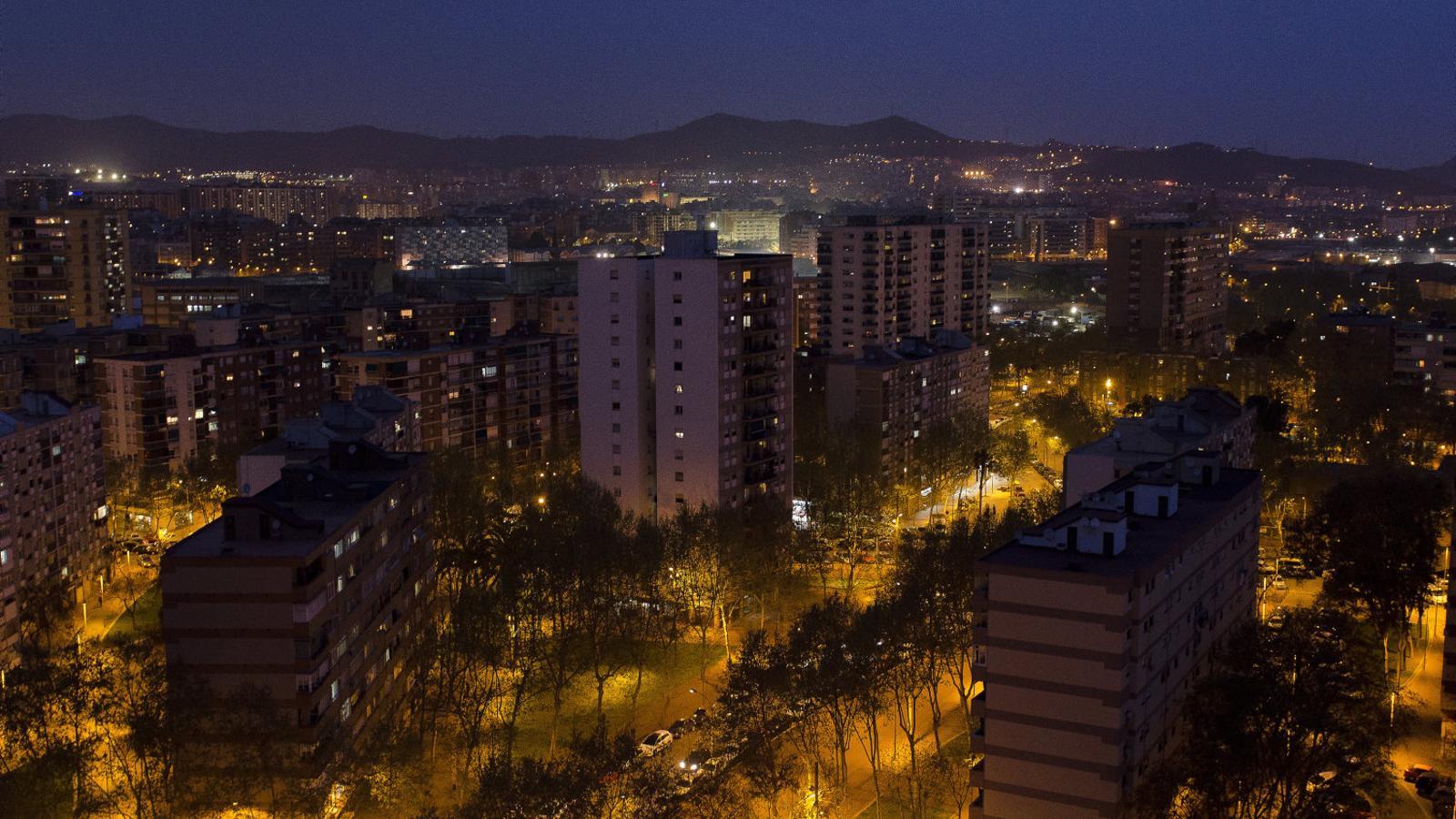
BarcelonaIn the summer of 2023, a strong storm suddenly left Barcelona in the dark and put cyclists at risk during the start of the Vuelta a España, which was taking place from the Catalan capital. At the time, the City Council explained that it could not act because the darkness was "unforeseen" and because a significant part of the system was very rigid and could only be turned on early manually. Now this situation can no longer happen again: since this summer, all the city's lights can be controlled remotely with a single switch.
The control center for this button is located in a building that the City Council has at the top of Torrent de l'Olla street, in the Vila de Gràcia. From there, through specific software, those responsible for the lighting can control the 158,000 light points in Barcelona. The program shows in real time the situation of the 2,580 electrical panels spread throughout the city and allows for direct intervention, programming lights to turn on and off according to specific needs.
"It allows us to manage all the city's lighting in real time," celebrated the first deputy mayor, Laia Bonet, in statements to journalists. According to the councilwoman, the new remote control model—which has been extended throughout the city over the last four years until it covers all the light points—represents "a clear improvement" in terms of light perception, safety, and also energy efficiency. The software also detects in real time the incidents affecting each electrical panel and classifies them according to the level of impact, which facilitates their repair.
Until now, the city's public lighting operated with an annual programming system that regulated the time the streetlights turned on and off based on the scheduled sunrise and sunset times. Beyond this schedule, the streetlights could only be turned on or off manually by intervening one by one on the light panels that regulated them. Now, however, from the Gràcia control center, they can be activated or deactivated at any time according to needs.
The example of the eclipse
The new system allows, for example, turning on the city lights during the day if weather conditions make it dark. These would be unforeseen situations such as the one experienced three summers ago during the start of the Vuelta, or those seen in recent days with strong storms, where cloud cover made it seem like it was still night for hours. In these scenarios, the lighting of streetlamps can be ordered remotely from the control center.
"When we see that a day is darker than it should be, we advance the lighting to improve visibility on the street," explained the head of the city council's lighting department, Luisa Cabezas. The new model also allows for acting in specific areas where, at a given moment, greater or lesser illumination is needed. This was the case, for example, with this year's Mercè Piromusical, which was held on the beach, and to facilitate its broadcast, several streetlamps were turned off remotely for the duration of the show. This direct action on specific streetlamps also allows for lighting specific areas if an event requires it or if, for example, there are disturbances and the police request it.
Furthermore, the system also features dynamic brightness control that, during the hour before dawn and dusk, measures the light level in three areas of the city – narrow streets, medium-width roads, and large avenues and open spaces – to automatically decide whether to anticipate or delay turning on the lights. This was already tested on August 12, when the streetlamps were turned on half an hour earlier than planned due to the darkness the solar eclipse caused over the city.

