Last call to include the end of fossil fuels in the COP31 agreement
Some countries have presented their own roadmaps to abandon fossils and Spain announces that it will elaborate its own

-
CAT -
CAST
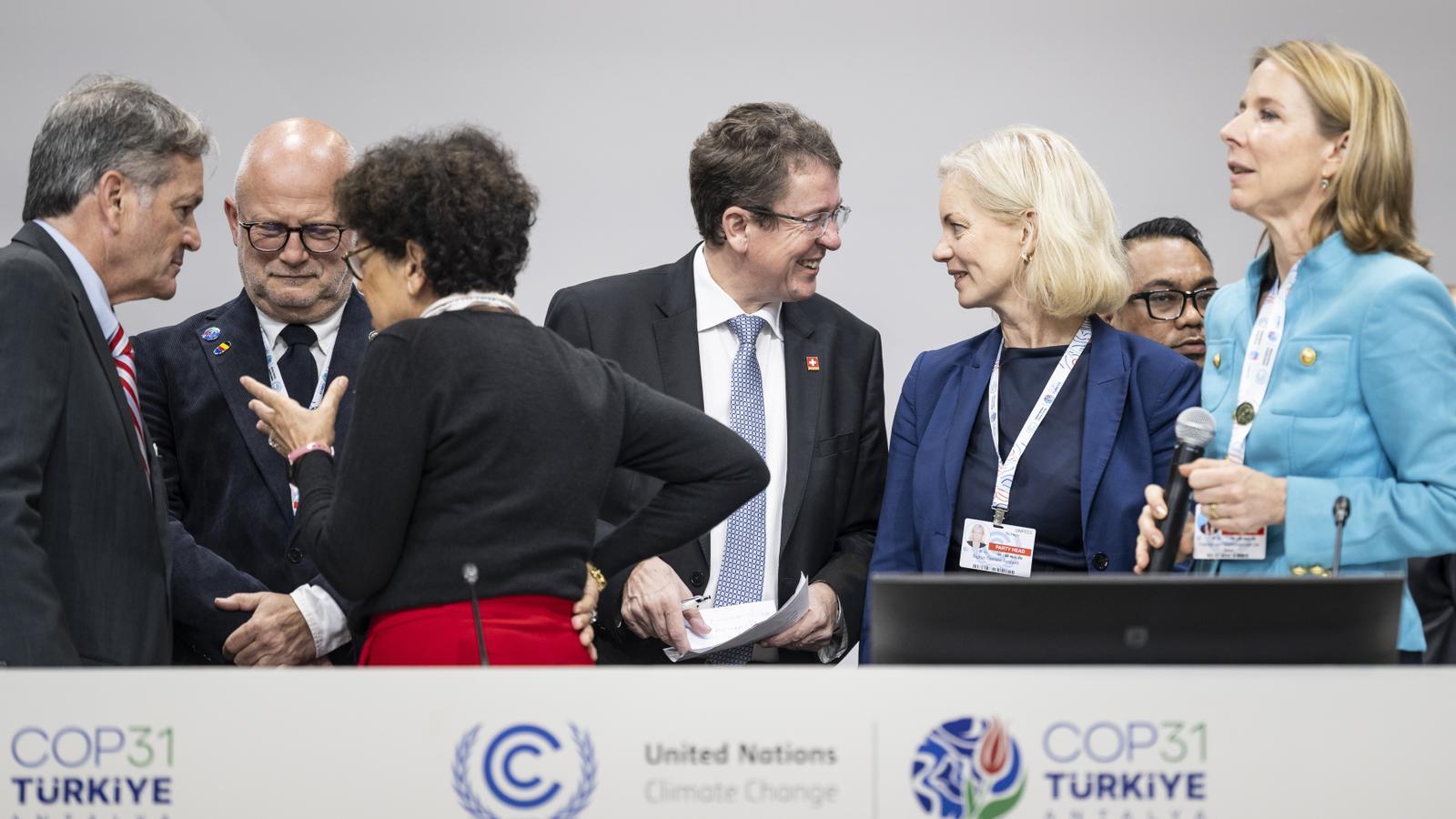
BarcelonaIn a last-ditch effort to avoid total frustration, a score of governments have united on the final day of the UN climate summit, COP31 in Antalya (Turkey), to demand that the final agreement include a roadmap to phase out fossil fuels. The call was led by Brazil, which hosted COP30 last year and committed then to working for a global agreement on this matter (because it failed to include it in the final text of the Amazon summit), and brings together several countries from Europe, Latin America, Asia, and the Pacific. “It is the last day of COP31 and it is necessary to increase efforts so that this ambition is reflected in the final decision of the summit,” said France's Minister of Ecological Transition, Monique Barbut, in a press conference this Friday.
France is one of the countries that has gone to the Turkey summit with its own state “roadmap” to abandon fossil fuels by 2040, as have Germany, the Netherlands (which has set 2050 as its deadline), and a group of Pacific countries that have presented a joint plan. During this summit in Turkey, the Spanish government also committed to developing a roadmap to end fossil fuels by 2050. This was announced a few days ago from Antalya by the Third Vice President and Minister for the Ecological Transition and the Demographic Challenge, Sara Aagesen, who did not go into details, probably aware that the plan could be shelved after the November 29 elections.
“Our roadmap is our declaration of independence. Renewables make us independent, this is good for our economy and is good for the world,” said Carsten Schneider, Germany's Minister for the Environment and Climate Action. The ministers of this score of countries (where Spain was not present because Aagesen had already returned to Madrid) held a joint press conference in which they took turns speaking, all standing on the press platform, to urge the COP31 presidency, shared between Turkey and Australia, to include this point in the final agreement. In the last draft of the final text published on Thursday it had disappeared. They also reiterated their demand that the commitment to electrify global energy to 35% by 2035 specify that it must be with renewables, something the text also does not currently include.
“The worst COP in history”
“The worst COP in history,” said Mohamed Adow, director of Power Shift Africa and a veteran of these meetings as an observer for the climate NGO network CAN, this Friday. It might be an exaggerated assessment, but the UN climate summit in Antalya already started with the lowest expectations ever. Before it began, nobody even expected a mention of fossil fuels in the final agreement document, but the first draft of the text included it and raised the bar again. The latest draft published on Thursday already removed this mention entirely, a move that did not surprise COP experts, but which reignited the frustration of many of those present. The 18 pages of the final draft, which included very many options, had been reduced by half and the most conflicting points had disappeared from it.
Also disappeared from the text were the 120 billion dollars that the first draft set as the minimum figure to comply with last year’s agreement to triple the funding dedicated to the adaptation of the most vulnerable countries to climate impacts. A section, that of adaptation funding, which is especially urgent for many states that are already suffering devastating impacts of the climate emergency and which was disappointing for the governments of the Global South and for many observers of the summit, because it did not specify any concrete measure on how the agreed goal would be reached.
All this suggested that, as is quite common in these annual summits, COP31 would be extended at least until Saturday to give the representatives of 197 countries (in addition to the EU) gathered in Antalya time to be able to reach a consensus text. The global roadmap to eliminate fossil fuels could fall by the wayside, since from the beginning it already seemed that it would not go into the text of the final agreement, but rather would be part of the non-binding texts of the summit. The same French minister who demanded this point in the final agreement opened the door this Friday to the possibility that it might not be so, if it were in exchange for other concessions, according to Efe. “If we don’t have, for example, fossil fuels, but we have a reference to the roadmaps proposed by Brazil [as a separate and non-binding agreement document], we will evaluate it. If we don’t have a reference to fossil fuels, but we really have clean electricity, we will evaluate it,” she pointed out.
