Research, the key to saving the vineyard from the climate crisis
Researchers at the Catalan Institute of Vine and Wine (INCAVI) study the entire cycle to adapt the crops to the new reality
-
CAT -
CAST
The climate crisis is now undeniable. Heavy rains are followed by drought episodes that we had not seen before. And all this with extremely high temperatures that break records year after year. Agriculture is not a friend to these extreme changes, and the art of working the land is becoming increasingly difficult. All the theory accumulated until now, both what the farmers had learned and what the plants and trees we have been caring for for decades have, can no longer be applied in the same way as always. In addition to the most obvious consequences, such as the water stress that drought causes to a plant or the damage that a downpour can do to fruit, it is also necessary to take into account that if minimum temperatures remain too high in winter, there may be organisms that generate certain diseases in the vineyard once the vegetation begins to sprout. All these situations are as new as they are threatening, and the best recipe to combat them is research.
The soil and the plant
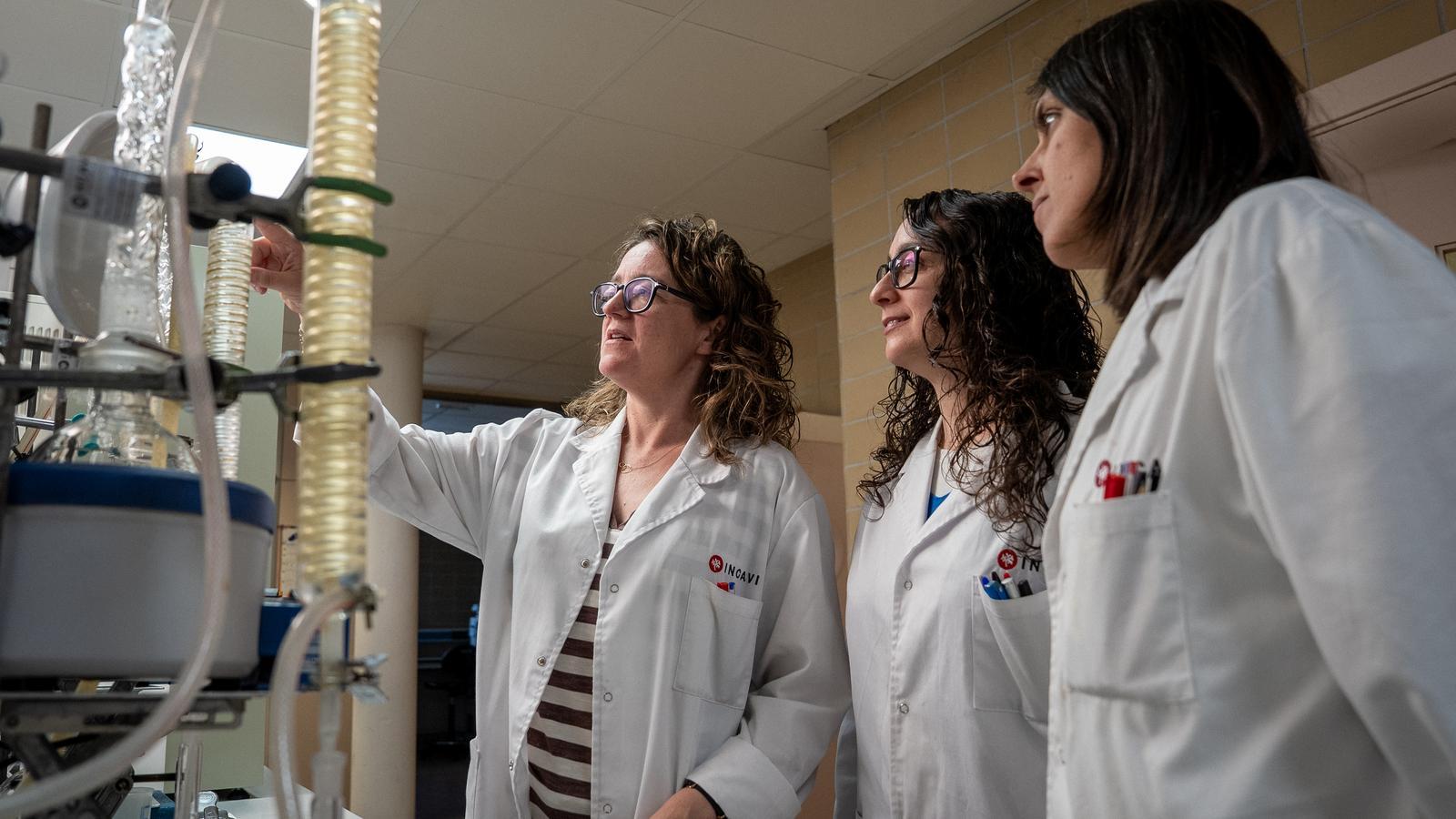
This task is one of those carried out by the Catalan Institute of Vine and Wine (INCAVI), a public research center that depends on the Government of Catalonia. For years, researchers have been looking for ways to adapt Catalan vineyards to the new context. Research focuses on different fields, and one of the most important is the soil itself. Researchers are expanding knowledge of soil microbiota (living organisms) to make it more resilient, and they are also looking at how to improve its structure to increase water retention capacity. In the current context, it is necessary to ensure that the water that falls on the field is used to the maximum. "We have to forget about that notebook where we had written down everything we had to do each year," explains the head of the Viticulture and Enology Service at INCAVI, Xoán Elorduy. Many farmers have in mind that it is necessary to plow after the harvest and, from that date on, it is necessary to plow every few weeks. All that knowledge, according to the expert, was useful when conditions were regular, but now it is no longer the case. "Plowing causes oxygenation of the soil and, therefore, a reduction in the microbiota. And if now, for example, we have a lot of water in the soil, perhaps that plowing is not necessary," he gives as an example. But it is not that easy: "You also have to take into account local circumstances: perhaps in Penedès and the coast it is not necessary to do the late autumn plowing, but in Costers del Segre or Terra Alta, it must be maintained. Careful technical knowledge is necessary to manage both the soil and the plant cover and the appropriate cultural techniques at all times," the expert continues. Another of the fields on which researchers are focusing refers to the plant itself. For many years, the base of the plant where the vine grafts (known as rootstocks) are placed were the same because models had been found that were very well adapted to our territory. The climate crisis, however, requires rootstocks that are more resistant to drought. Once the most resistant rootstocks are found –tests are already being carried out– it will be necessary to check how they adapt to each variety.
Another line of research focuses on clonal selection, that is, finding specimens that adapt to current conditions and reproducing them. Scientists foresee the possibility that we have had one of the solutions right under our noses and have not paid much attention to it: ancestral varieties. Many of these varieties have been forgotten and neglected, often relegated to the edges of fields. But if they have survived, their resilience is more than demonstrated. “We believe that, possibly, they can provide resistance to these new conditions,” explains Elorduy. Researchers, finally, also focus on the study of the plant. Until now, the techniques used by farmers prioritized aeration, exposure of the grapes to the sun, and ripening. But this will very possibly have to change, because now the problem is the excess hours of sun exposure. This implies modifying the way of pruning to protect the grapes from the sun.
Techniques in the winery
Once the grapes have been harvested and enter the winery, a new challenge begins for researchers. It is likely that there is an excess of sugar (which will later turn into an increase in alcohol content and a loss of acidity) and it will be necessary to use yeasts and bacteria in a different way to end up obtaining the type of wine the market demands, which, precisely, is rather one with a milder alcohol content. There is still one last avenue of research, which INCAVI also explores, and that is new consumption habits, which are changing on an international scale.
All these investigations are carried out together with other research centers and the results are shared to be able to join forces in the face of new challenges. INCAVI is part of different research forums, such as the Working Group on Experimentation in Viticulture and Enology (GTEVE), where many other research centers from Spain participate, or also Cervim, based in the Aosta Valley, which focuses on grape cultivation in mountains and steep slopes.
