I thought that Iran would be like Afghanistan, but it is not like that: there are fewer restrictions

-
CAT -
CAST
KabulMy report on women imprisoned in Afghanistan caused me considerable problems. After it was published in an Afghan media outlet, prison officials and a representative of the Taliban Supreme Court complained to my editor-in-chief. I tried to argue that I had simply done my job as a journalist. I have always believed that journalism consists of giving a voice to those who cannot make themselves heard. But in Afghanistan, when you give a voice to those who have none, they often try to silence you too.
Coinciding with this situation of pressure, I was lucky enough to be able to travel to Iran within the framework of a collaboration project organized by the Iran-Afghanistan Media Network at the end of October. It was the first trip abroad of my life: I was excited because I would finally get to know another country, but also because I would be able to briefly escape the tension I was experiencing. However, for the Taliban to let me leave the country, I had to be accompanied by a male relative. So my brother accompanied me on the trip.
‘Mahram’ obligation
Even at Kabul airport, the Taliban reminded me that I remained under their rule. A Taliban guard at the entrance signaled for me to pull up my mask and cover my face properly. While passengers were queuing to check in, a man asked us if his sister, who was traveling alone, could go with us. We told him yes. A Taliban guard examined my identity document and my brother's, and once he verified that we were family, he let us pass.
The young woman who was traveling with us, however, was not so lucky. The Taliban reprimanded her for not traveling with a mahram –a male guardian or a close male relative–. She explained that she was going to meet her husband, who lives in the United Kingdom. The Taliban then examined her marriage certificate, a photograph of her husband's passport, and his residence documents in the United Kingdom, but seemed reluctant to let her pass. Finally, she showed him a document and the Taliban gave in. I asked the woman later what kind of document she had shown him. And she replied that it was a sort of safe-conduct that she had obtained the day before by paying 1,000 dollars to the Taliban. In other words, Afghan women can overcome the restrictions through bribes.
Our plane landed at Imam Khomeini International Airport, in Tehran, at 12:30 p.m. I expected similar treatment to what I had experienced at Kabul airport, but I found a very different reality. No one asked me if I was traveling alone or with a man from my family. At the exit, there were families waiting for passengers, among whom were women wearing trousers and brightly colored blouses. I, on the other hand, was wearing a mask on my face and a dark-colored chador [long, loose-fitting tunic]. This contrast surprised me. Before the trip, I had imagined that Iranian society would not be very different from Afghan society. But it is not like that.
What caught my attention
The journey to the hotel took about two hours. Along the way, the roads in good condition, the high buildings, the overpasses, and the vegetation caught my attention. Tehran is very different from Kabul, especially in terms of infrastructure and public facilities.
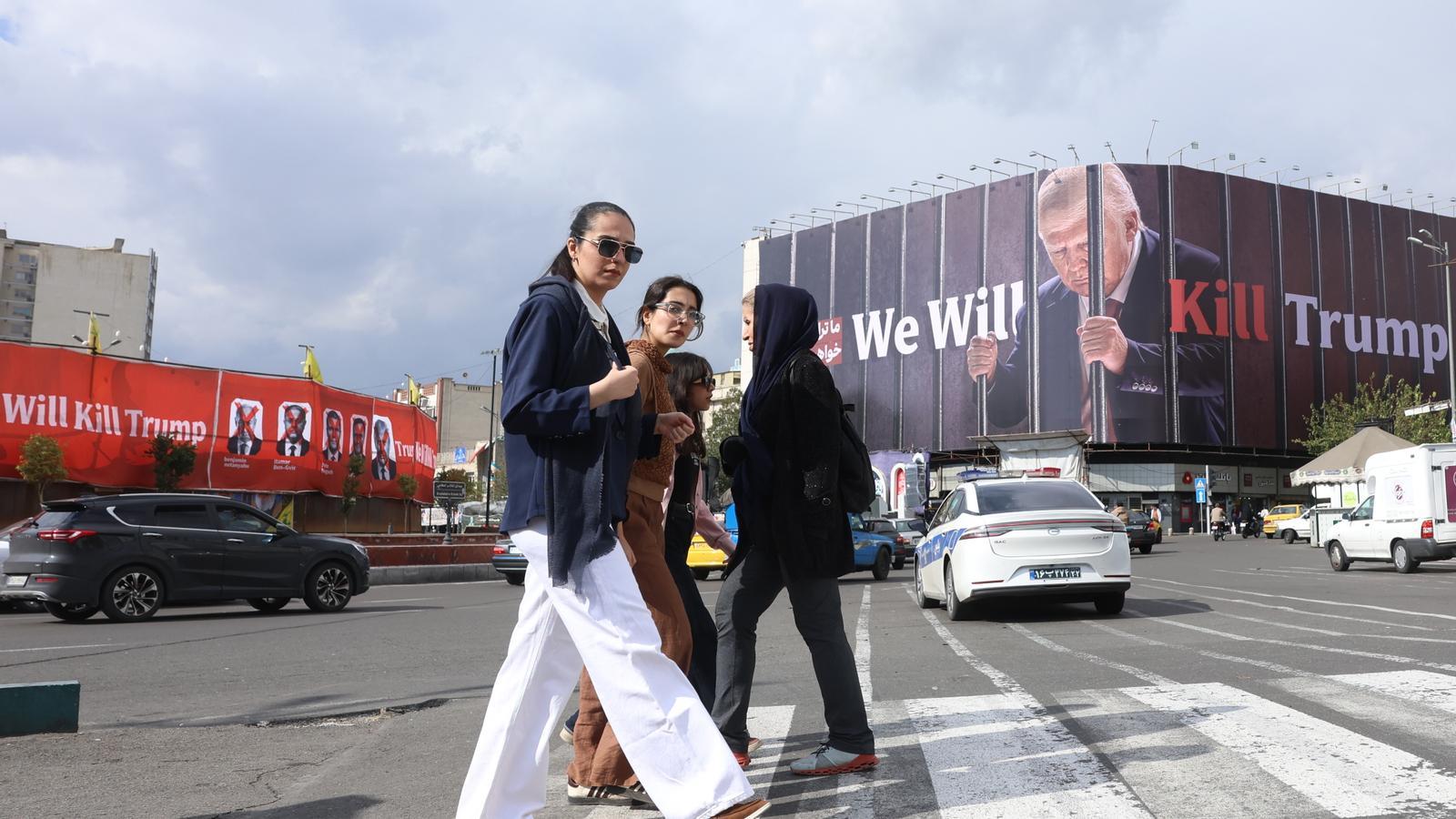
In the streets, I saw women dressed in very diverse ways. Some did not wear any headscarf, others wore loose clothing, and there were also those who opted for the hijab. What surprised me the most was this diversity. And that in the areas I visited, I did not see any authority reprimanding women for their attire. I also noticed how the men behaved around them. From what I could observe, people seemed focused on their own lives, and women could move freely without having to constantly worry about the reaction of others, which is not the case in Afghanistan.
I was also especially struck by seeing young men and women holding hands. To many people this might seem normal, but for someone living in Afghanistan like me, it is completely extraordinary. In Afghanistan, even walking beside a man in a public space can lead to questioning. Women must always demonstrate that the man accompanying them is a mahram.
These scenes cheered me up, but at the same time they saddened me when thinking about Afghan women and girls. Rights that in many societies are considered normal have become distant dreams in my country.
One of the most moving images was seeing girls in school uniforms. It had been more than five years since I had seen girls of fourteen or fifteen years old going to school. In Afghanistan it is prohibited from the age of twelve, when they should begin secondary education. Something so common in other places is completely exceptional in Afghanistan.

An unforeseen difficulty was obtaining a SIM card for the mobile phone. According to what we were told, with the new restrictions of the Iranian regime, to obtain one it was necessary to go through some procedures that lasted one or two weeks. Finally, an Iranian man gave us one of his own SIM cards and told us that we could use it during our stay. That simple gesture of hospitality remained etched in my memory.
During the trips, I spoke with the drivers because I wanted to know about their lives firsthand. Many complained about inflation, the rising price of food, high rents, and salaries that do not keep pace with the cost of living. One of the drivers explained to me that he works for a government agency and earns 50 million tomans a month, but that, even so, he needed a second job to cover his expenses. I did not expect that in a city with such developed infrastructure, people would have so many difficulties making ends meet. Then I realized that modern infrastructure does not necessarily mean that everyone lives in comfort. A city can have beautiful streets and tall buildings, while its inhabitants struggle to survive in their day-to-day lives.
Iran and Afghanistan have to face similar economic difficulties, but we, the Afghans, also live under a regime that suppresses and controls us every day.
