The darkness of the bottom of the sea, the darkness of the bottom of the heart
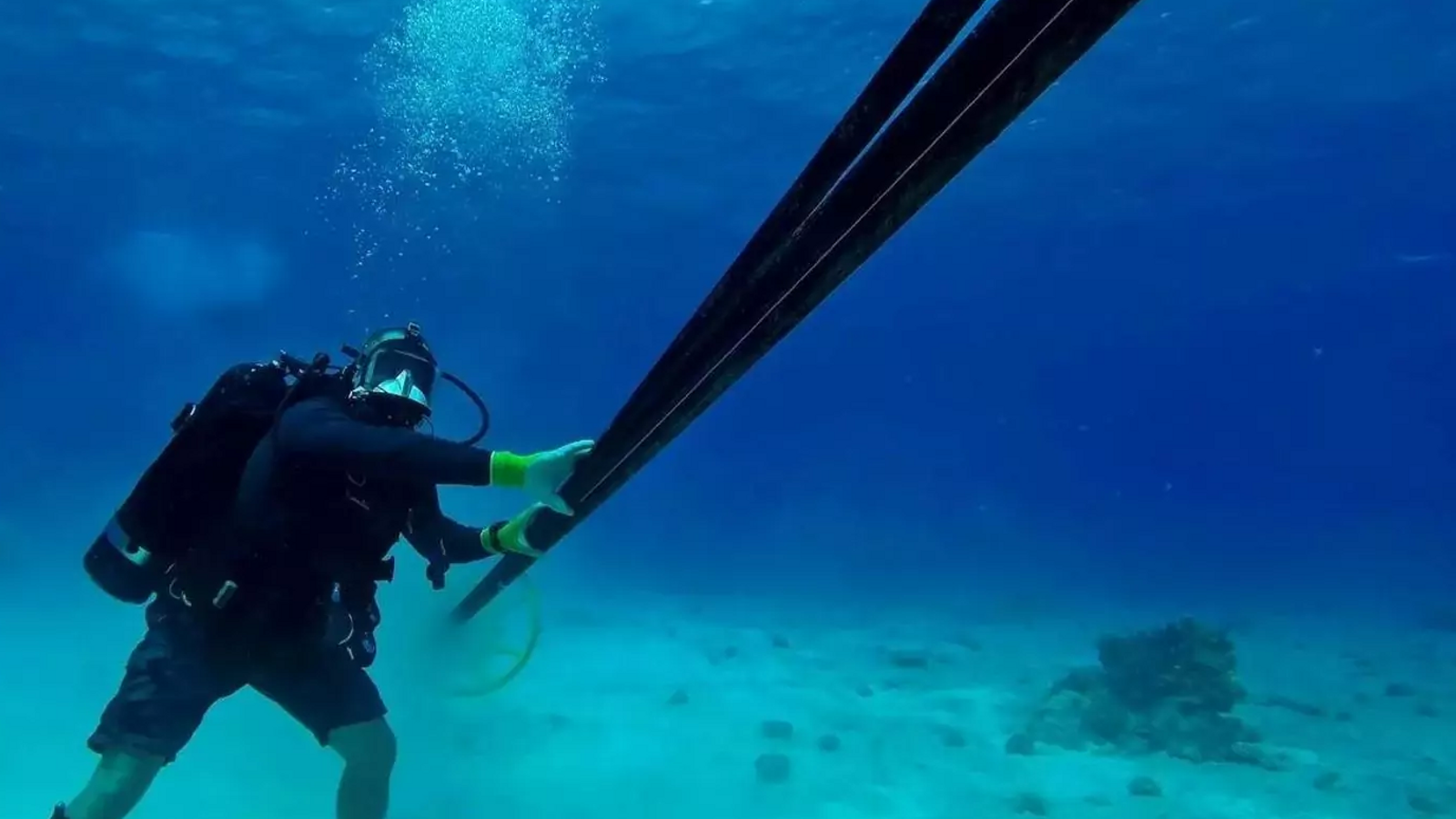
The narrator of ‘Twist’, by Colum McCann, leaves to do a report ‘in situ’ about the cable repair ships and the divers who carry out the repair tasks

-
CAT -
CAST
- Colum McCann
- L’Altra / Feltrinelli
- Translation by Marc Rubió Rodon
- 326 pages / 20.90 euros
There are novels that have such a powerful symbolic core that all other components –the characters, the plot, even the tone and the style of the prose– seem to remain in the background, or can only be appreciated in accordance with the narrative relationship they have with the symbolic core in question.
That is somewhat the feeling I had while reading Twist, by Colum McCann (Dublin, 1965). The novel has a gallery of highly charismatic and interesting protagonists; it tells a strange and sorrowful story, but also an exciting and profound one, and it is written in prose of lyrical robustness and reflectivity that is at once agile and penetrating. Even so, if it primarily pulls you in and convinces you, it is because of all the symbolic play—that is to say, also ethical, emotional, and intellectual—that the central element of the book allows the author to unfold. This central element is the extremely long, submarine intercontinental cables that digitally connect the entire world, transmitting information of all kinds: intimate and professional, political and economic... These cables are essential for the proper functioning of modern capitalist societies and, naturally, from time to time they break and must be repaired. The metaphorical possibilities of it all are more than evident, and McCann extracts all the juice from them: the bonds that unite us are complex and fragile; everything that connects us also chains and condemns us; there is nothing that can last for a long time without being damaged and requiring repair, if only we know how to make the necessary repairs... Et cetera.
In psychological, emotional, and dramatic terms, the novel pivots around two male characters: the tormented and omnipresent narrator and the serene and elusive protagonist. The narrator is an Irish novelist, playwright, and journalist down on his luck who has been struggling to write for a long time. Functionally but destructively alcoholic, he has a very distant relationship with his son and his ex-wife. Erratic, emotionally bent under the weight of many failures, one day this narrator, Anthony Fennell, receives a professional assignment that might serve to bring order to his life and allow him to write something of significance again. The assignment consists of doing an in situ report about cable repair ships and the divers who carry out the repair tasks. The head of the expedition on the ship where Fennell boards is John Conway, an enigmatic man who is deeply in love with a very special woman – South African, an actress – and who takes on life without reservations, just as he explores the depths of the oceans free-diving.
The tense yet complicit relationship between the two main characters, and especially the fascination that Conway's figure generates in the narrator, runs from start to finish through the novel, giving it an atmosphere of unfathomable murky enigma, complemented by the fact that both carry the conflict-ridden past of Northern Ireland, of which they do not even want to speak. “Everything is fixed and we all remain broken,” says Conway in a conversation with Fennell, and the latter takes the sentence as one who drinks from the bitter fountain of truth. Heir to Joseph Conrad – there are references to Heart of Darkness and to Apocalypse Now, and both the oceanic and African scenery as well as the philosophical and moral disquisitions are pure Conrad–, Twist imposes upon the reader the pained yet resigned lucidity of having to recognize that “we are all shards of the wreckage”. In one passage, Conway says that the darkness at the bottom of the sea is denser than the darkness of space. Yes, Conway, but no darkness is denser than that of the human heart.
